Chalk, cliffs & coves …

Featured

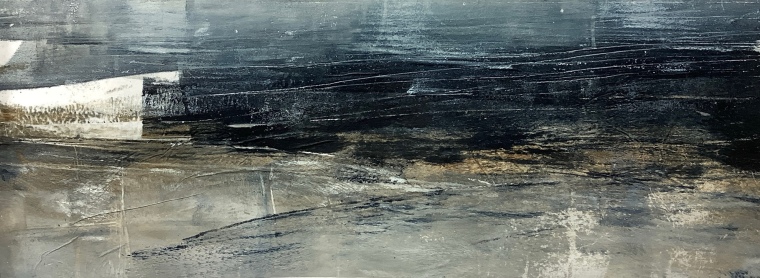
Flamborough cliffs & foreshore impression. Collage, gouache & pencil.
© Mari French 2024

Determined to get away on a much-needed sketching break for new inspiration, I recently headed to the dramatic Flamborough Head on the East Yorkshire coast. I’d only visited once before for a day on a school field trip in the early 1970s, but it left a big impression on me and casting around for new sketching locations this year (it’s a couple of years since I’ve been able to have a solo break just for sketching) and wanting an area within a few hours drive, I decided on Flamborough’s unusual limestone cliffs, caves and geology as a change from my gentler local haunts on Norfolk’s saltmarsh coast.
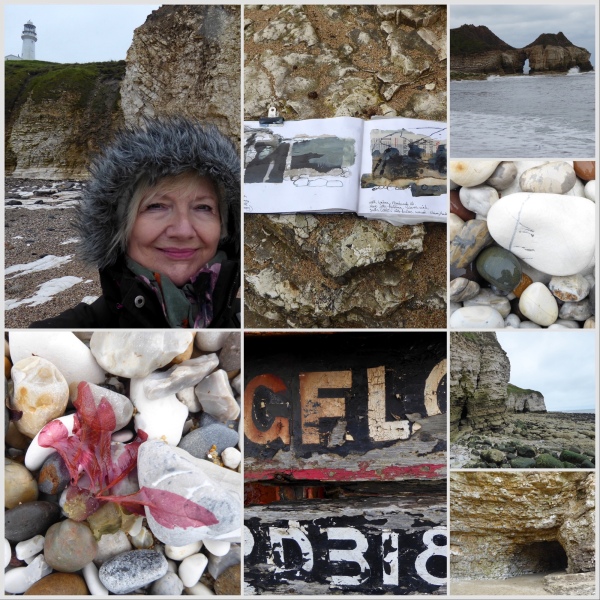
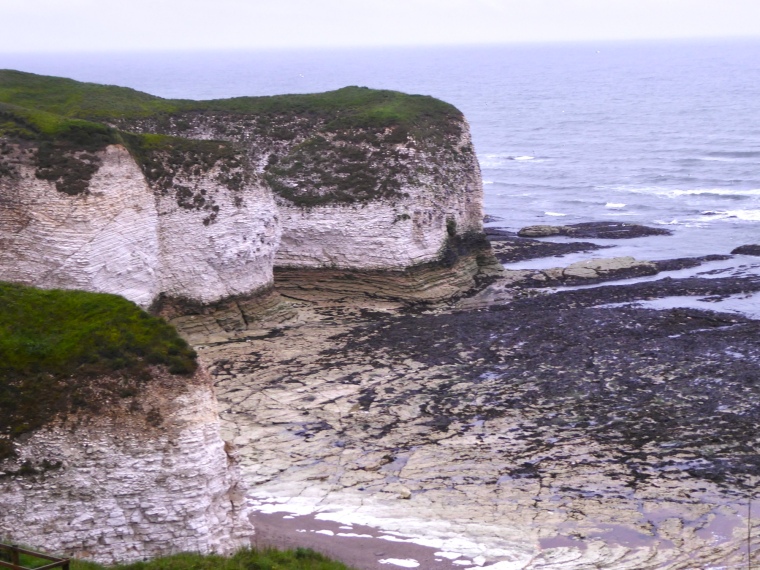
Flamborough. Making the most of the wet and windy May weather.
North Landing, Flamborough Head, East Yorkshire. © Mari French 2024

First impressions …

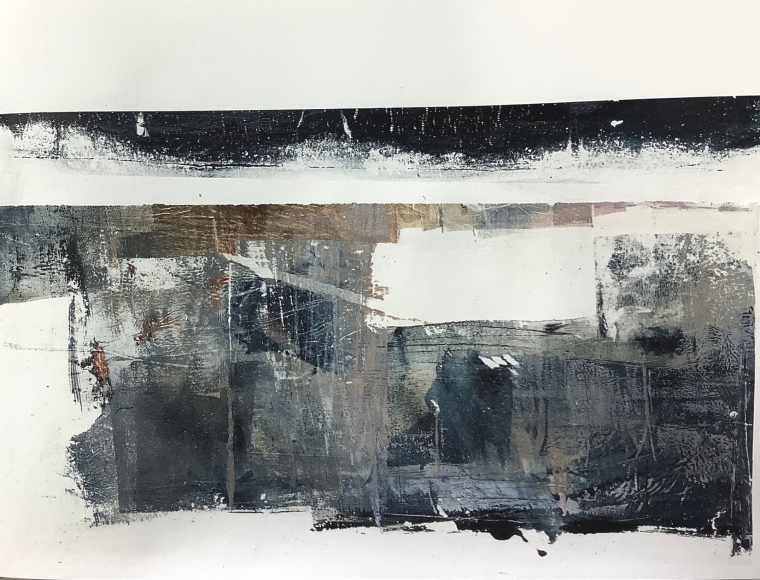
Chalk cliff, dark sea. Monoprint. Acrylic on tissue. © Mari French 2024

Due to ongoing family health issues I had to cut my time away short, only managing to get away for two full days. So I was determined to make as much use of the time as possible.

Accessing the many coves far below the cliffs was pretty strenuous, one involved 182 steep steps, but was well worth the effort. Views from the cliff tops are impressive but you need to get down to sea level if you can, to really appreciate the variety of limestone rock formations, multi-coloured sea-worn stones and deep caves; to experience the essence of the place.
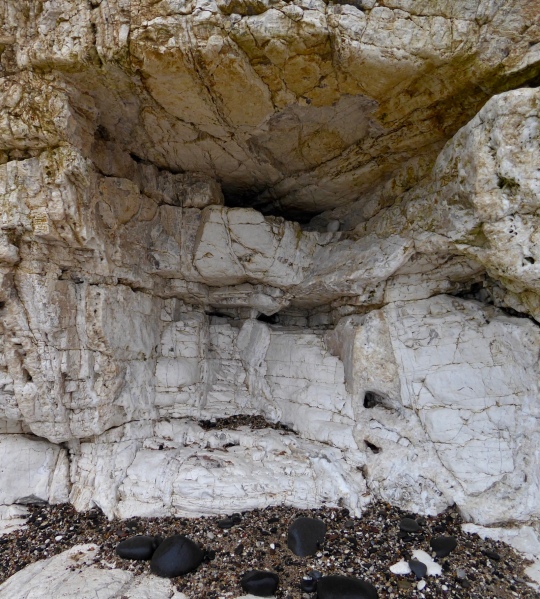
Sketching shelter, limestone ‘grotto’, Selwicks Bay, Flamborough Head.
© Mari French 2024

The weather was unseasonably cold and wet for May, with fog followed by sideways rain on the first day, although by the second day it was more changeable. I’d decided beforehand that I wanted to take gouache and collage with me, instead of my usual watercolour or acrylic ink. This soon proved to be a mistake, particularly perched awkwardly sketching in the rain, although a limestone ‘seat’ set back under an overhang was a very useful find. I’d enjoyed practising with the materials in the studio before I went away, and at the kitchen table in the holiday cottage in the evening, but outdoors they were an overworked mess.
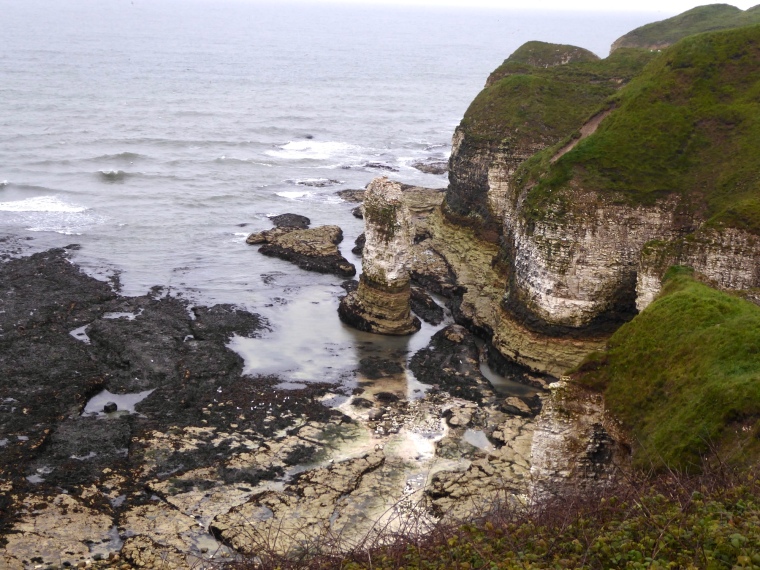
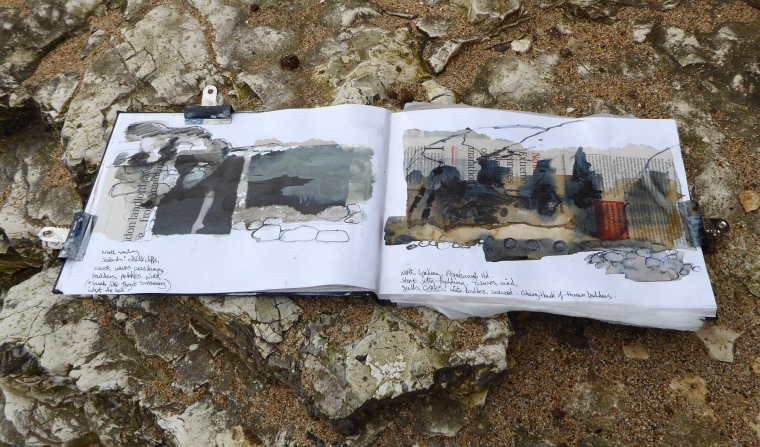
Selwicks Bay with sea stack, Flamborough Head. © Mari French 2024

However, as I’ve come to realise over the years, location sketches don’t have to be perfect as they will still capture valuable information and impressions that will feed into your memories when you want to take the subject further back in the studio.

For me, nothing beats the act of sketching outdoors on location to make me observe a subject more thoroughly, even when it turns out like the one below!
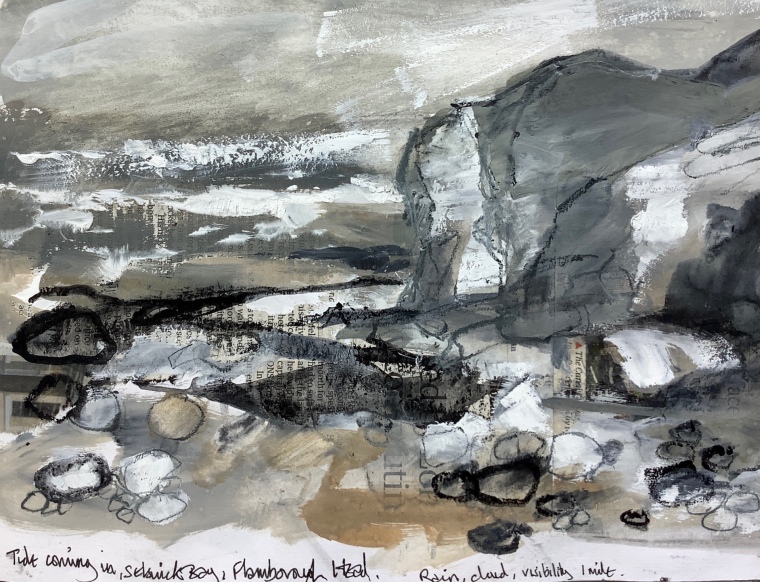
Tide coming in, Selwicks Bay. Gouache, ink block and newsprint, sketchbook.
© Mari French 2024

Observation & exploration …
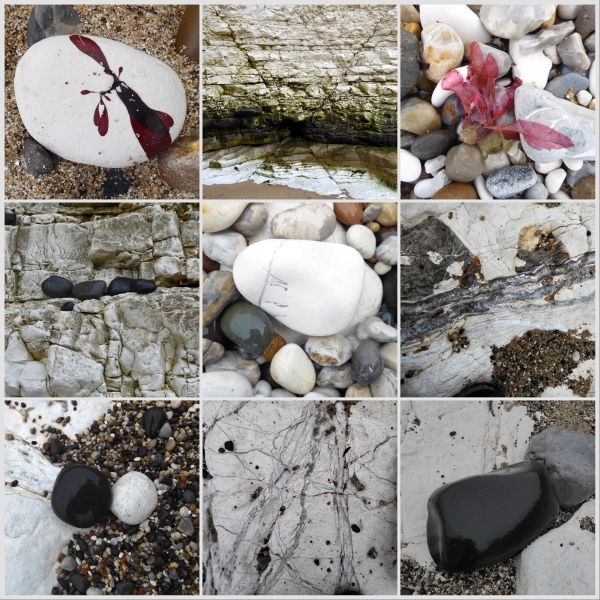
Pebbles, smooth stones and boulders, simple pale colours with veins of quartz and other minerals, strung like jewels in the fissures of rock.

My initial sketches/collages kept emerging as abstracted versions of the coves, bays and cliffs, which I suppose is understandable given their scale and drama and freshness to me. But I can see later work perhaps developing into explorations of the micro landscape that lay beneath my feet: pebbles, smooth stones and boulders, simple pale colours with veins of quartz and other minerals, strung like jewels in the fissures of rock.
Striations and fractures in rock faces and on the foreshore limestone ‘pavements’ meanwhile, will lend themselves to some interesting markmaking.
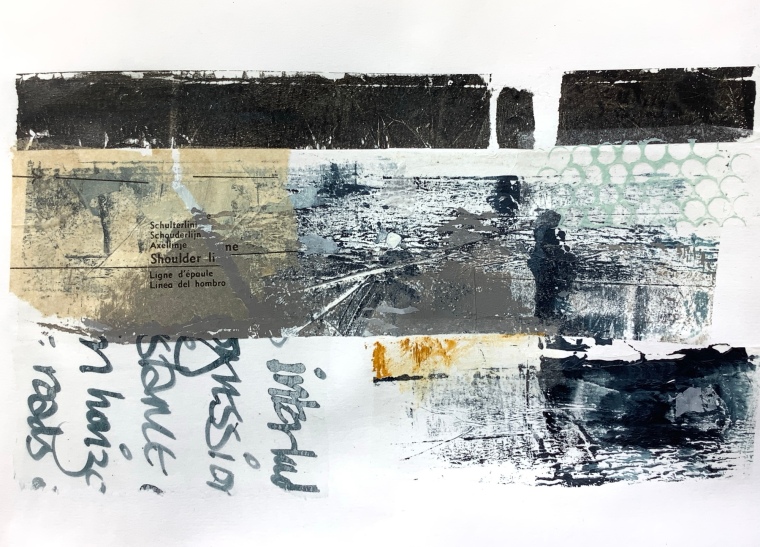
Collage with torn monoprint & calligraphy. Mari French 2024

Taking it forward …

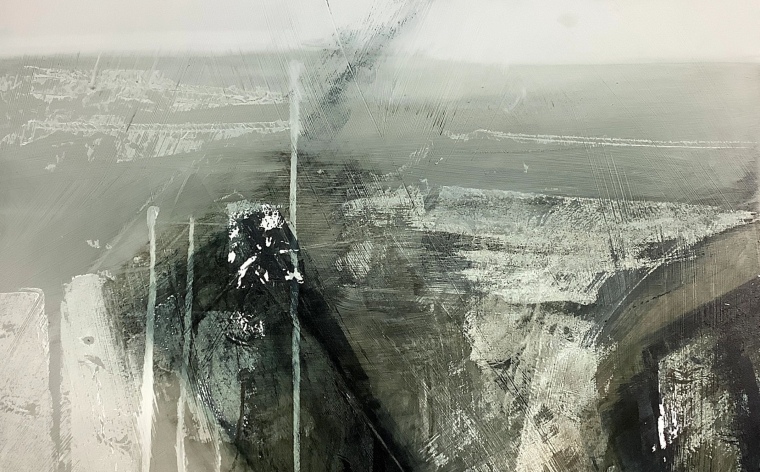
North Landing, Flamborough. Acrylic on Dura-lar. Mari French 2024

Back home in the studio I’m spending time working on those many impressions. Just now I’m trying out different media and methods till I find a combination that gives the results I want (not sure what they are, but I’ll know it when I see it).

Above, in acrylic paint on Dura-lar, a painting that recalls the moody light and weather of North Landing, Flamborough Head; Dura-lar is similar to drafting film and I love the way acrylic paint behaves on it; the way I can move and blend the paint, and scratch into it. Below, a monoprint in acrylic on tissue, created using a gelli plate.

I just wanted to share a few impressions of the many coves and cliffs around Flamborough Head that I’ve been working on since I returned. I’ll be posting more as I develop the series, on Instagram @marifrench and in a future post in this blog.

Thornwick Bay, Flamborough. Acrylic monoprint on tissue. © Mari French 2024
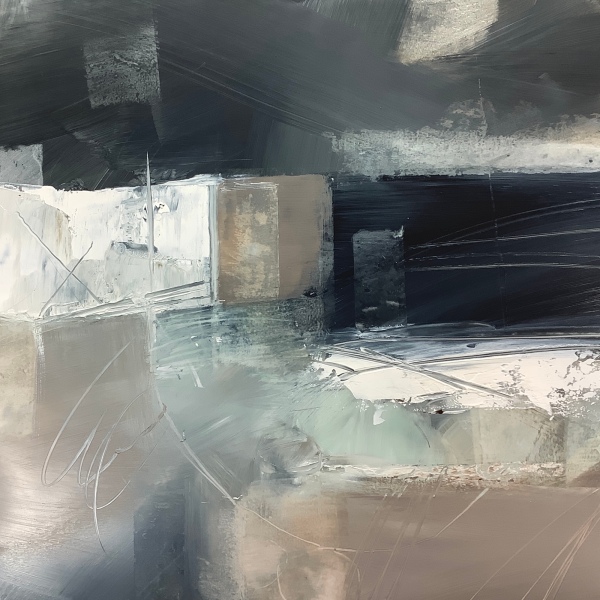
Limestone cliffs at Selwicks Bay, Flamborough Head. © Mari French 2024

Mercurial light in winter …

Featured

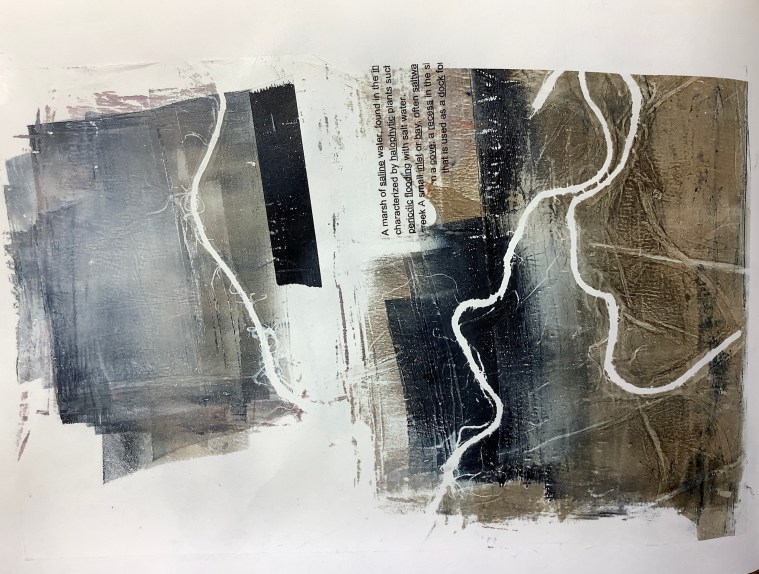
Abstract workbook collage inspired by saltmarshes and creeks, by Mari French Contemporary Artist, 2023.
Workbook collage with gelli plate printed papers. © Mari French 2023.

It’s been a year of ups and downs, stresses and a few successes, plus a lovely new studio which has been a lifeline for my work. So, apologies to my readers for such a gap in posts, but I’m back now and progressing a ‘new’ series of work (and a few exhibitions to work towards next year). I qualify ‘new’ because while this work is still related to my ongoing obsession with the saltmarsh coast, it feels different, deeper.

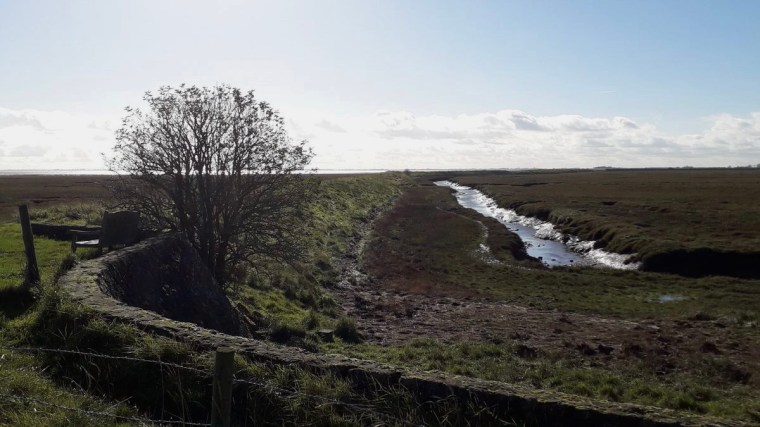
Saltmarsh and creek near Boston, Lincolnshire. Photo by Mari French 2023.

The emphasis in this current work is on tidal creeks, snaking through the marsh, mercurial light reflecting the huge overhead skies; the dark mudflats around them. I recently visited the saltmarshes near Leiston Shore on the East Lincolnshire coast, across the wide expanse of the Wash from North Norfolk. The visit gave me a different perspective, and I also learned a bit more about this unique landscape habitat through the work of photographer Steve Thornton. His project ‘Invisible Carbon’ has produced many sublime dramatic photographs of the Lincolnshire saltmarshes and the accompanying text reveals much about the worth of these unique landscapes as a hugely valuable ecosystem in the fight against global warming. You can read more on his work here.

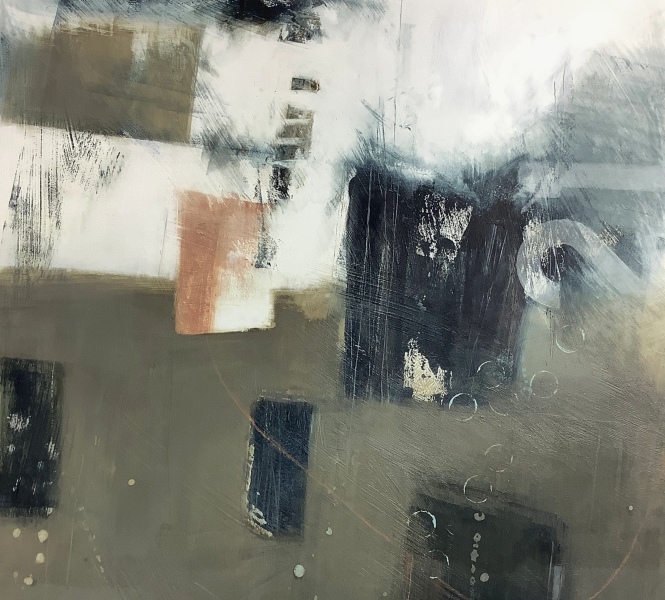
Detail of monochrome abstract landscape in acrylic on cradled panel. Mari French Contemporary Artist 2023.
Detail from new series of work in progress on cradled panel.
© Mari French 2023.

In developing this series of work my palette has become more subdued: warm umbers, soft blue-greys, indigo, a touch of pinkish siennas. I love the subtlety and it works well with the subject matter. I’m enjoying working on smooth cradled wood panels, altering them with brushed gesso before painting on them. The resulting texture and subsequent application and removal of paint is producing interesting atmospheric effects.

Abstract acrylic painting on cradled panel, by artist Mari French 2023.
Detail from new series of work on cradled panel. © Mari French 2023.

It has been productive spending time exploring the subject of tidal creeks and saltmarsh in my studio workbook, by creating collage papers with a gelli plate and assembling them; allowing experimentation with combinations of pattern, line and space and possible ways of referencing my experience of the subject. A few are included in this post.

Workbook collage with gelli printed papers. © Mari French 2023.
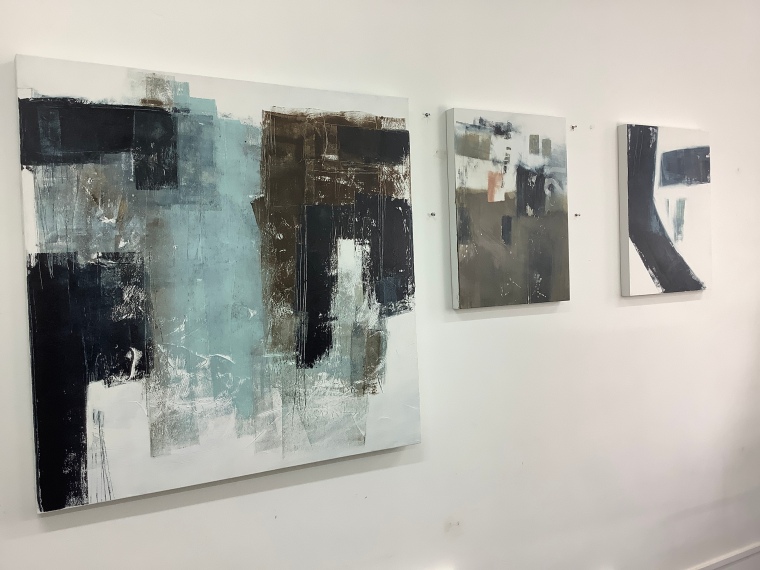
Abstract paintings on the wall of the studio of artist Mari French, inspired by saltmarsh and creeks. © Mari French 2023
Abstract work on the studio wall, prompted by creeks and saltmarsh.
© Mari French 2023.

I’m really enjoying pursuing this work and to seeing how it develops. I hope you’ve enjoyed the read and the images.

Saltmarsh and creek near Boston, Lincolnshire. Photo by Mari French 2023.

Revelations in the reedbeds …

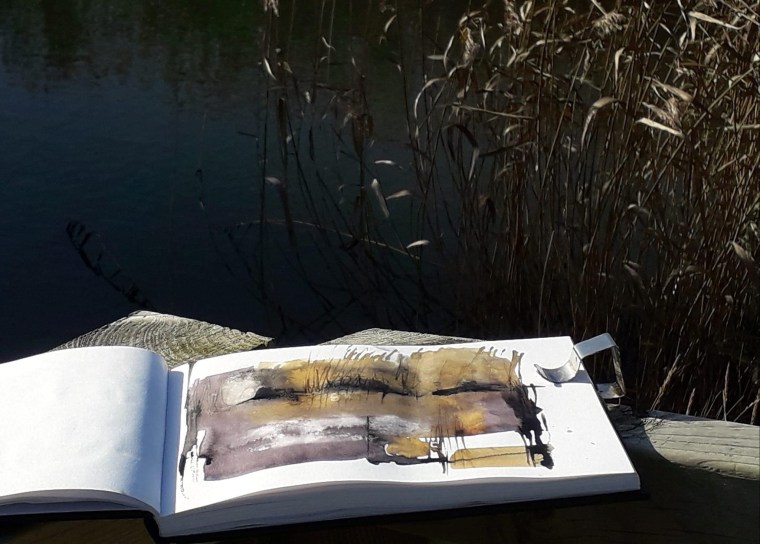
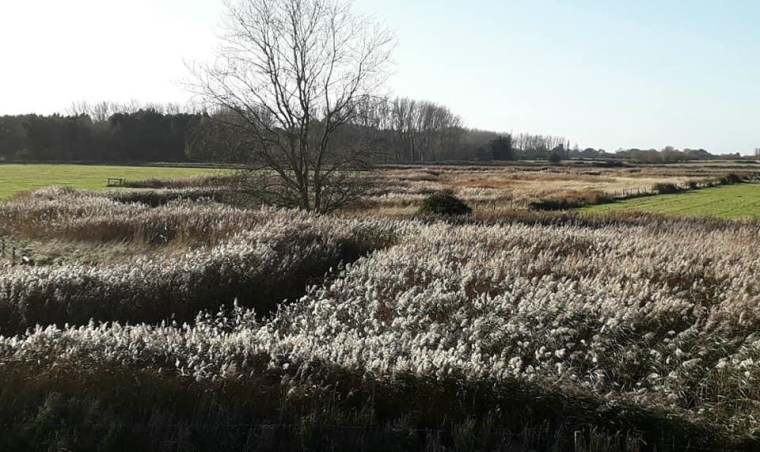
For the first time in months I went out sketching last week on the north Norfolk coast at Thornham, with its salt marsh, tidal creeks and reedbeds. It was a gloriously sunny day for November and (thankfully) I decided I couldn’t face the shady studio or staying indoors in my north-facing house on such a day.

There are many reasons I’ve left it so long – I used to go out sketching each week and it was (is) an important part of my practice – but the truth is I just got out of the habit. Yet I felt so much clearer-headed and brighter once I was treading the familiar sea defences looking out to the horizon and down over the winter reeds.

Despite the cold wind I found a little shelter in the sunlight next to a pool almost hidden in the reedbed, below the path. While a late dragonfly hovered in the sun and a large fish leapt out of the still water, I precariously balanced my sketchbook on a fence rail and set to work…

…and it is this point I’ve been thinking about since. I always tell myself and others that it’s the light and the landscape that compels me to paint; that I’m trying to instil in my mind what interests me in the scene, so that later I can retrieve and distil the impressions into a piece of studio work.

I still believe this, but now I realise it’s too simple an explanation – it doesn’t tell the whole story. There’s the pleasure I take in pausing to contemplate how I’m going to ‘interpret’ the scene whether with watercolour or acrylic ink; the joy of brushing water across the white page, into which I’m going to just touch the black ink block and watch it bleed out swiftly into the wet, or trail a loaded ink dropper through it and see the colour bloom swiftly outwards; the experience that, after years of trial and error, I now know that by moving a purple-grey ink into the wet area further down it will bleed upwards into the black, where I watch it pool and spread or run off wildly in a different direction; how colours will mix and back run.

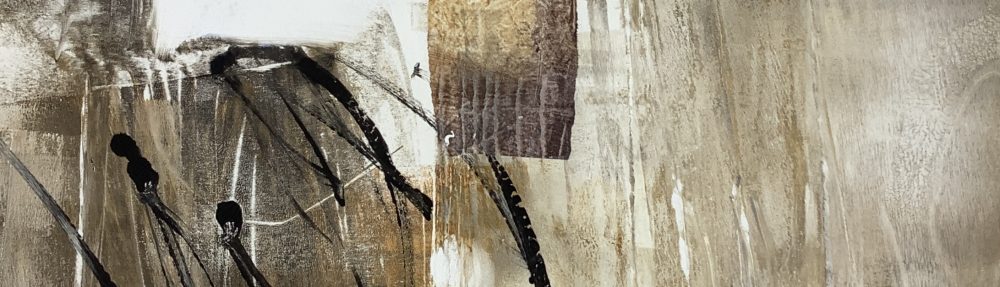
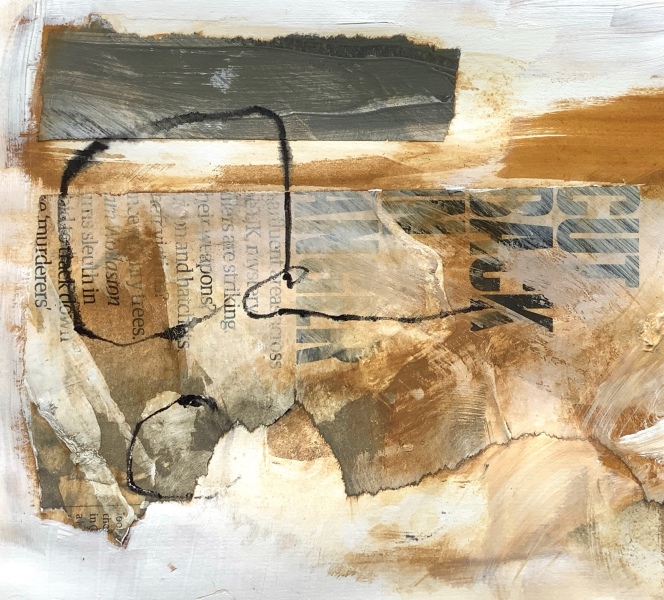
This also happens whatever medium I’m using in the studio. There comes a point quite early in the process where I forget the original inspiration and an all-consuming pleasure in the media takes over; whether it’s dragging acrylic paint across a prepared canvas with a big brush, pasting selected newsprint onto the work, scratching marks into wet paint, or scraping colour away to reveal stained texture below.

Of course, like all artists, there are times the process doesn’t work for me and pleasure turns to frustration, but when it does work there’s nothing like it.