Chalk, cliffs & coves …

Featured

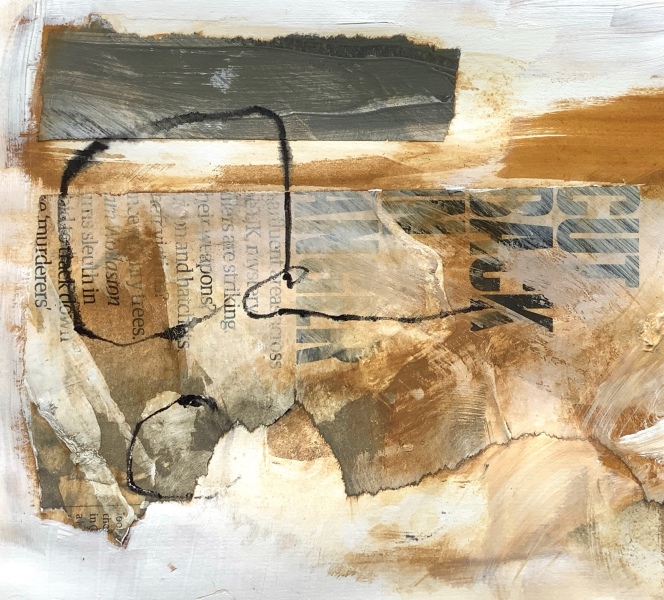
Flamborough cliffs & foreshore impression. Collage, gouache & pencil.
© Mari French 2024

Determined to get away on a much-needed sketching break for new inspiration, I recently headed to the dramatic Flamborough Head on the East Yorkshire coast. I’d only visited once before for a day on a school field trip in the early 1970s, but it left a big impression on me and casting around for new sketching locations this year (it’s a couple of years since I’ve been able to have a solo break just for sketching) and wanting an area within a few hours drive, I decided on Flamborough’s unusual limestone cliffs, caves and geology as a change from my gentler local haunts on Norfolk’s saltmarsh coast.
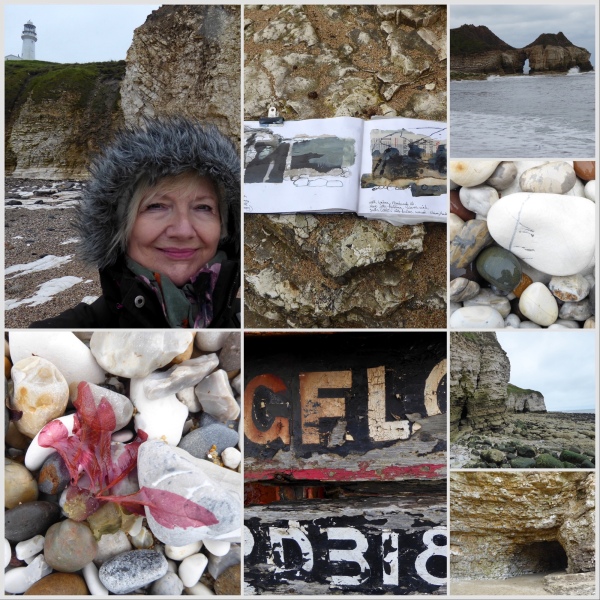
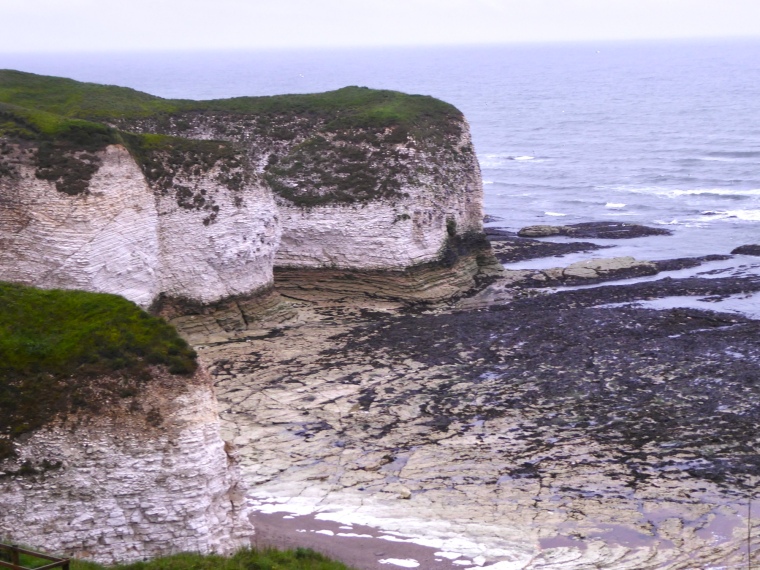
Flamborough. Making the most of the wet and windy May weather.
North Landing, Flamborough Head, East Yorkshire. © Mari French 2024

First impressions …

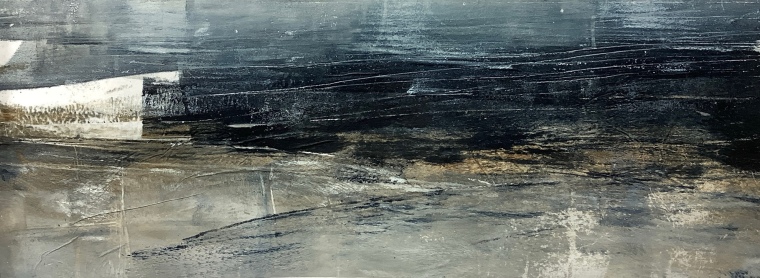
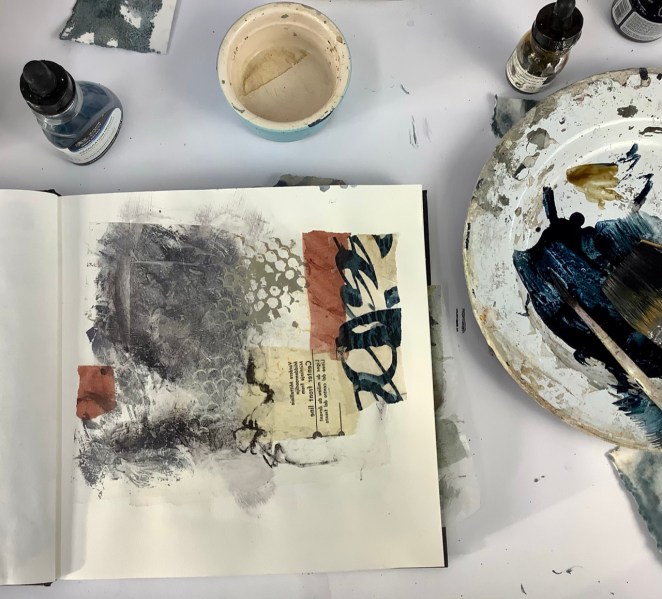
Chalk cliff, dark sea. Monoprint. Acrylic on tissue. © Mari French 2024

Due to ongoing family health issues I had to cut my time away short, only managing to get away for two full days. So I was determined to make as much use of the time as possible.

Accessing the many coves far below the cliffs was pretty strenuous, one involved 182 steep steps, but was well worth the effort. Views from the cliff tops are impressive but you need to get down to sea level if you can, to really appreciate the variety of limestone rock formations, multi-coloured sea-worn stones and deep caves; to experience the essence of the place.
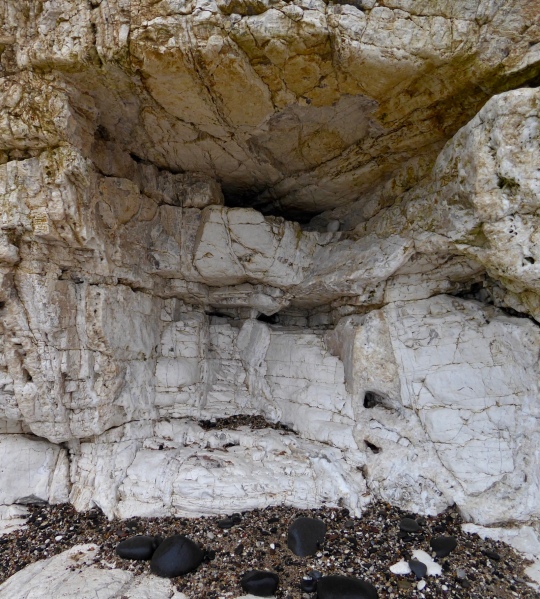
Sketching shelter, limestone ‘grotto’, Selwicks Bay, Flamborough Head.
© Mari French 2024

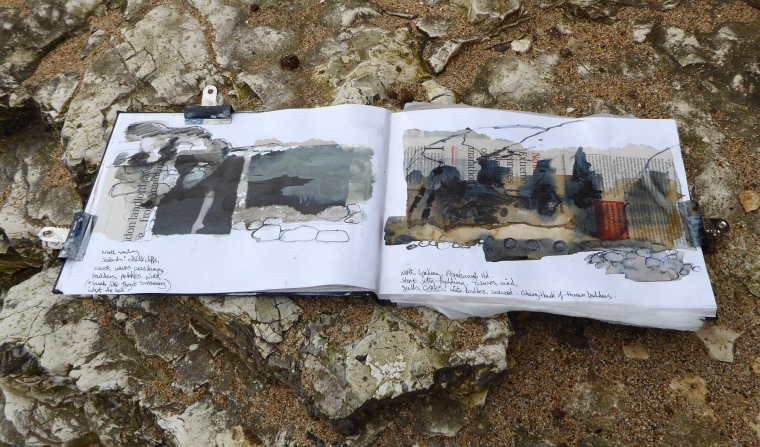
The weather was unseasonably cold and wet for May, with fog followed by sideways rain on the first day, although by the second day it was more changeable. I’d decided beforehand that I wanted to take gouache and collage with me, instead of my usual watercolour or acrylic ink. This soon proved to be a mistake, particularly perched awkwardly sketching in the rain, although a limestone ‘seat’ set back under an overhang was a very useful find. I’d enjoyed practising with the materials in the studio before I went away, and at the kitchen table in the holiday cottage in the evening, but outdoors they were an overworked mess.
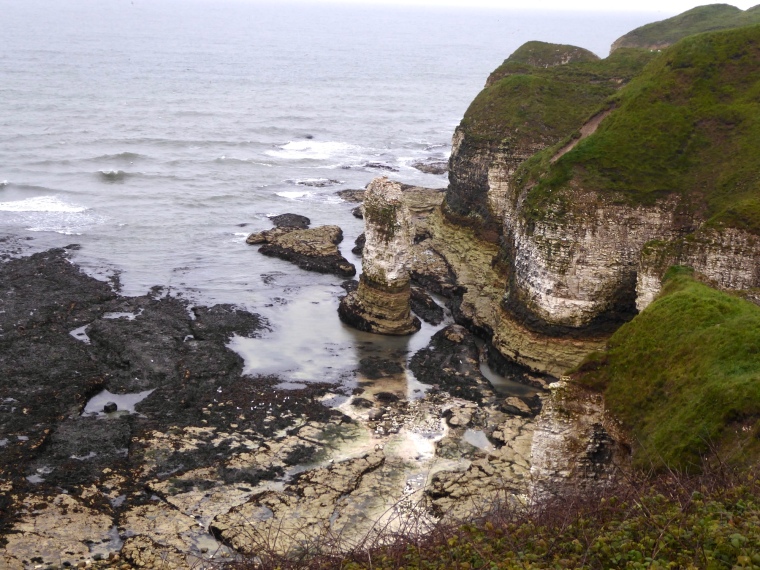
Selwicks Bay with sea stack, Flamborough Head. © Mari French 2024

However, as I’ve come to realise over the years, location sketches don’t have to be perfect as they will still capture valuable information and impressions that will feed into your memories when you want to take the subject further back in the studio.

For me, nothing beats the act of sketching outdoors on location to make me observe a subject more thoroughly, even when it turns out like the one below!
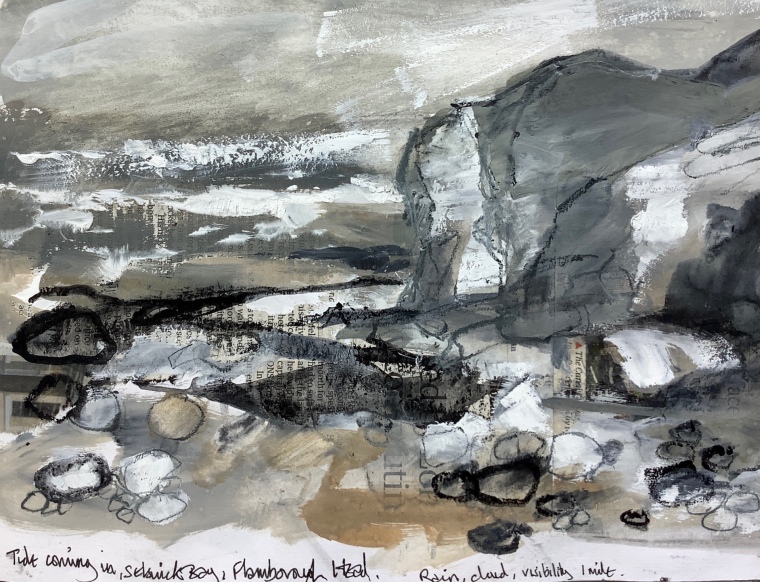
Tide coming in, Selwicks Bay. Gouache, ink block and newsprint, sketchbook.
© Mari French 2024

Observation & exploration …
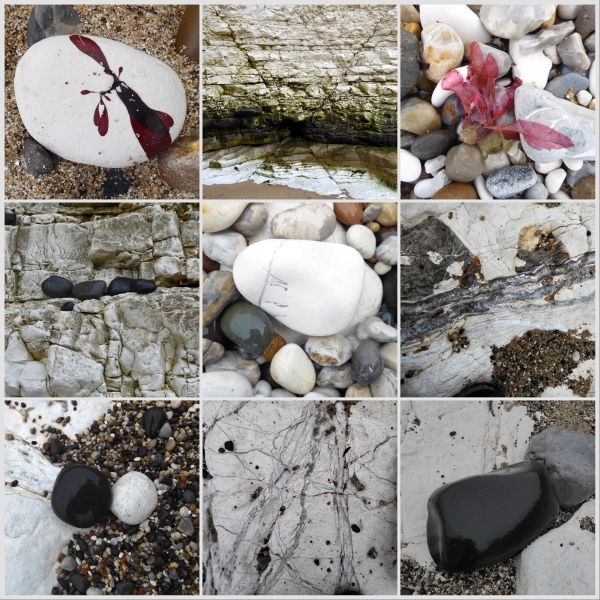
Pebbles, smooth stones and boulders, simple pale colours with veins of quartz and other minerals, strung like jewels in the fissures of rock.

My initial sketches/collages kept emerging as abstracted versions of the coves, bays and cliffs, which I suppose is understandable given their scale and drama and freshness to me. But I can see later work perhaps developing into explorations of the micro landscape that lay beneath my feet: pebbles, smooth stones and boulders, simple pale colours with veins of quartz and other minerals, strung like jewels in the fissures of rock.
Striations and fractures in rock faces and on the foreshore limestone ‘pavements’ meanwhile, will lend themselves to some interesting markmaking.
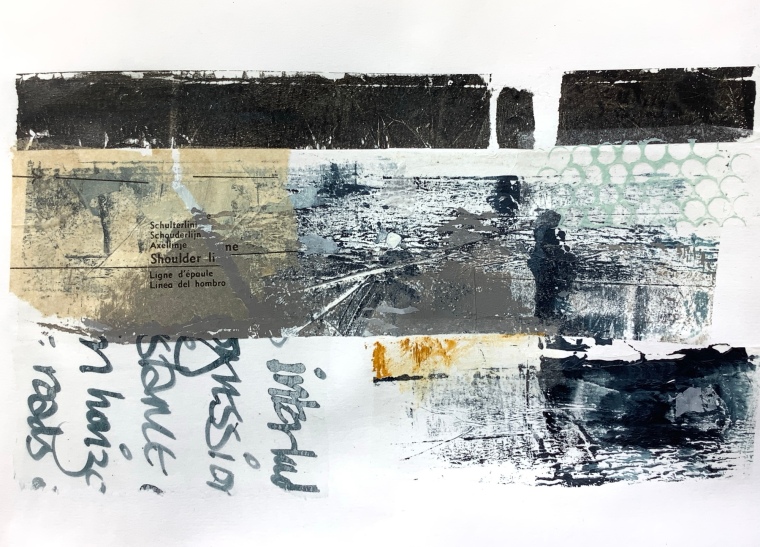
Collage with torn monoprint & calligraphy. Mari French 2024

Taking it forward …

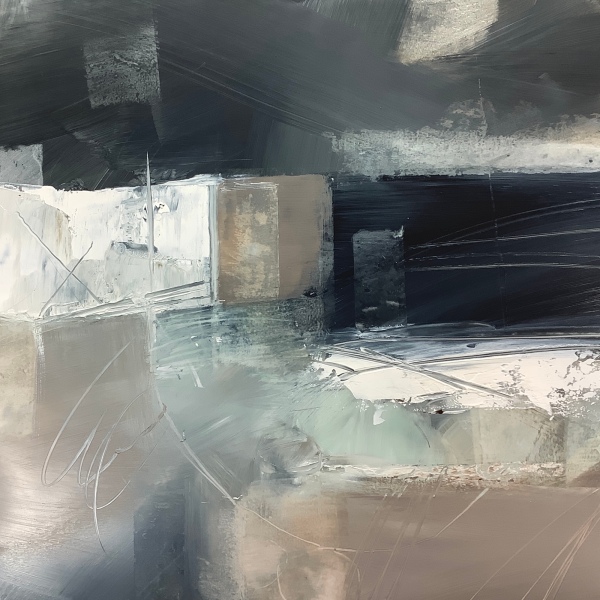
North Landing, Flamborough. Acrylic on Dura-lar. Mari French 2024

Back home in the studio I’m spending time working on those many impressions. Just now I’m trying out different media and methods till I find a combination that gives the results I want (not sure what they are, but I’ll know it when I see it).

Above, in acrylic paint on Dura-lar, a painting that recalls the moody light and weather of North Landing, Flamborough Head; Dura-lar is similar to drafting film and I love the way acrylic paint behaves on it; the way I can move and blend the paint, and scratch into it. Below, a monoprint in acrylic on tissue, created using a gelli plate.

I just wanted to share a few impressions of the many coves and cliffs around Flamborough Head that I’ve been working on since I returned. I’ll be posting more as I develop the series, on Instagram @marifrench and in a future post in this blog.

Thornwick Bay, Flamborough. Acrylic monoprint on tissue. © Mari French 2024
Limestone cliffs at Selwicks Bay, Flamborough Head. © Mari French 2024

Back to the Moors …

Featured

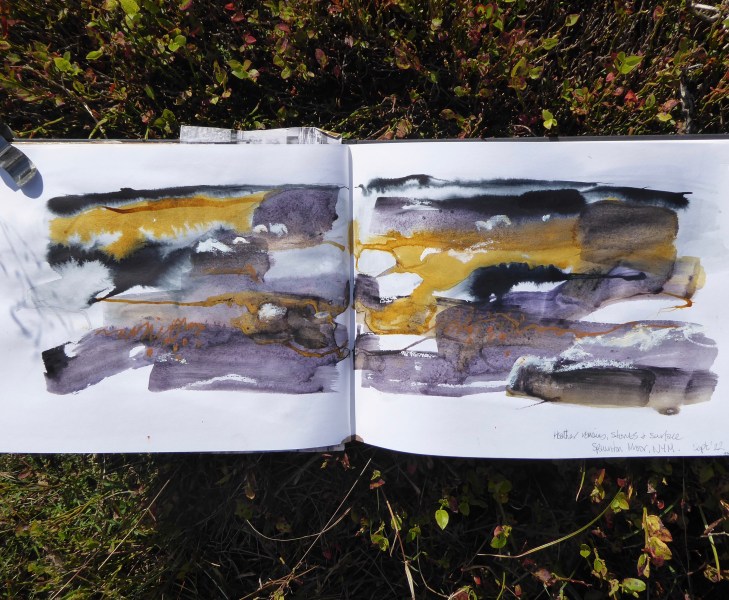
Sketchbook spread: Heather remains and stones, Staunton Moor, North York Moors. September 2022.

Fresh from a week away sketching in the glorious North York Moors, I’m now back in my studio working on a new series of ink/mixed media works on paper inspired by the wonderful array of textures, colours and shapes I encountered up there.

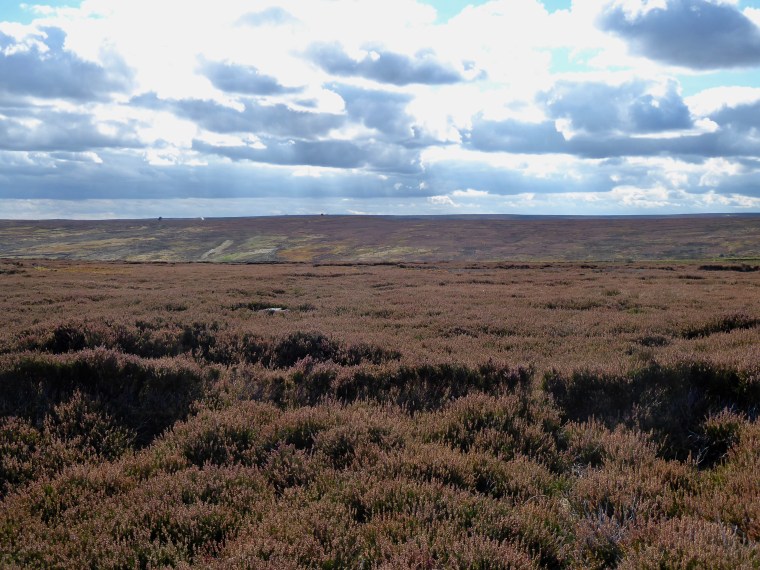
Autumn heather moorland above Rosedale, North York Moors.
© Mari French 2022.

I was staying at Rosedale Abbey, a small village about 30 minutes drive inland from Whitby on the northeast coast. I’ve stayed there before and you can read about my experiences (and see resulting work) in this post , this post and this post.
Rosedale is a beautiful peaceful valley now, with an interesting industrial past (remains of ironworks perch above it on the steep valley sides). This time though, I wanted to concentrate on the high moorland plateau, where the heather was just going over.

View towards Glaisdale Rigg, from Beacon Hill near Danby.
© Mari French 2022.

I took mainly Liquitex acrylic inks with me as I love their intensity of colour and pigment range, and a Seawhite sketchbook as I find they will take a lot of wet media and layers without disintegrating. Not sure if I’ve mentioned it before but I used to use watercolour pans while sketching outdoors, however I was often disappointed with the resulting paler, duller colours as the paint dried.
Acrylic inks give me that depth of pigment and keep it once dry, while also having the advantage of being amenable to working over with more ink or other media. The main disadvantage of course, is the heavier weight and bulk of little glass bottles of ink in my rucksack!

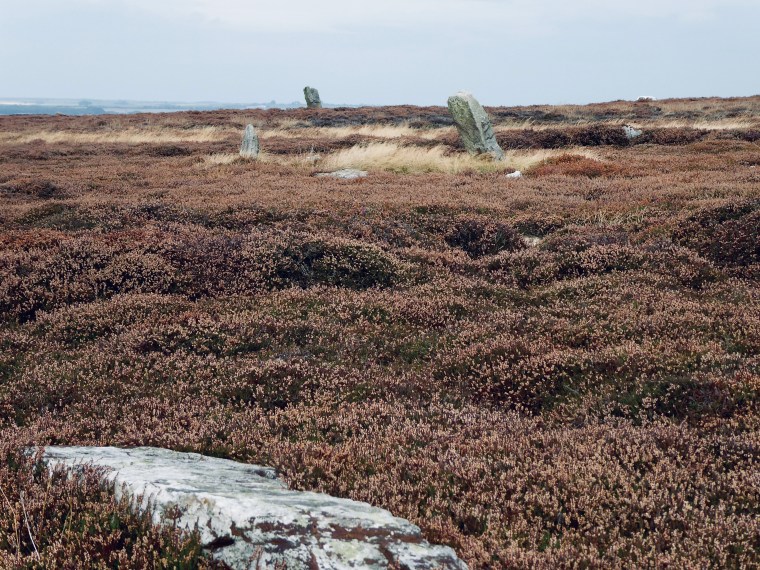
Bridestones, Sleights Moor, North York Moors. © Mari French 2022.

I love this landscape, particularly in the changing colours of the autumn. The North York Moors look deceptively flat in these photos but are actually a high plateau above deep fertile valleys. The whole moorland is a carpet of texture and colour, punctuated with waymarkers, rocky outcrops and standing stones. The russets and pinks of the fading heather contrast with dark rectangular areas of burnt ground. These are grouse moors and selective burning encourages the heather cover for the birds. I don’t agree with shooting for sport but the resulting patterns, textures and colours do provide interest for the abstract artist.

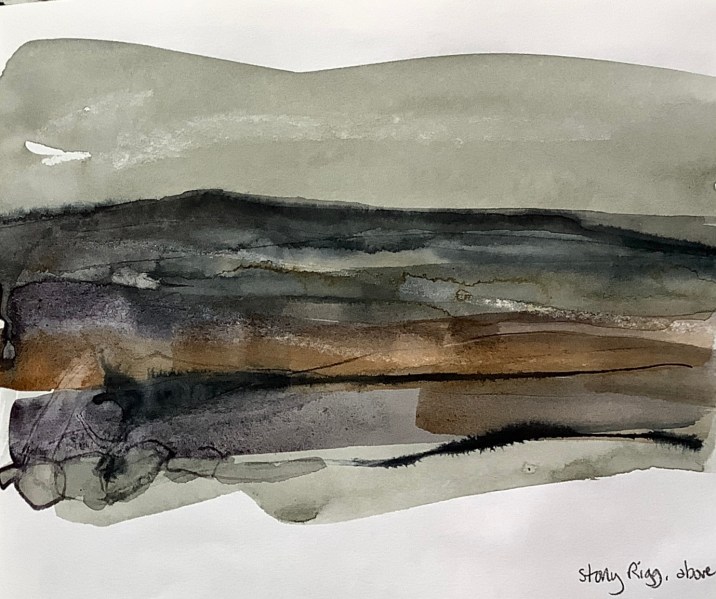
Stony Rigg, above Grosmont, North York Moors. © Mari French 2022.

Most of the week the weather was bright and sunny, great for a holiday, but a bit undramatic for my sketching at times – I get the most inspiration from dark moody skies. So I did spend a fair amount of time chasing big cloud shadows over winding moorland roads, avoiding sheep. Fortunately there is an awful lot of scenery and heart-stopping views on these stunning moors to discover. One of my favourite landscapes and no doubt I’ll be back!

View from Beacon Hill near Danby. © Mari French 2022.
Egton Moor, North York Moors. © Mari French 2022.

Cold feet … midwinter motivation

I’ve occasionally been working from home recently as the studio is just too cold (even with a log fire, oil-filled radiator and padded overalls; there’s obviously a drawback to having a big concrete space with high ceilings!). At my kitchen table last week I produced these two workbook collages on the theme of winter; early explorations for a project I’m going to be working on through January and February, which I’ll reveal more of at a later date.

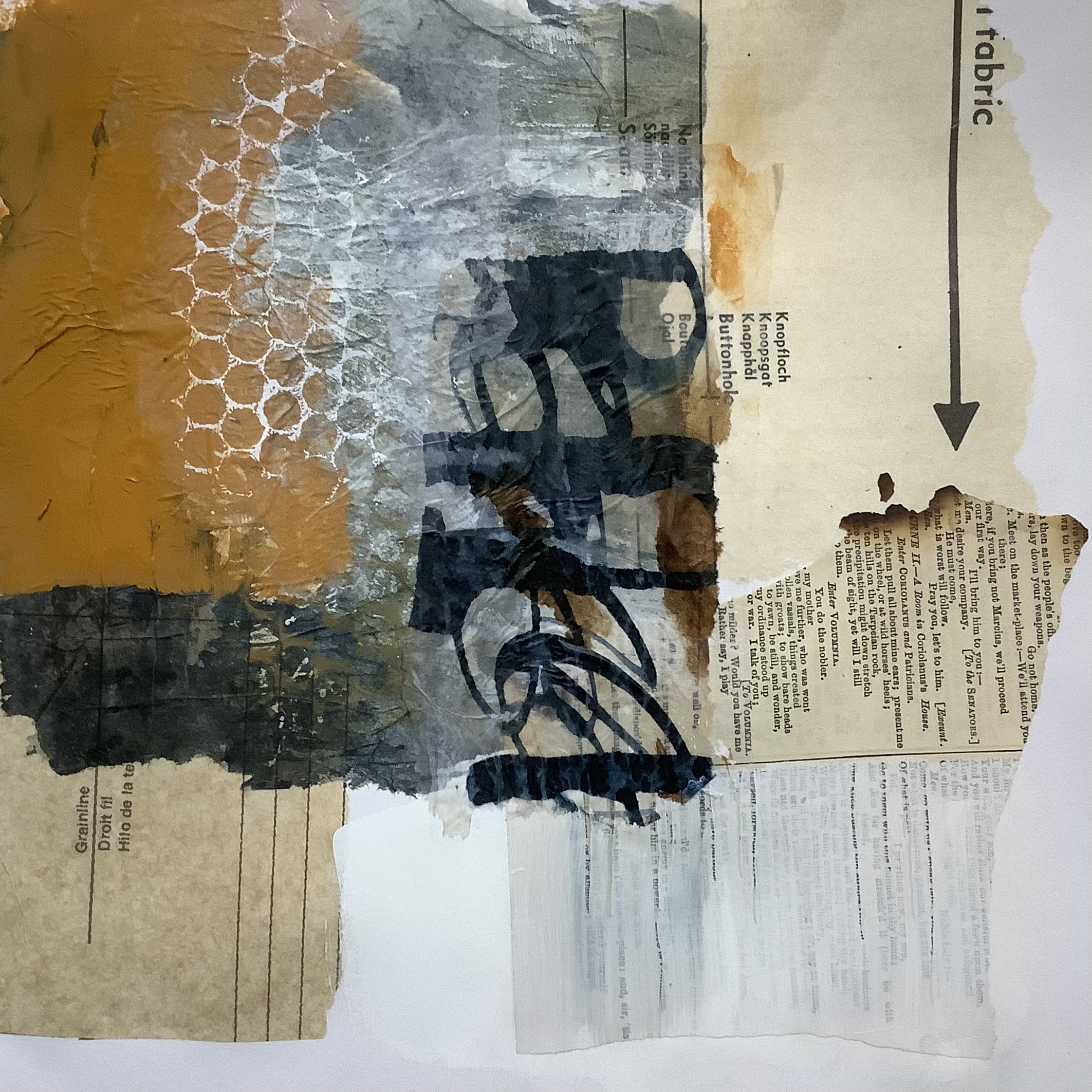
Workbook mixed media collage © Mari French 2021.

I like to keep a bag stuffed with collage materials, found and made, along with acrylic medium for pasting down, and favourite markmaking tools, markers, inks etc, at home so that I can always get some practice in between studio days.

Weather and light have always influenced my abstract landscapes and winter weather will be pretty much a dominant theme in my work for the next couple of months. Fortunately (for my work at least) we’ve had the whole gamut of winter variations here in the Norfolk countryside the past few weeks – fog, ice, frost, snow (not as much as some areas, yet), rain and bright sun but cold. It’s added interest to my walks round the local area, taking photos of details for inspiration, sometimes playing around with them in photo-editing apps to enhance and abstract them, which itself can suggest directions for work.

Photographic-collage-of-winter-weather-by-Mari-French-2021
Photographic collage of weather details © Mari French 2021.

In the winter months it can be difficult for me, like many artists, to work up the motivation to get into the studio, especially in cold weather, now that I live 4 miles away and can’t just pop in and out. This last year has been difficult enough, but add into the mix the fact that I live with anxiety and depression (managed well mostly, with medication) and the SAD (Seasonal Affective Disorder) I also suffer from during the darker months, and motivation can be quite a struggle. So how do I personally cope with it?

When I have to coax myself into the studio I try to pre-plan practical tasks to get started, such as prepping canvases and boards, creating colour mixes and swatches from new paint/ink colours (relaxing and satisfying!), or creating papers for collages. Telling myself that I’ll just do a couple of hours and head home can do the trick and I very often find myself forgetting about this once I get into the work and spend longer anyway, (I always make sure I’ve got milk for a brew and ingredients for a simple lunch in my bag, so I can stay on if I want to). Ironically, it’s often on these reluctant attendances at the studio that I produce my most satisfying work.

Workbook mixed media collage © Mari French 2021.

Keeping warm: even with a log fire and an oil-filled radiator it’s difficult keeping my workspace warm (it was built as part of a 1930s RAF airbase and was semi-derelict when I first came across it; even now after we’ve renovated most of it, there are many drafts from the windows and leaks from the roof during heavy rain). One of the best things I ever bought were my padded overalls (from Dickies I think, but there are other makes) – cosy and warm. I feel very workmanlike in them! I’ve also covered a large area of the concrete floor with that jigsaw-type rubber matting you can buy online. It’s used for all sorts of work places, inc gyms, play spaces, garages etc. Mine is in dark grey and not only helps keep my feet from freezing but reduces foot and leg strain when working at the easel.

Another thing I find helps me greatly, once in the studi, is to have a few good podcasts downloaded onto my ipad (which I always take with me, usually for photographing work). It can be a solitary business this artist life and it’s good to have some virtual company. I can really recommend the ones listed below:

Art Juice, with Alice Sheridan and Louise Fletcher
Waldy and Bendy Adventures in Art
Art Stuff

Workbook mixed media collage © Mari French 2021.

However you’re coping just now, I hope you’re managing to get some art done for yourself, and that some of my tips may have helped you with using your own workspace.

Happy art-making!
Mari