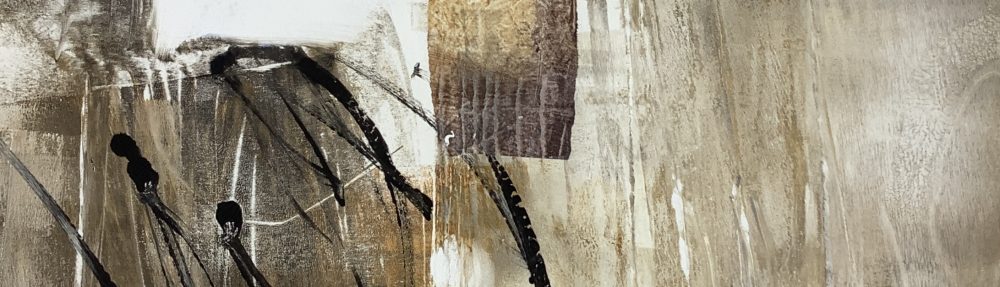
a saltmarsh is born…

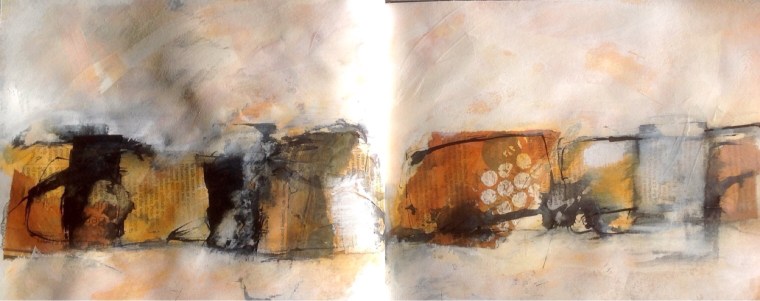
Subsequent tides. Mixed media on paper. © Mari French 2015

Subsequent tides. Mixed media on paper. © Mari French 2015

The following is an extract from an interesting post I recently came across, giving a useful insight into the saltmarsh coast of Norfolk, the subject of my current artworks :

November Saltmarsh

In Norfolk there are amazingly few habitats which are self-forming and self-maintaining – which therefore require no intervention from conservationists to keep them as they are – and almost all of them are associated with the sea, its winds, its waves and its tides.

… the tide … helps make two fascinating and oft-ignored Norfolk habitats. Two of the wildest, least human-led habitats in Norfolk at that: mudflat and saltmarsh. In areas sheltered from the intense energy of the waves, such as enclosed bays and the harbours behind spits, the finest sediments in the water – tiny particles of silt – are deposited at the top of the tide, where the water has least energy. These particles cling to one another and where they are not shifted by subsequent tides they form a tenuous, easily-moved mudflat. Where conditions allow, filamentous algae colonise the mudflat, followed by what botanists call glasswort and in Norfolk we call samphire. These plants stabilise the flat and encourage more silts and clays to settle.

A saltmarsh is born.

Nick Acheson, Norfolk Wildlife Trust

norfolkwildlifetrust.blogspot.co.uk
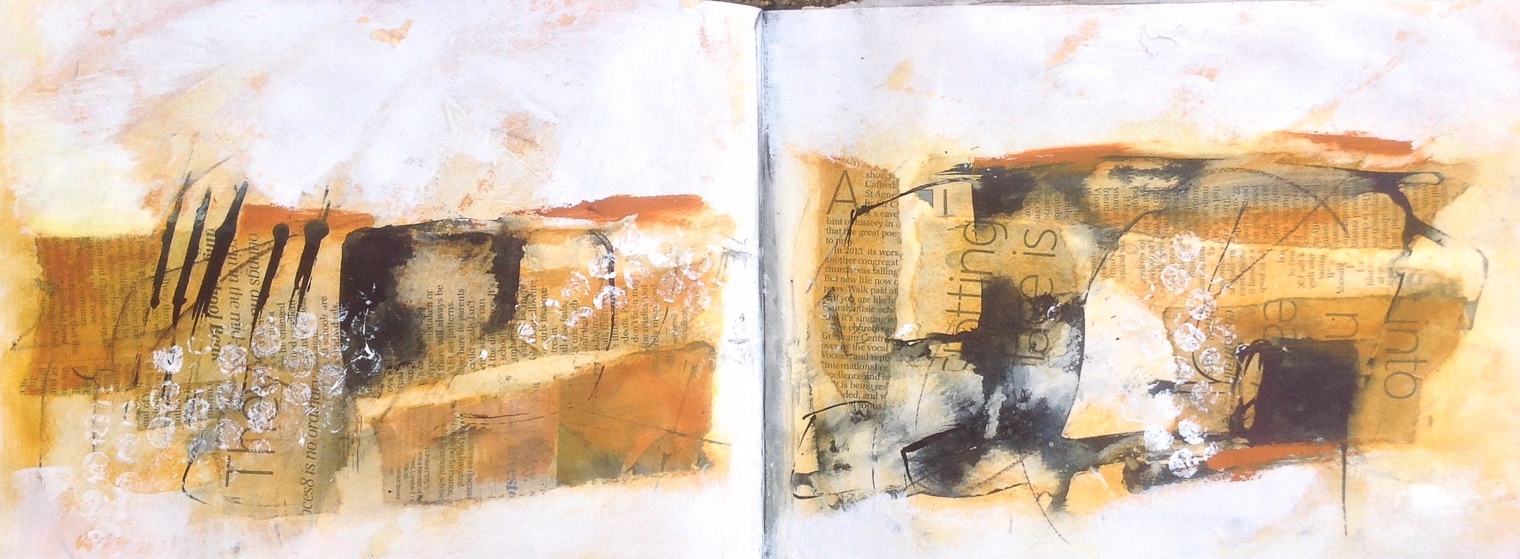
Overy Marsh. Workbook spread. © Mari French 2015
Overy Marsh. Workbook spread. © Mari French 2015


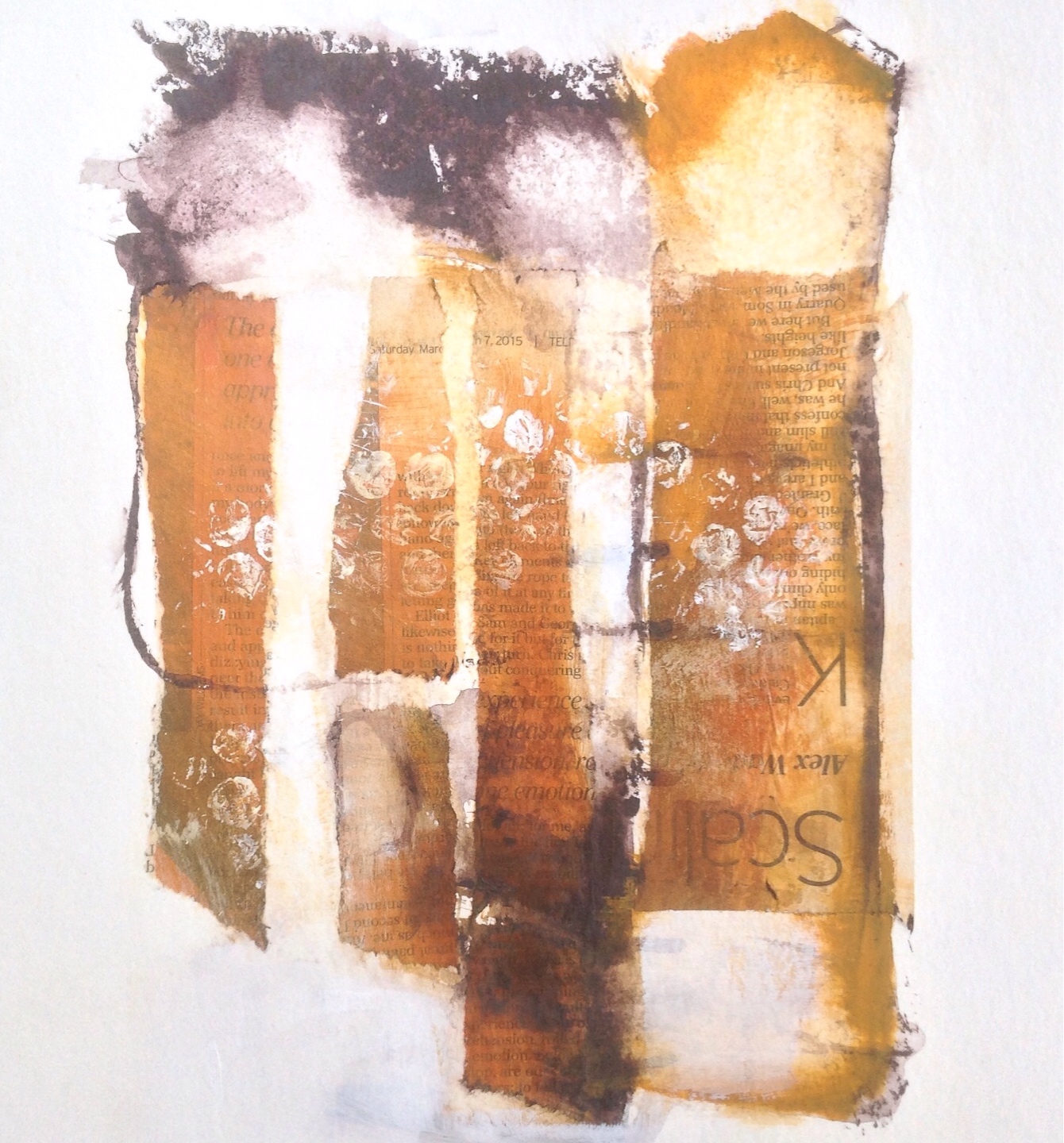
But here we are. Overy Marsh. Mixed media on paper. © Mari French 2015

But here we are. Overy Marsh. Mixed media on paper. © Mari French 2015

areas of light …

Progressing the experimental studies on the Norfolk salt marsh areas I’ve been concentrating on recently.  The intention is to create a body of work on this theme eventually. I feel I’m getting somewhere … I’m excited anyway, which is usually a good sign!

Areas of light. © Mari a French 2015

Areas of light. © Mari French 2015

Am still starting with the orange gold colour I’m so obsessed with at the moment, but now adding a few more subtle tones to that limited palette. The one above, Areas of light, is in acrylic, Inktense stick, gouache and newsprint on watercolour board. One for framing eventually I think. The abstract below has a different feel, more of a summer atmosphere perhaps.

Saltmarsh abstract © Mari French 2015

Saltmarsh abstract © Mari French 2015


Workbook spread © Mari French 2015

Workbook spread © Mari French 2015

 And above, another workbook spread on the same theme. I love the golden hues and contrasting dark ink in this.

One thing that bothers me is that each time I write a blog the images look squashed up and I cant figure out why. If they look odd to you, please do me a favour and leave a comment letting me know, thanks.

a wide open space …


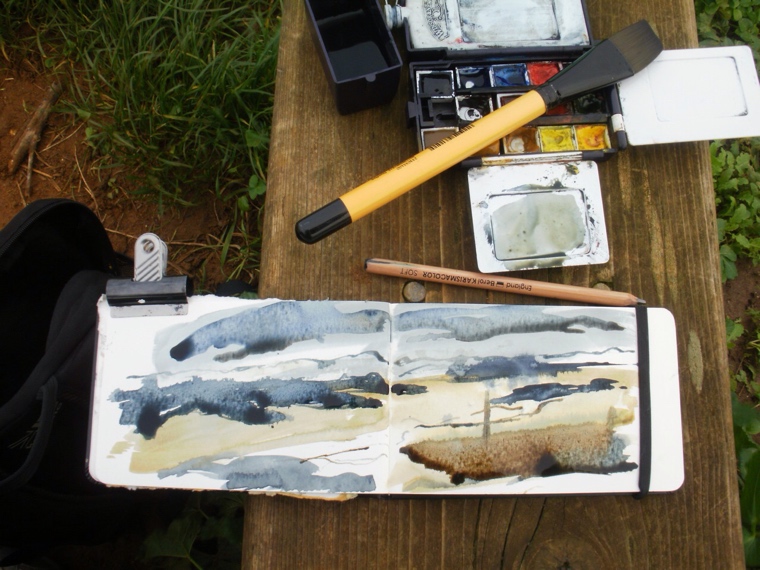
Sketchbook. Burnham Overy salt marsh, December.

Sketchbook. Burnham Overy salt marsh, December. Mari French 2014 

Recently on an overcast winter day I visited the small Norfolk coastal village of Burnham Overy Staithe and for the first time explored the salt marshes there along the path to the beach. I went back soon after on a cold but bright December day to do some sketching and photography. 

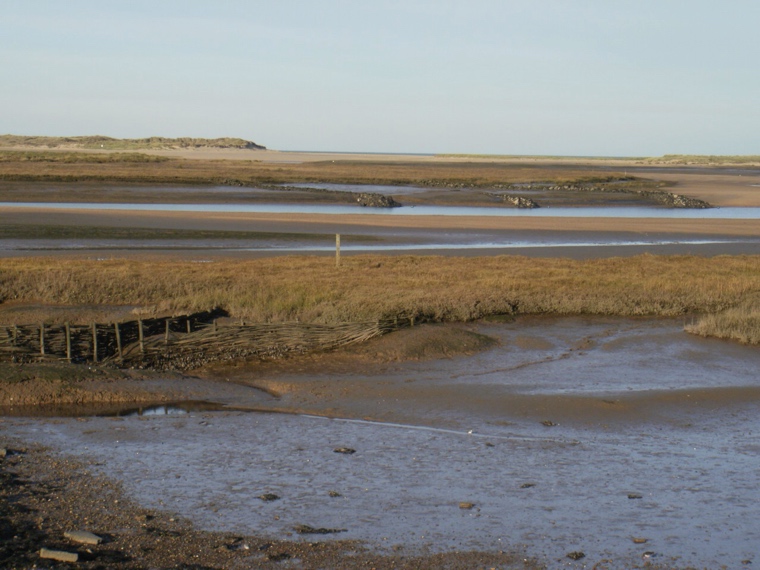
Such an exhilarating place, with the calls of the migrating geese, waders on the mud flats and sun in the reeds. I liked the sinuous shapes the left-behind creek water made in the tidal mud, with the delicate running patterns of prints from small sea birds; the way the wet mud reflects the blue sky with the brown water trickling through it.

Burnham_Overy_Staithe_December.JPG

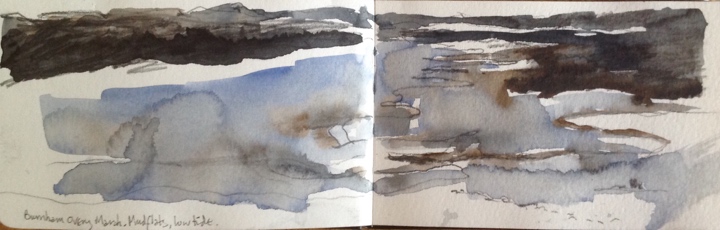
Burnham Overy marsh, low tide.

Burnham Overy marsh, low tide. Mari French 2014

My usual stomping and sketching ground is a few miles west at Thornham’s salt marsh area but the Burnham Overy marshes are different, with, depending on the tide, large areas of sand, tidal mud, saltwater lagoon, freshwater drainage channels fringed with silvery reed beds, grass pastureland grazed by flocks of overwintering pink foot and Brent geese. 

This wonderful variety can be easily enjoyed (and sketched, there are several nicely positioned benches too) from the 1 1/2 mile path along the sea defences to the sand dunes and beach. 

Sketchbook. Burnham Overy marsh, December.

Sketchbook. Burnham Overy marsh, December. Mari French 201 


Woven bank supports, Burnham Overy marsh.

Woven bank supports, Burnham Overy marsh. Mari French 2014 

Like much of the Norfolk Coast there is a wide open limitless feel to the landscape and sky here, which inspires me. The light on a clear day is amazing. 

Even in bad weather it’s endlessly interesting; I’ve always been intrigued by the decaying evidence of man’s work in the landscape and here the woven willow/hazel bank supports and stone breakwaters supply punctuation marks to the scene. This is clearly going to become an important area of source material for my work on salt marshes.

Woven bank supports, Burnham Overy marsh. Mari French 2014

Woven bank supports, Burnham Overy marsh. Mari French 2014


Reed_beds_Burnham_Overy_marsh.JPG

Reed beds, grazing geese, Burnham Overy marsh. Mari French 2014


Tidal mud, Burnham Overy marsh. Mari French 2014

Tidal mud, Burnham Overy marsh. Mari French 2014

Burnham Overy marsh, high tide.

Burnham Overy marsh, high tide. Mari French 2014