Revelations in the reedbeds …

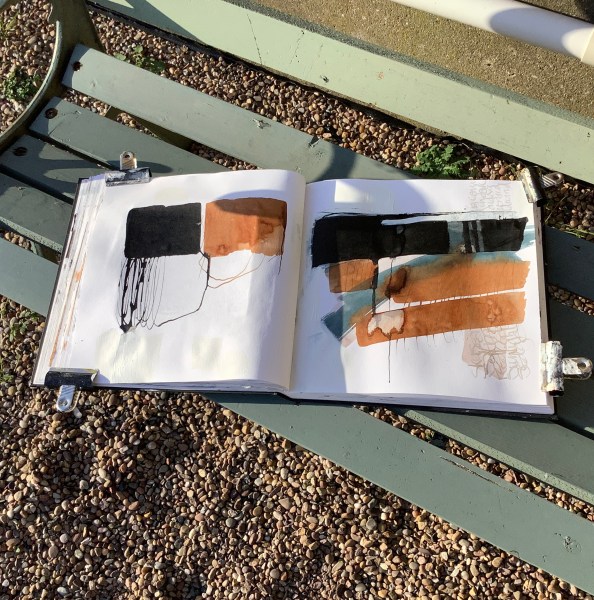
For the first time in months I went out sketching last week on the north Norfolk coast at Thornham, with its salt marsh, tidal creeks and reedbeds. It was a gloriously sunny day for November and (thankfully) I decided I couldn’t face the shady studio or staying indoors in my north-facing house on such a day.
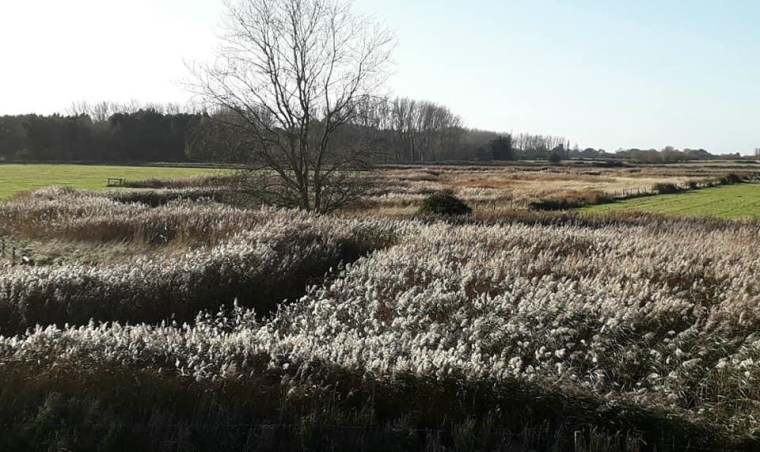
There are many reasons I’ve left it so long – I used to go out sketching each week and it was (is) an important part of my practice – but the truth is I just got out of the habit. Yet I felt so much clearer-headed and brighter once I was treading the familiar sea defences looking out to the horizon and down over the winter reeds.

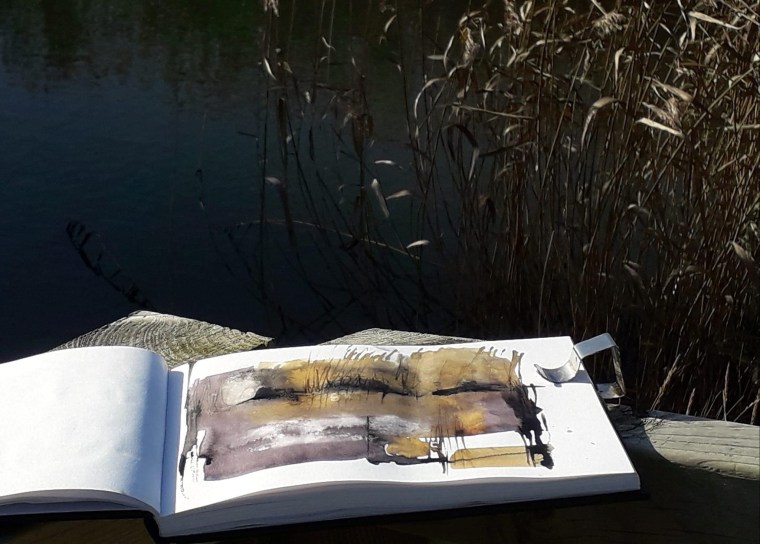
Despite the cold wind I found a little shelter in the sunlight next to a pool almost hidden in the reedbed, below the path. While a late dragonfly hovered in the sun and a large fish leapt out of the still water, I precariously balanced my sketchbook on a fence rail and set to work…

…and it is this point I’ve been thinking about since. I always tell myself and others that it’s the light and the landscape that compels me to paint; that I’m trying to instil in my mind what interests me in the scene, so that later I can retrieve and distil the impressions into a piece of studio work.
I still believe this, but now I realise it’s too simple an explanation – it doesn’t tell the whole story. There’s the pleasure I take in pausing to contemplate how I’m going to ‘interpret’ the scene whether with watercolour or acrylic ink; the joy of brushing water across the white page, into which I’m going to just touch the black ink block and watch it bleed out swiftly into the wet, or trail a loaded ink dropper through it and see the colour bloom swiftly outwards; the experience that, after years of trial and error, I now know that by moving a purple-grey ink into the wet area further down it will bleed upwards into the black, where I watch it pool and spread or run off wildly in a different direction; how colours will mix and back run.

This also happens whatever medium I’m using in the studio. There comes a point quite early in the process where I forget the original inspiration and an all-consuming pleasure in the media takes over; whether it’s dragging acrylic paint across a prepared canvas with a big brush, pasting selected newsprint onto the work, scratching marks into wet paint, or scraping colour away to reveal stained texture below.

Of course, like all artists, there are times the process doesn’t work for me and pleasure turns to frustration, but when it does work there’s nothing like it.
Back to the Moors …

Featured

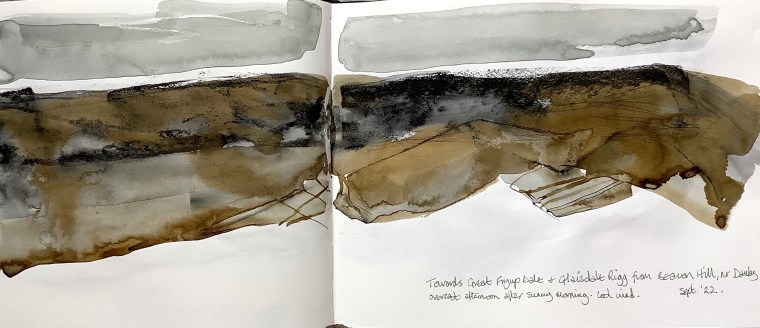
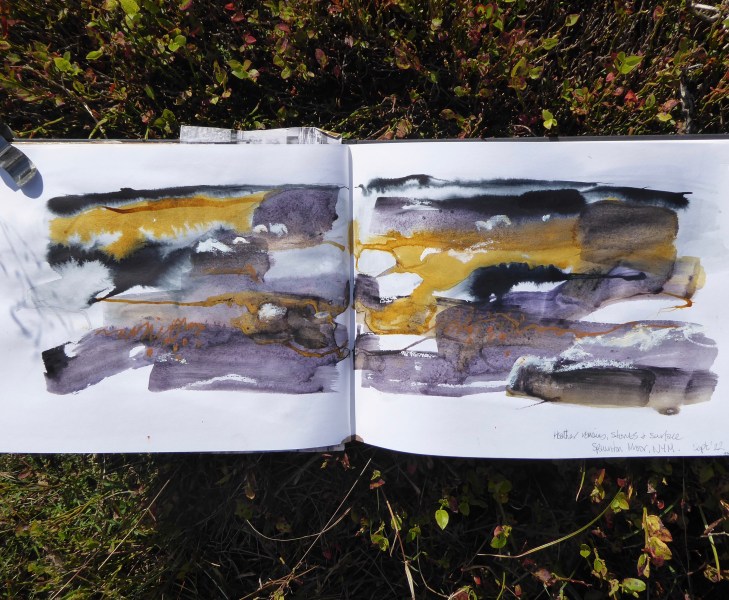
Sketchbook spread: Heather remains and stones, Staunton Moor, North York Moors. September 2022.

Fresh from a week away sketching in the glorious North York Moors, I’m now back in my studio working on a new series of ink/mixed media works on paper inspired by the wonderful array of textures, colours and shapes I encountered up there.

Autumn heather moorland above Rosedale, North York Moors.
© Mari French 2022.

I was staying at Rosedale Abbey, a small village about 30 minutes drive inland from Whitby on the northeast coast. I’ve stayed there before and you can read about my experiences (and see resulting work) in this post , this post and this post.
Rosedale is a beautiful peaceful valley now, with an interesting industrial past (remains of ironworks perch above it on the steep valley sides). This time though, I wanted to concentrate on the high moorland plateau, where the heather was just going over.

View towards Glaisdale Rigg, from Beacon Hill near Danby.
© Mari French 2022.

I took mainly Liquitex acrylic inks with me as I love their intensity of colour and pigment range, and a Seawhite sketchbook as I find they will take a lot of wet media and layers without disintegrating. Not sure if I’ve mentioned it before but I used to use watercolour pans while sketching outdoors, however I was often disappointed with the resulting paler, duller colours as the paint dried.
Acrylic inks give me that depth of pigment and keep it once dry, while also having the advantage of being amenable to working over with more ink or other media. The main disadvantage of course, is the heavier weight and bulk of little glass bottles of ink in my rucksack!

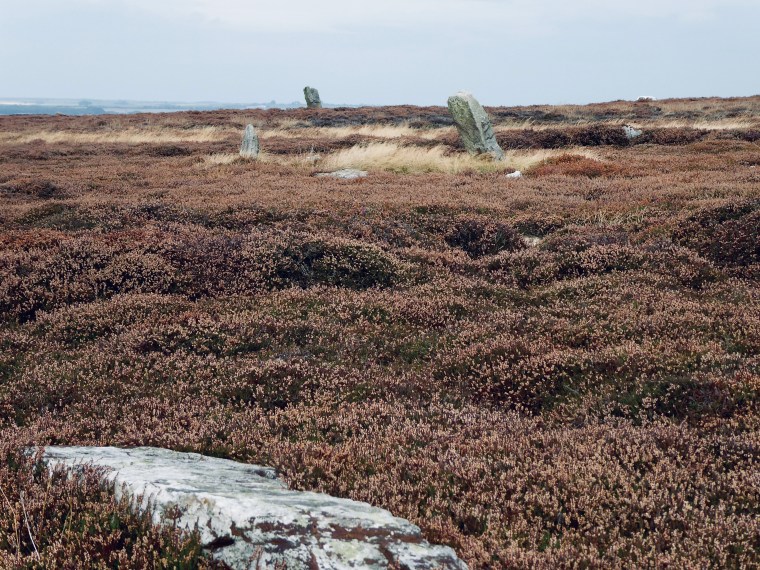
Bridestones, Sleights Moor, North York Moors. © Mari French 2022.

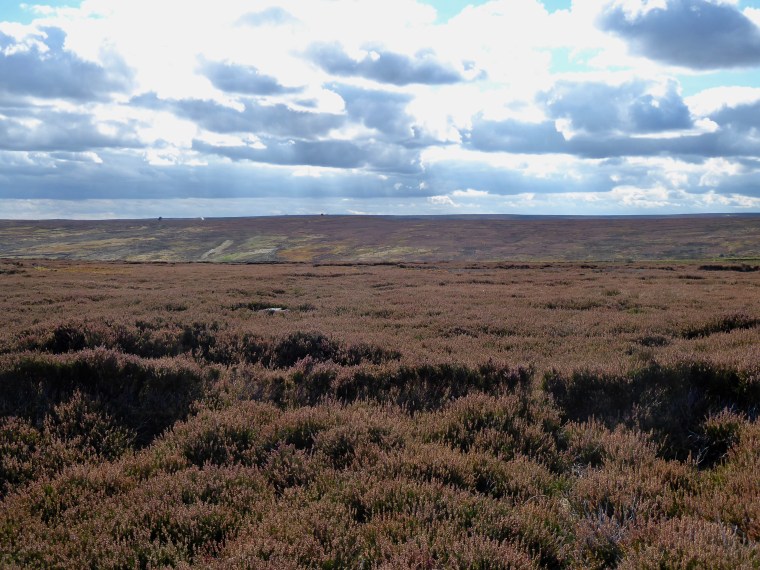
I love this landscape, particularly in the changing colours of the autumn. The North York Moors look deceptively flat in these photos but are actually a high plateau above deep fertile valleys. The whole moorland is a carpet of texture and colour, punctuated with waymarkers, rocky outcrops and standing stones. The russets and pinks of the fading heather contrast with dark rectangular areas of burnt ground. These are grouse moors and selective burning encourages the heather cover for the birds. I don’t agree with shooting for sport but the resulting patterns, textures and colours do provide interest for the abstract artist.

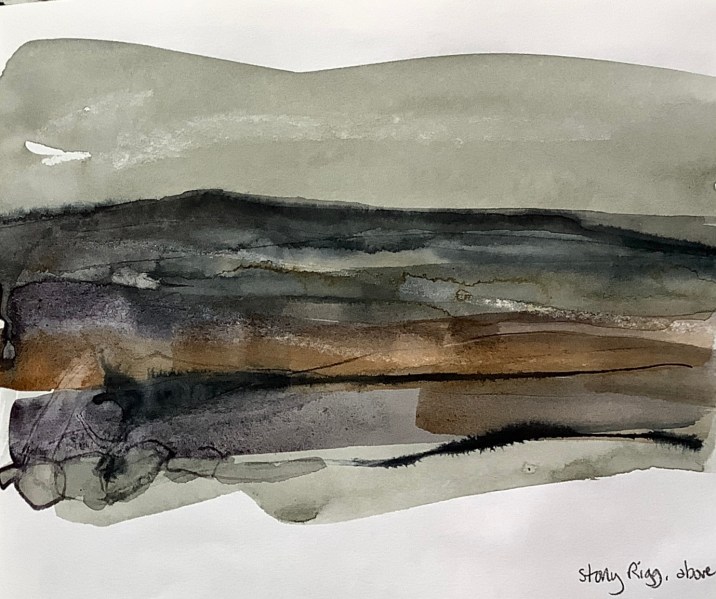
Stony Rigg, above Grosmont, North York Moors. © Mari French 2022.

Most of the week the weather was bright and sunny, great for a holiday, but a bit undramatic for my sketching at times – I get the most inspiration from dark moody skies. So I did spend a fair amount of time chasing big cloud shadows over winding moorland roads, avoiding sheep. Fortunately there is an awful lot of scenery and heart-stopping views on these stunning moors to discover. One of my favourite landscapes and no doubt I’ll be back!

View from Beacon Hill near Danby. © Mari French 2022.
Egton Moor, North York Moors. © Mari French 2022.

Ink to make you blink…

New light. Acrylic ink & collage on watercolour paper, 26x34cm. © Mari French 2022

Right now I just love working with acrylic ink on watercolour paper; the medium is perfect for using wet-in-wet, with a dry brush, making marks, or layering translucent areas. I’ve used acrylic ink before as part of mixed media artworks, but lately it’s become the leading player in my painting. It seems particularly suited to my current obsession with the pools and creeks of bright water on the North Norfolk coastal salt marshes.

These are a few of my latest abstract ink works. The limited palette, the washes, bleeds and back runs really appeal to me. I’m trying to capture a sense of the mercurial light on these areas of water on the marshes; mirrors of the sky which fill and empty with the highest tides.

Salt and sky. Acrylic ink & collage on watercolour paper, 26x34cm. © Mari French 2022

It can be quite meditative building up the layers of ink, the combination of control and serendipity, and I just love the way the ink reacts to the grain of the watercolour paper and the sparkle that results from the brush skipping over the texture.

Although I still add a little collage to the works, I’ve also started to apply calligraphy directly instead of onto tissue paper first as I normally do. The words come from my impressions of the location on the day I’m there, often from my sketchbook notes. Like a meditative chant, they evoke the weather, atmosphere, elements and my thoughts on the landscape that occur while I’m sketching on location.

Reflections. Acrylic ink on watercolour paper, 26x34cm. © Mari French 2022
Sketchbook pages with acrylic ink © Mari French 2022
Thornham creek and salt marsh © Mari French 2022

Below are a couple of larger ink works on paper in a very limited palette, which may be the next stage I’m working towards, or perhaps a valid part of the same series. I’ve altered one of my location photos (above) to show one of my favourite areas of inspiration – Thornham creek and marsh, on the North Norfolk coast, and you can probably see where these last two paintings are coming from.

The creek fills with light. Acrylic ink on watercolour paper, 42x60cm. © Mari French 2022
Angle of light. Acrylic ink on watercolour paper, 42x60cm. © Mari French 2022

Some of these works are available on my website www.marifrench.com Do let me know if you are interested. In the meantime let me know if you enjoy working with acrylic ink too.