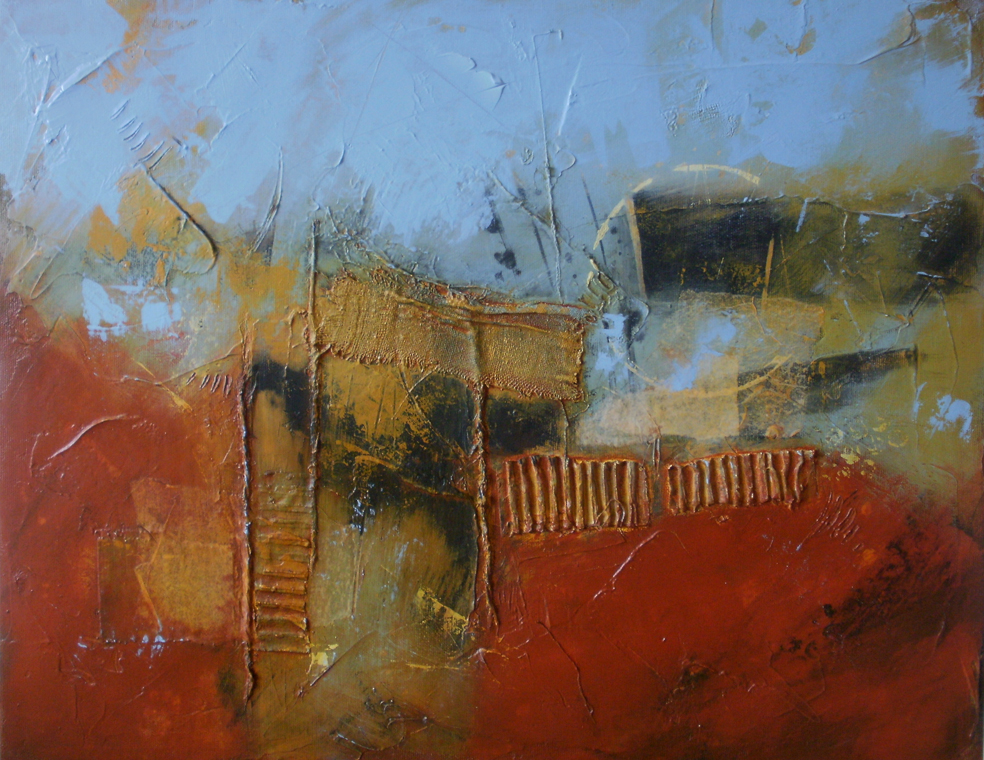
september 2011 © Mari French
My response to the remains of the industrial tin mining landscape of Cape Cornwall… its dangerous, poignant and poisonous history (see my previous post).
An acrylic and mixed media work on deep-sided canvas 40x50cm.
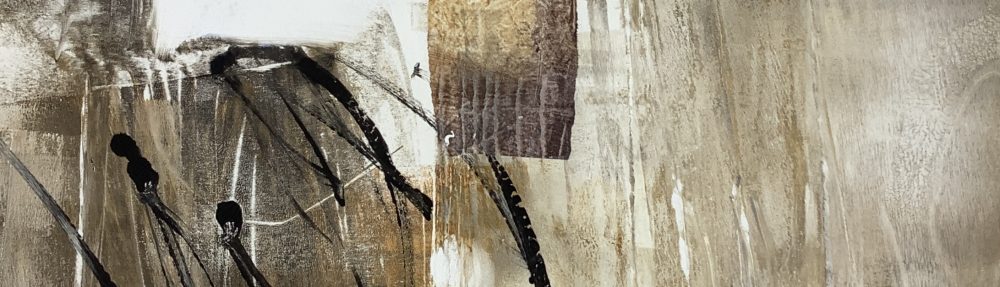
september 2011 © Mari French
My response to the remains of the industrial tin mining landscape of Cape Cornwall… its dangerous, poignant and poisonous history (see my previous post).
An acrylic and mixed media work on deep-sided canvas 40x50cm.
In early September I spent a week on the Penwith peninsula of Cornwall. This area is well-known for its stunning coastline, artists and the many standing stones and stone circles.
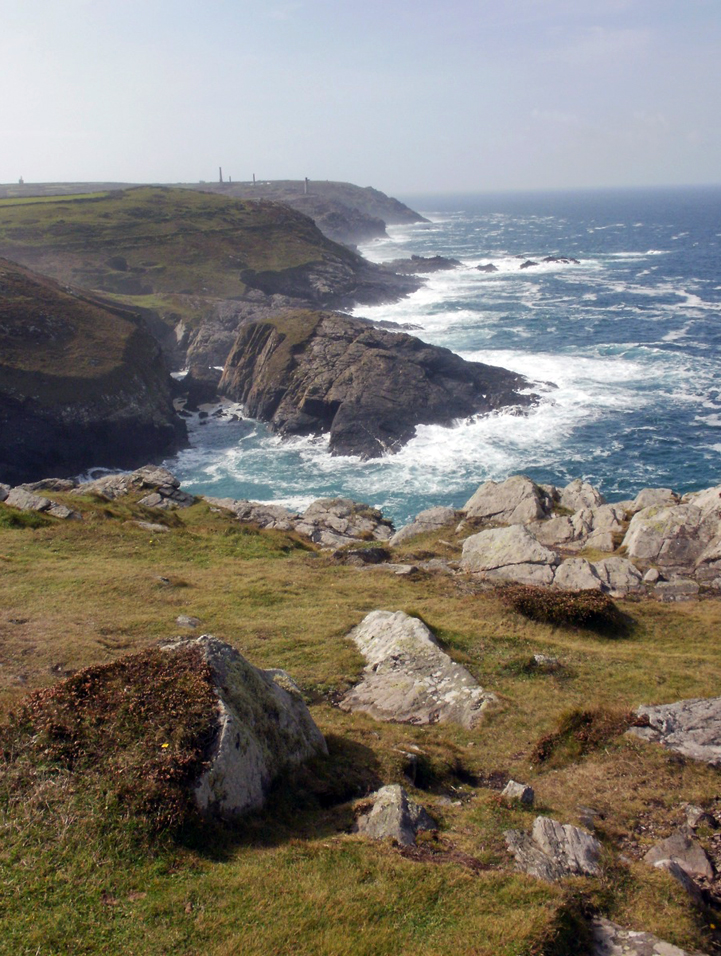
Cape Cornwall from Pendeen Lighthouse © Mari French 2011

Sketch of Cape Cornwall, from Pendeen Watch © Mari French 2011
At St Ives I visited the 150 year old art studios at Porthmeor, with their large boarded sail-loft type spaces and huge seaward windows overlooking the Atlantic rollers on Porthmeor beach. Really difficult not to be envious of such light and space for painting. One of the artists, John Emanuel, originally from Cumbria, has been resident at the studios for 30 years. He had a fascinating book of photos of the studio interior recently published so I bought a copy.
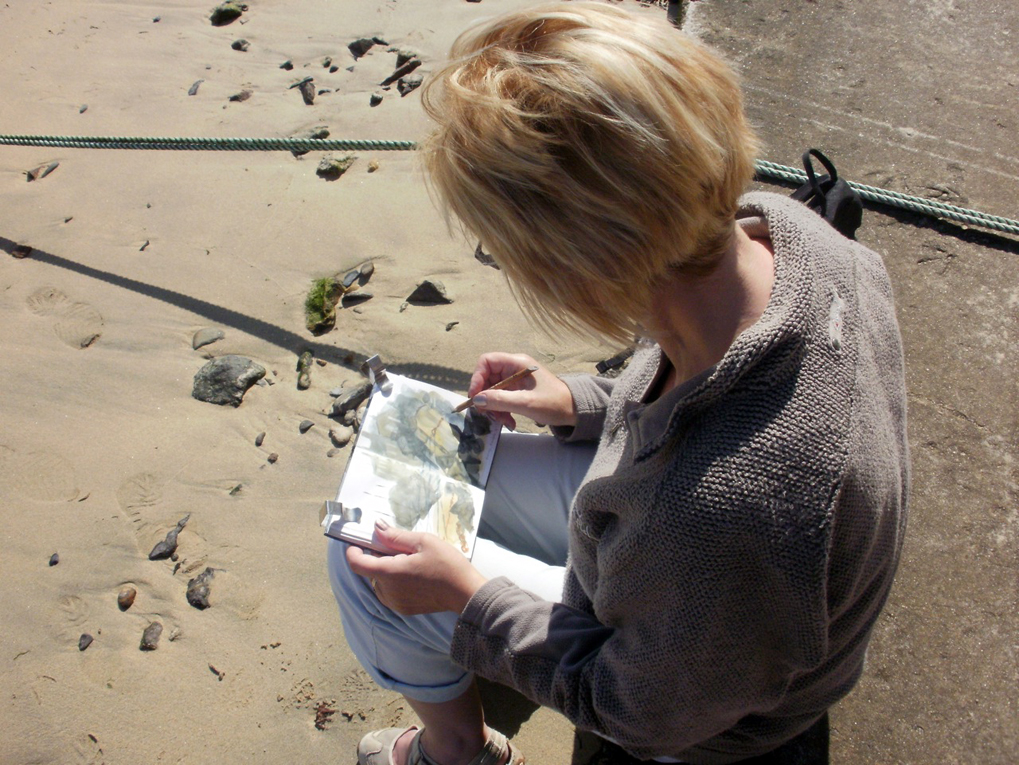
Sketching at Mousehole, Cornwall © Mari French 2011
I also spent a glorious couple of days tracking down some of the industrial archaeology of the area’s past – tin mines, near Land’s End, which I wanted to sketch. Levant mine, on the coast between St Just and Pendeen is now a National Trust site but this didn’t intrude on the potent atmosphere of the ruined engine houses, chimneys and arsenic works.

Ruins, Levant mine, Cornwall © Mari French 2011
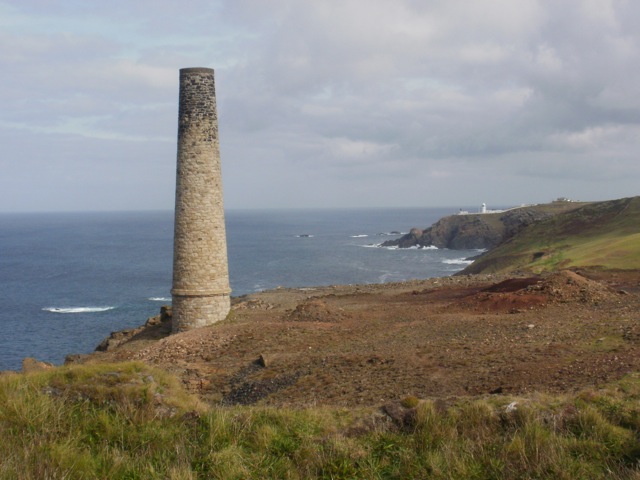
mine chimney, Cape Cornwall © Mari French 2011
The spectacular setting, on the coastal path high above the sea, added to the sense of drama… a gift to the artist and photographer, although I didn’t see much evidence of the industrial side of Cornwall in the galleries at St Ives.
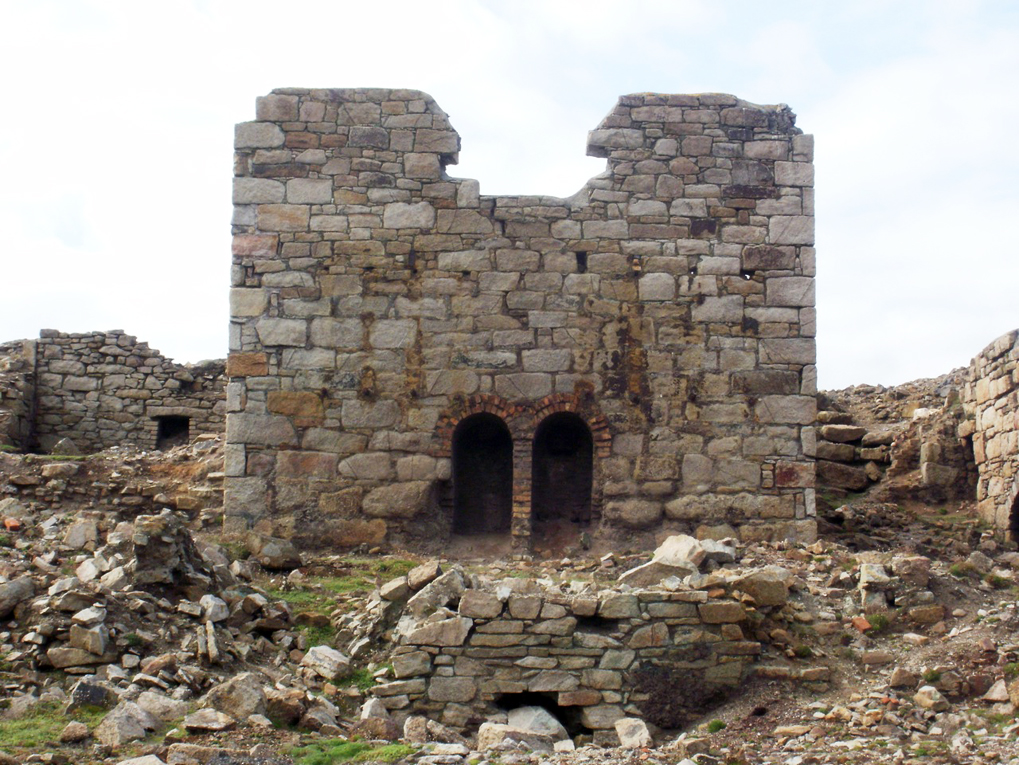
ruined arsenic works, Levant mine, Cornwall © Mari French 2011
Levant mine originally worked copper till the 1850s, then tin. Arsenic produced as a by-product of the tin mining was, horrifyingly, scraped off the inside of the chimney by men and young boys, by hand, with little more than a cloth to protect their breathing. The arsenic was produced for dyes, pesticides and medicine!

Sketch of Levant Mine, Cape Cornwall © Mari French 2011
I was excited by the vivid red and ochres, both in the buildings and bleeding through the ground of this eerie landscape. Beautiful and potentially lethal…
…an interesting possibility for a body of work I thought, also appreciating the contrast of the industrial subject within the landscape.
Traces of jewel-like minerals can easily be found in the scattered rocks and the earth around the site.
Even the bracken and other vegetation on the moorland above the mine seemed to mirror the colours of the earth and ores.
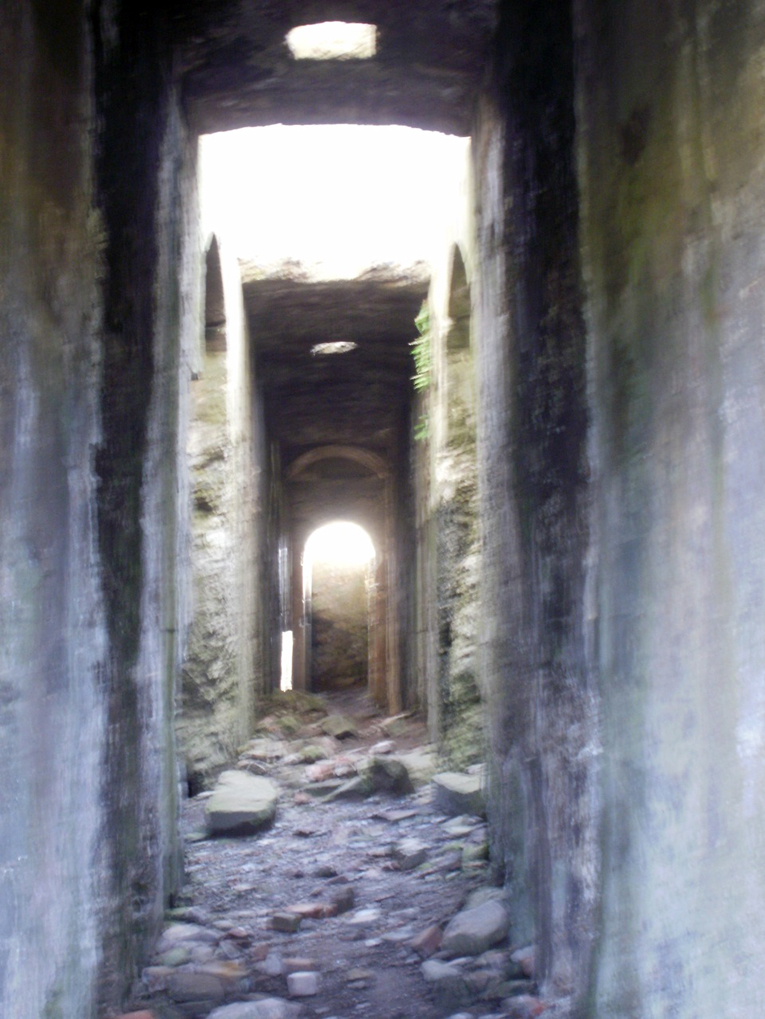
interior of ruined mine - Levant mine, Cornwall © Mari French 2011

rocks at Levant mine, Cape Cornwall © Mari French 2011

Levant Mine, Cape Cornwall © Mari French 2011

Harvest moon 2 (collagraph) © Mari French 2011
Last weekend I enjoyed the most inspiring and creative weekend collagraph printmaking workshop with Laurie Rudling at Salthouse, north Norfolk. The workshop was incredibly good value for money, being heavily subsidised as part of the Salthouse 11 art project. Laurie is an incredibly professional printmaker and effectively passes on his knowledge in an enthusiastic, instructive and effective way, packing a lot into the two day workshop.
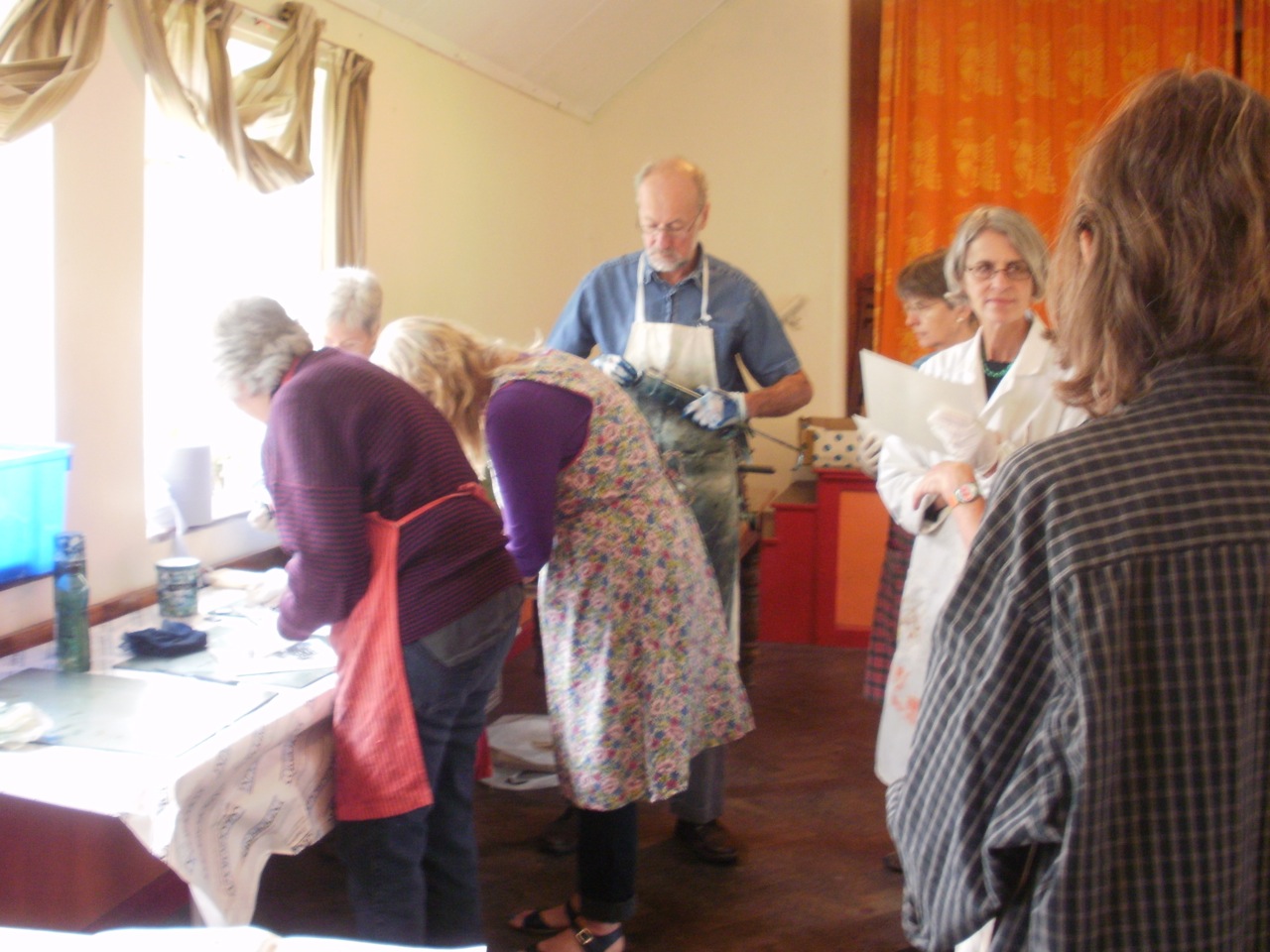
Collagraph workshop with Laurie Rudling (© Mari French)
Collagraphs are a method of (intaglio) printmaking created by collaging materials of a similar thickness, eg bits of sandpaper, wallpaper samples, muslin cloth etc, onto a simple (in this case cardboard) plate, creating textures and shapes that will show up when inked and passed through a press. The ‘plate’ is then varnished to make it more durable for inking and printing. Approx 15 to 25 prints are possible from such a plate.
Collagraph printmaking can also be kinder to the environment too, in that it uses no harsh chemicals such as acid, it makes use of scrap materials and the oil-based ink can be efficiently cleaned with simple vegetable oil.
Below you can see the basic collagraph plate from which I produced the ‘Harvest moon’ prints in this post. What I found most fascinating is that the most humble and unpromising materials can result in really interesting textures in the resulting print. The sky on this plate is sandpaper, the lower ‘field’ textures are scraps of B&Q wallpaper samples.

basic collagraph plate - 'Harvest moon', Mari French
Once inked up the ink is forced into the indentations and textures of the plate, as opposed to relief printmaking (such as linocuts), where the ink sits on top of the raised areas. To oversimplify, colours are added by either sweeping a contrasting ink colour over the first or by diligently inking up individual areas in different colours.
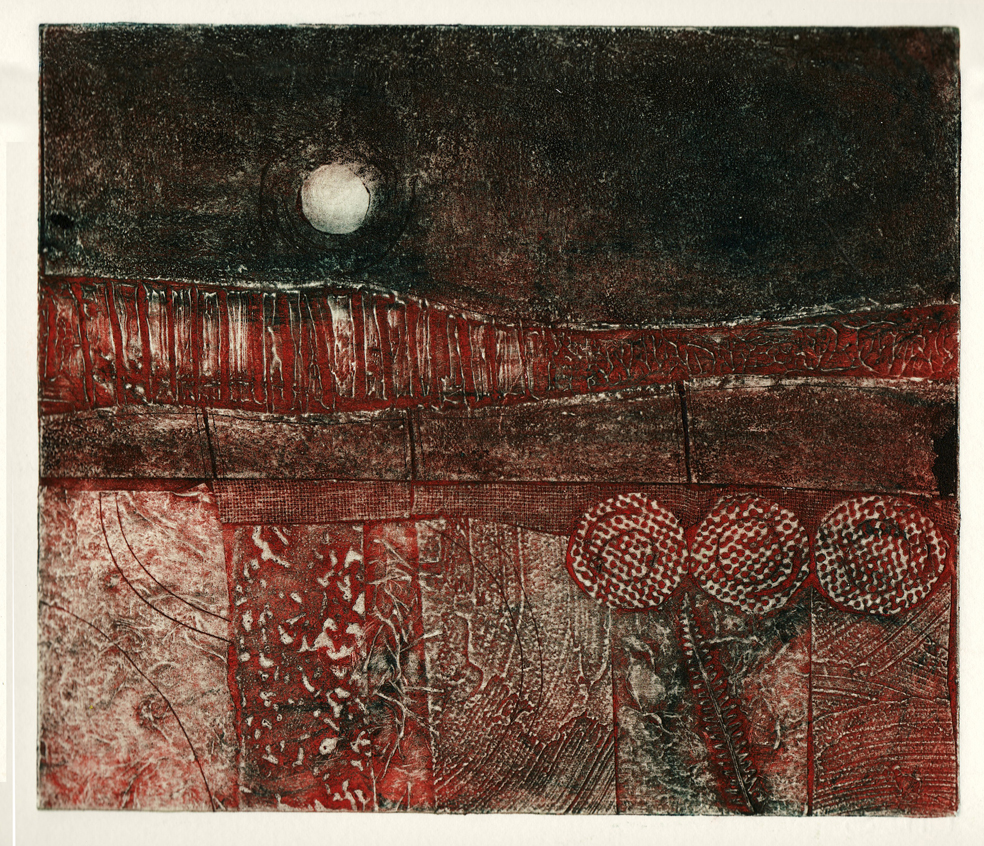
Harvest moon 3 (collagraph) © Mari French 2011
The method of building up overlapping layers, creating further shapes, is an alternative method of collagraph platemaking shown in the second ‘Arches’ plate below left.
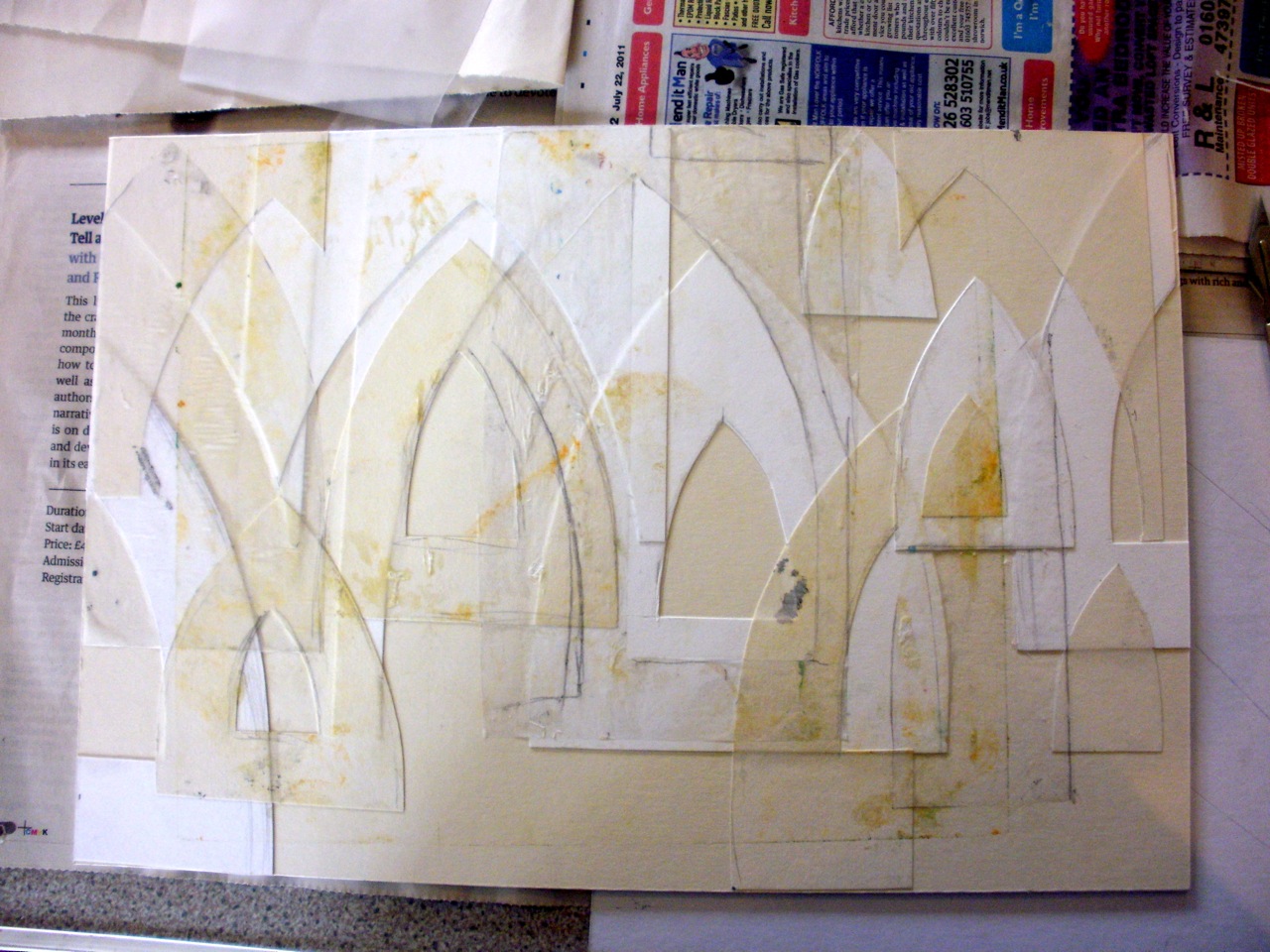
simple layered collagraph plate (Arches © Mari French)
I found it fascinating that by ‘playing’ around like schoolchildren with bits of paper, glue and scissors, it was possible to produce such creative prints.
Although most of the students on the workshop were artists or had some creative experience, none of them had made collagraphs before. Yet as you can see from the photos of some of their work further down this post, they produced some stunning collagraph prints.
Much of this was due to the encouragement, patience and experience of our tutor. Laurie Rudling also holds workshops at the Broadland Arts Centre at Dilham near North Walsham in Norfolk.
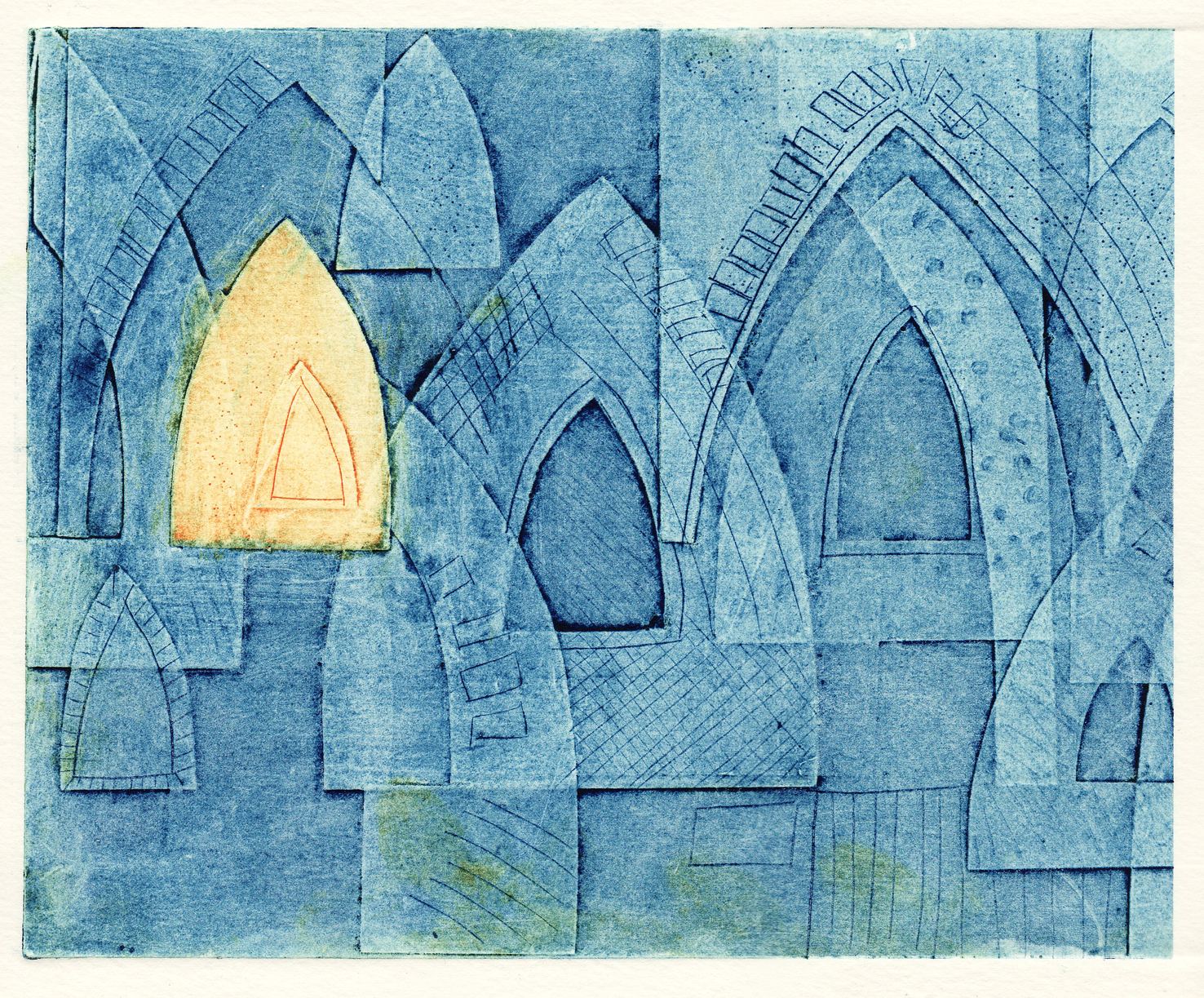
Arches (collagraph) © Mari French 2011

Poppy collagraph prints produced by fellow student Dee (photo © Mari French)
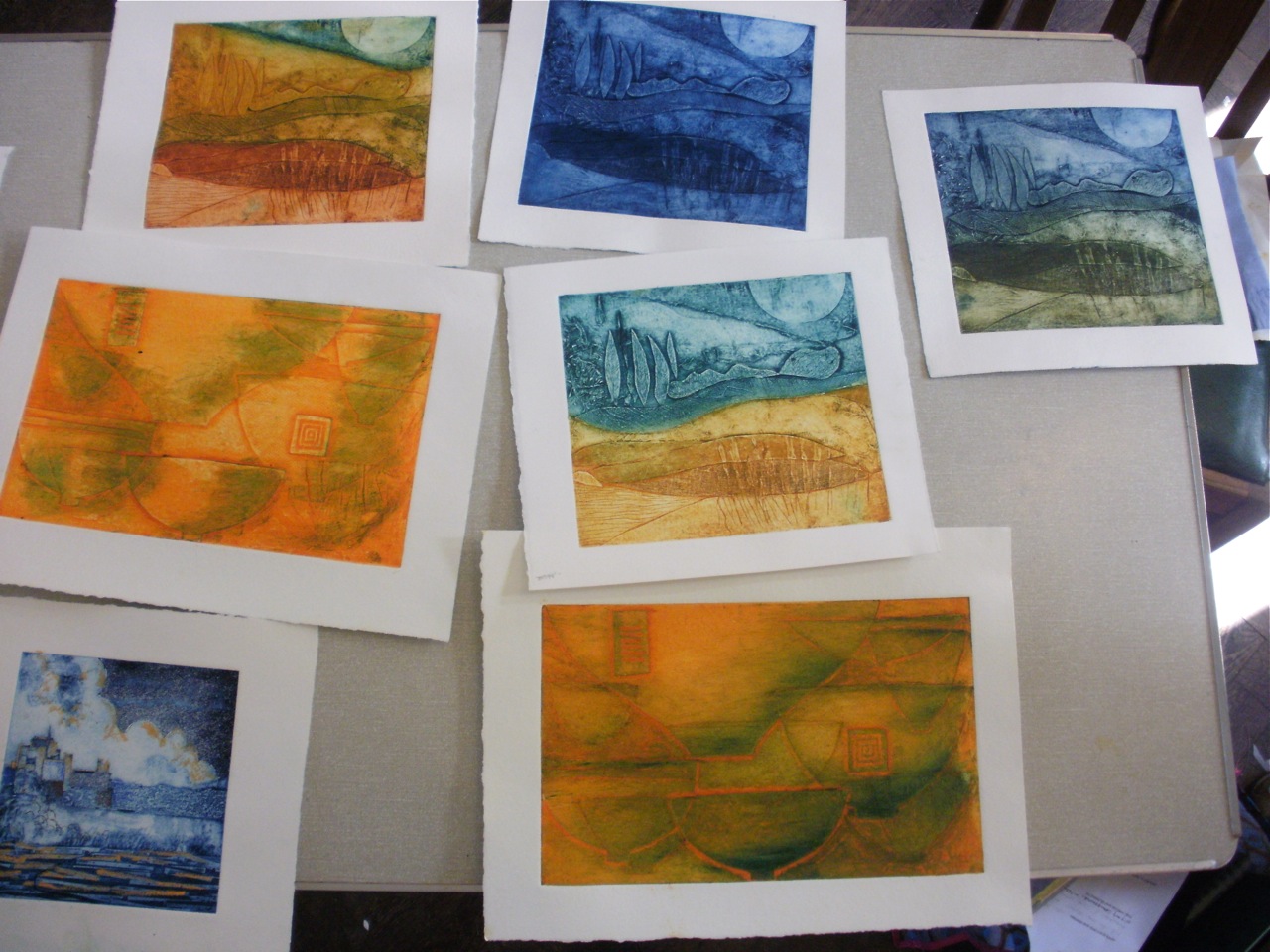
Collagraph workshop - students' work (photo © Mari French 2011)
 Mari French RI : contemporary artworks