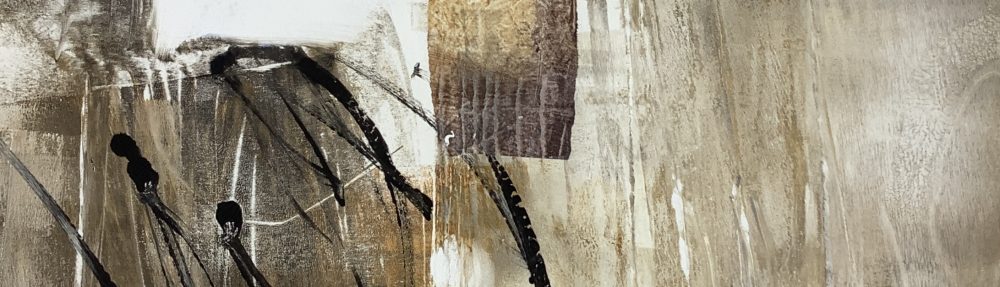
all in the detail…

Reedbed sketch (detail) 1 © Mari French 2017

Reedbed sketch (detail) 1 © Mari French 2017

Funny how the mind works isnt it? Just browsing through my current sketchbook wondering where to get my next inspiration from and of course it’s all there in front of me (which is the point of my sketches after all, apart from the enjoyment of exploring a place and training myself to ‘see’).

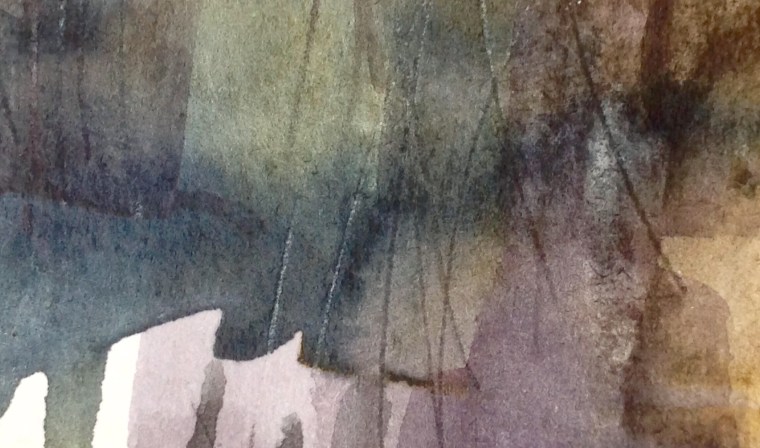
Reedbed sketch (detail) 2 © Mari French 2017

Reedbed sketch (detail) 2 © Mari French 2017

But although I paint abstract landscapes, I don’t find it easy to abstract from my own sketches, so I’ve come to the conclusion – why not photograph some of the details/colour combinations in my sketchbooks that most interest me and crop them down, in effect abstracting them further? Removing them from their literal context while keeping the colours and marks formed intuitively from studying the subject (in this case reedbeds). Thus creating fragments of inspiration and signposts from my own work, at one remove from my original interpretation, to lead me to my next abstract landscape.
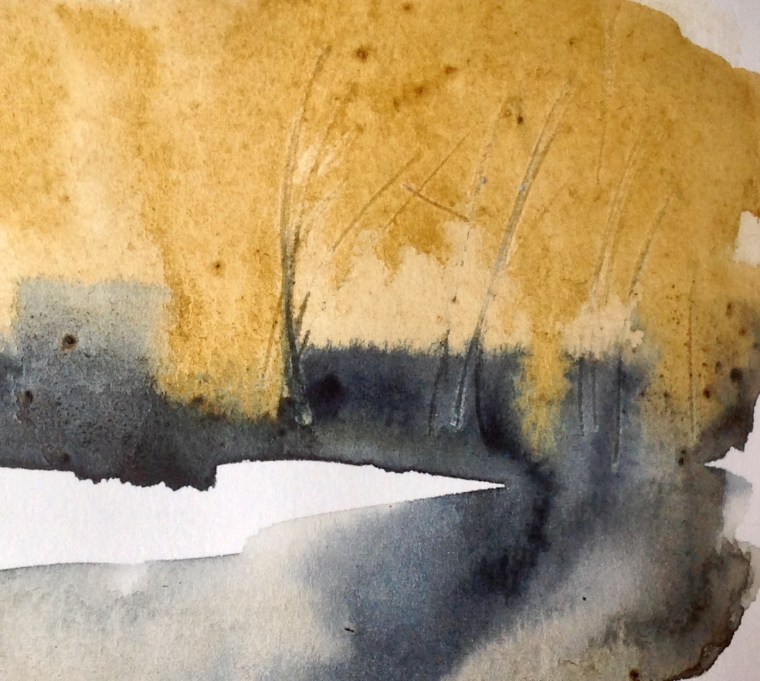
Reedbed sketch (detail) 3 © Mari French 2017

Reedbed sketch (detail) 3 © Mari French 2017

Blindingly obvious I suppose to some, but sometimes I tend to miss the obvious (am I the only one?). Perhaps getting too bogged down in the well-known ‘must produce work for exhibition/sale’ scenario and forgetting the vital process of mining one’s own sketchbooks and workbooks for my own subconscious insights into a subject.

I prefer not to work directly from my sketches to develop paintings as I find myself getting bogged down in trying to replicate (even subconsciously) the freedom of marks and effects that give life to the sketch, inevitably resulting in (for me) a stilted overworked final piece.
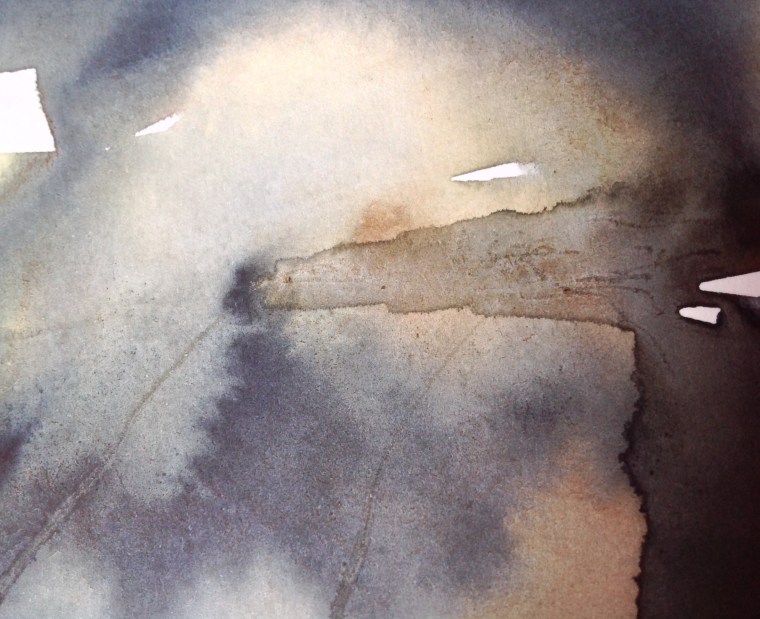
Reedbed sketch (detail) 4 © Mari French 2017
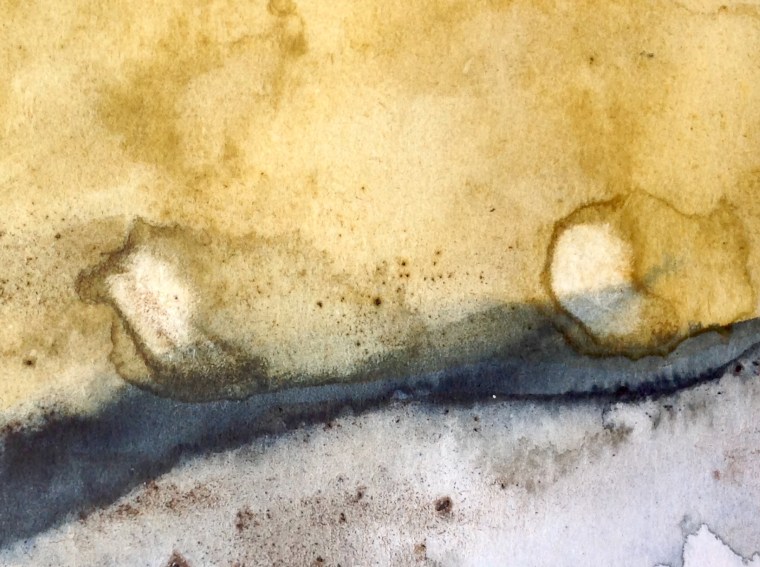
Reedbed sketch (detail) 4 © Mari French 2017

Reedbed sketch (detail) 5 © Mari French 2017

Reedbed sketch (detail) 5 © Mari French 2017

Many of my sketches use watercolour, sometimes ink, wet-in-wet, a technique I love for the glorious random accidental effects that can occur, often suggesting landscape forms. Looking at the cropped details of sketches in this post, I can see how the wands of the reeds, white spaces of the paper showing here and there and feathery ‘bleeds’ of paint/ink now take on a more prominent abstract element in the composition. And that gorgeous granulation! Also interesting is how small details can suggest the larger landscape. (I must apologise here for one or two rather blurry photos).
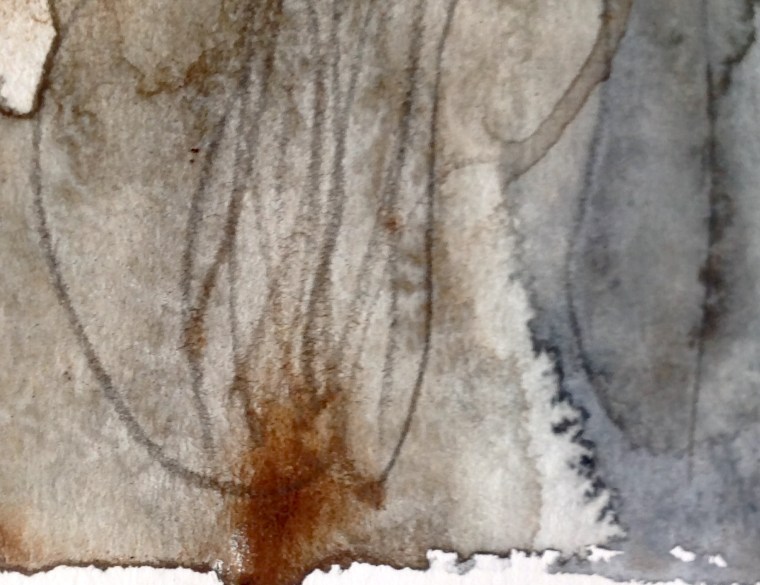
Reedbed sketch (detail) 6 © Mari French 2017Reedbed sketch (detail) 6 © Mari French 2017

Reedbed sketch (detail) 6 © Mari French 2017

I don’t expect to replicate these effects, especially on a large scale, but, I’m reasoning, if I print out cropped abstract sections from my reedbed sketches I will be effectively removing the recognisable parts of the image, leaving myself with inspirational pieces of colour, light and atmosphere with which to influence my subsequent series of work; suggestions rather than templates.

Reedbed sketch (detail) 7 © Mari French 2017

Reedbed sketch (detail) 7 © Mari French 2017

I’m sure many artists will do this already, but I’m excited to fall upon this idea as a way of working to abstraction from my own sketchbook. I’d love to hear techniques you use to create looser/abstract pieces from your sketches, if you want to share them please do in the comments below.
an artist’s journey …

Creative online platform Fleur and Arbor regularly share their space with selected photographers and female artists. I was approached by them a month ago to see if I’d be interested in featuring on their website. I was and this week I am delighted to be their guest artist.

Completing their questionnaire about my work, influences and how I came to paint abstracts was interesting and useful. I’m convinced that it’s beneficial for artists to occasionally take stock and consider how and why they do what they do. You can read my own responses to these considerations at the Fleur and Arbor website on the link below:

Q&A with Mari French

Rocks, stones & coves: Cape Cornwall residency 2017

Towards the Brisons, evening. © Mari French 2017.

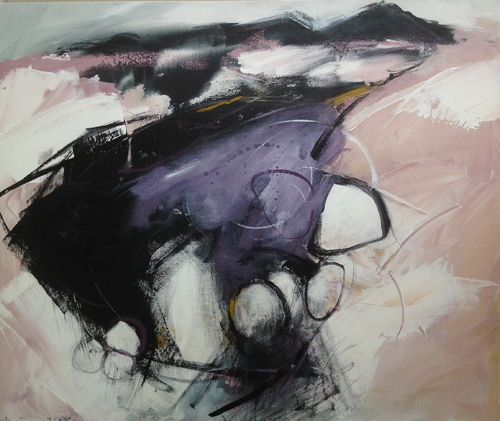
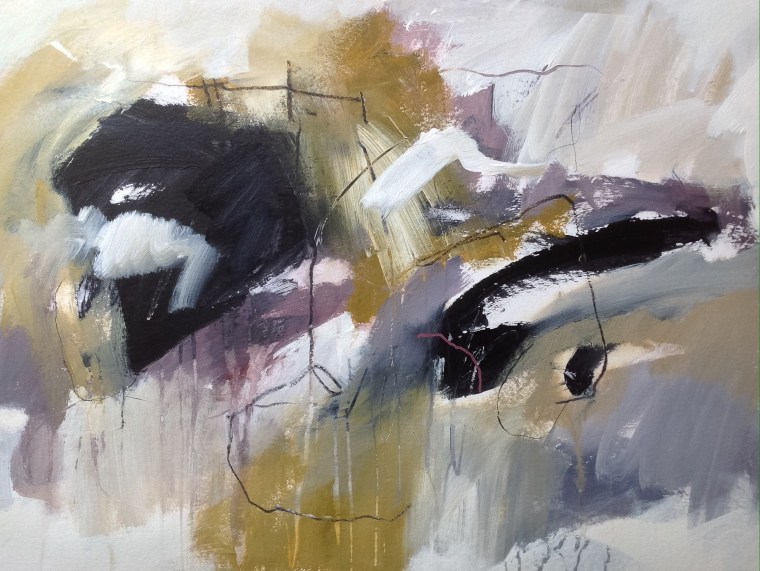
Towards the Brisons, evening. Mixed-media on canvas. © Mari French 2017.

A few weeks ago I was fortunate to spend two weeks on my own, on my second art residency at Brisons Veor, Cape Cornwall. Some of you may remember my staying here in 2014, but whereas previously I’d produced work inspired by the ruined tin and copper mines and the raging stormy sea, this time the weather was more spring-like and I wanted to concentrate on the energy of the sea filling and emptying, not only Priest Cove, but also the many small coves along the wild Penwith coastline.

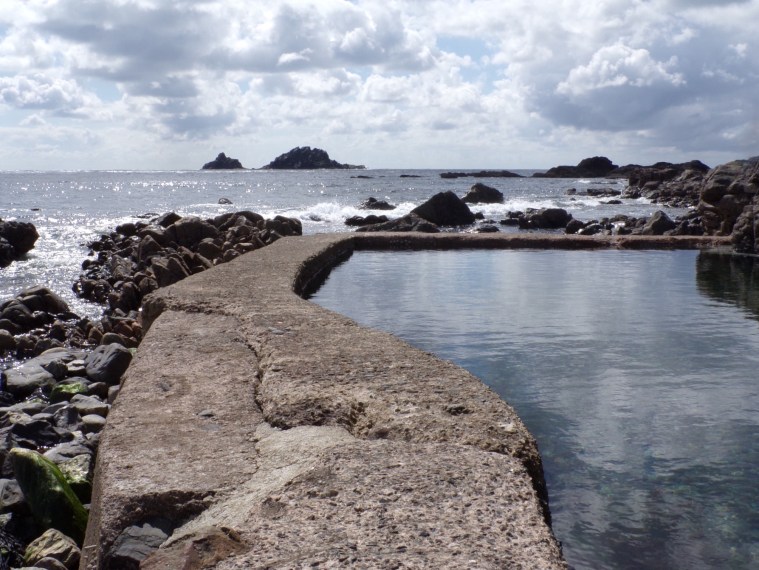
My attention was also captured by the semi-natural bathing pool nestling in the rocks below the house in Priest Cove. There was much more sunshine and light this time and the pool was like a mirror reflecting the sky; often its stillness was in sharp contrast to the crashing waves just beyond. The pool was the still point in the moving scene of the cove; reflective in both senses of the word, filled by the sea, controlled by the moon, partially man-made, part bounded by rocks. In my subsequent work the pool has become a calm space, contrasting with the energy of the mark-making around it. The effect sets up a tension which I like.

Bathing pool, Priest Cove. © Mari French 2017.

Bathing pool, Priest Cove. © Mari French 2017.

Experimental ink studies, Priest Cove. © Mari French 2017.

Experimental ink studies, Priest Cove. © Mari French 2017.

I also produced a series of rapid, small experimented ink studies (above) as I sat next to the pool in the sun, using the pool water to give a marbling and granulated effect. I’m hoping to develop these further at some point.

Mirroring the sky © Mari French 2017.

Mirroring the sky, Mixed-media on paper © Mari French 2017.

The geology of this area is so striking, from white egg-like boulders and the twisted striations of minerals threaded through massive jagged black rocks in the sea coves, to the tumbled stone scattered across the moors. I can see it featuring in much of my future work.

Rocks near Boat Cove © Mari French 2017

Rocks near Boat Cove © Mari French 2017

Boat Cove stones © Mari French 2017

Boat Cove stones © Mari French 2017

Over the course of the residency, I became aware of lines, suggested and real, threading a dimensional net around this coastal place: on and below the sea’s surface – the regularity of shipping lanes, the varying routes of small fishing boats, the patterned pulses of light from the lighthouses at Wolf Rock and Long Ships, the movement of wildlife; in the air – the soaring flight of sea birds and regular small passenger planes lifting off from Lands End airport. Lines began to appear in my sketchbook and swirling over the paintings I was working on.

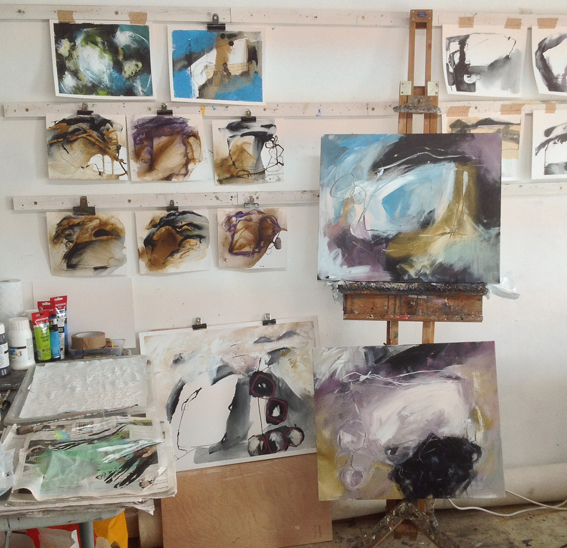
Studio work, Brisons Veor © Mari French 2017

Studio work, Brisons Veor © Mari French 2017

Plein air painting, Brisons Veor © Mari French 2017.

Plein air painting, Brisons Veor © Mari French 2017.

I’ve been trying to loosen up my sketching for some time, which in the past tended towards more figurative renderings of landscape. It was rewarding to be able to spend more time working on abstract ways of sketching for future reference. See my last post for more sketchbook spreads from this residency.

Sketchbook, Priest Cove. © Mari French 2017.

Sketchbook, Priest Cove. © Mari French 2017.

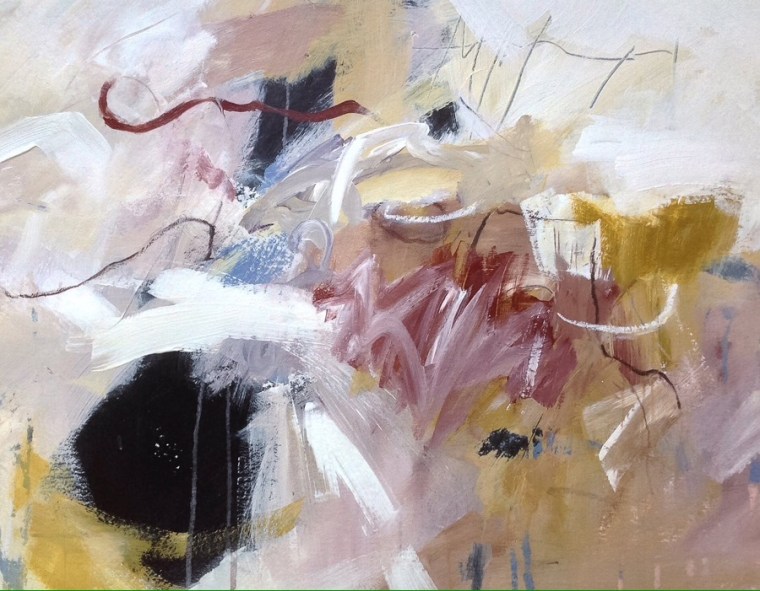
Unlike my first residency, where I was free to paint what I wanted, this time I knew I needed to supply work for a mixed exhibition at Artichoke Gallery near Tunbridge Wells, when I returned and I wanted to use the residency to produce a few canvases to fit their exhibition theme ‘Across the water’. (The first and last images on this post are two of the canvases to be exhibited.)

Working in the studio, Brisons Veor. © Mari French 2017

Working in the studio, Brisons Veor. © Mari French 2017

Along with wealth of material from Priest Cove, the discovery of exquisite little Boat Cove tucked into the coast near Pendeen Light, with its mass of tumbled rocks and stone and remnants from the fishing industry (still carried out there on a small scale), provided the stimulus I needed. The resulting canvases (see Artichoke Gallery link above for all four works) were painted to the pulse and crunch of waves on the rocks beneath the studio.

Bathing pool, Priest Cove © Mari French 2017.

Bathing pool, Priest Cove. Mixed-media on canvas. © Mari French 2017.