pressing matters…

Harvest moon 2 (collagraph) © Mari French 2011

Harvest moon 2 (collagraph) © Mari French 2011

Last weekend I enjoyed the most inspiring and creative weekend collagraph printmaking workshop with Laurie Rudling at Salthouse, north Norfolk. The workshop was incredibly good value for money, being heavily subsidised as part of the Salthouse 11 art project. Laurie is an incredibly professional printmaker and effectively passes on his knowledge in an enthusiastic, instructive and effective way, packing a lot into the two day workshop.
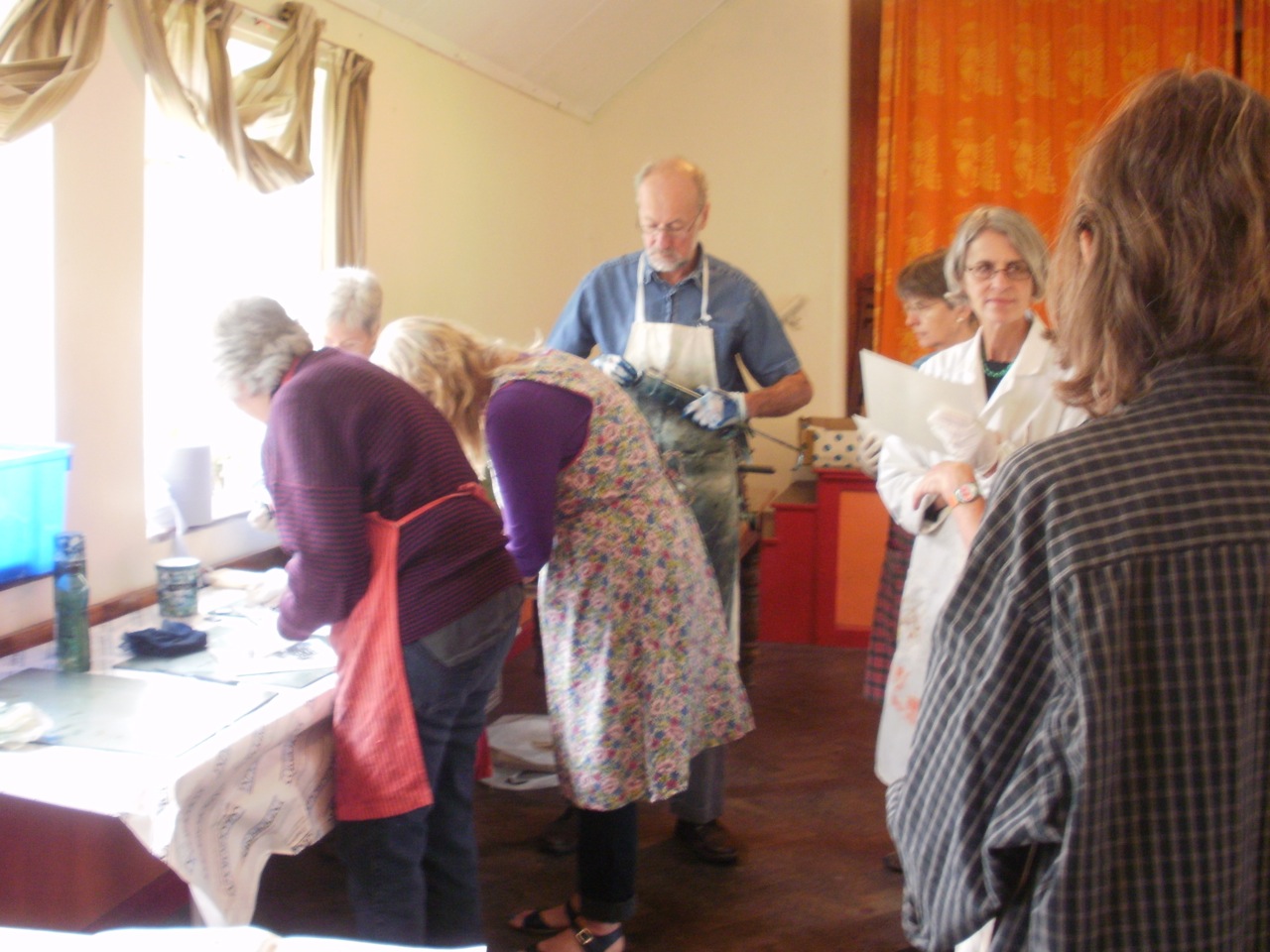
Collagraph workshop with Laurie Rudling (© Mari French)

Collagraph workshop with Laurie Rudling (© Mari French)

Collagraphs are a method of (intaglio) printmaking created by collaging materials of a similar thickness, eg bits of sandpaper, wallpaper samples, muslin cloth etc, onto a simple (in this case cardboard) plate, creating textures and shapes that will show up when inked and passed through a press. The ‘plate’ is then varnished to make it more durable for inking and printing. Approx 15 to 25 prints are possible from such a plate.

Collagraph printmaking can also be kinder to the environment too, in that it uses no harsh chemicals such as acid, it makes use of scrap materials and the oil-based ink can be efficiently cleaned with simple vegetable oil.

Below you can see the basic collagraph plate from which I produced the ‘Harvest moon’ prints in this post. What I found most fascinating is that the most humble and unpromising materials can result in really interesting textures in the resulting print. The sky on this plate is sandpaper, the lower ‘field’ textures are scraps of B&Q wallpaper samples.

basic collagraph plate - 'Harvest moon', Mari French

basic collagraph plate - 'Harvest moon', Mari French

Once inked up the ink is forced into the indentations and textures of the plate, as opposed to relief printmaking (such as linocuts), where the ink sits on top of the raised areas. To oversimplify, colours are added by either sweeping a contrasting ink colour over the first or by diligently inking up individual areas in different colours.
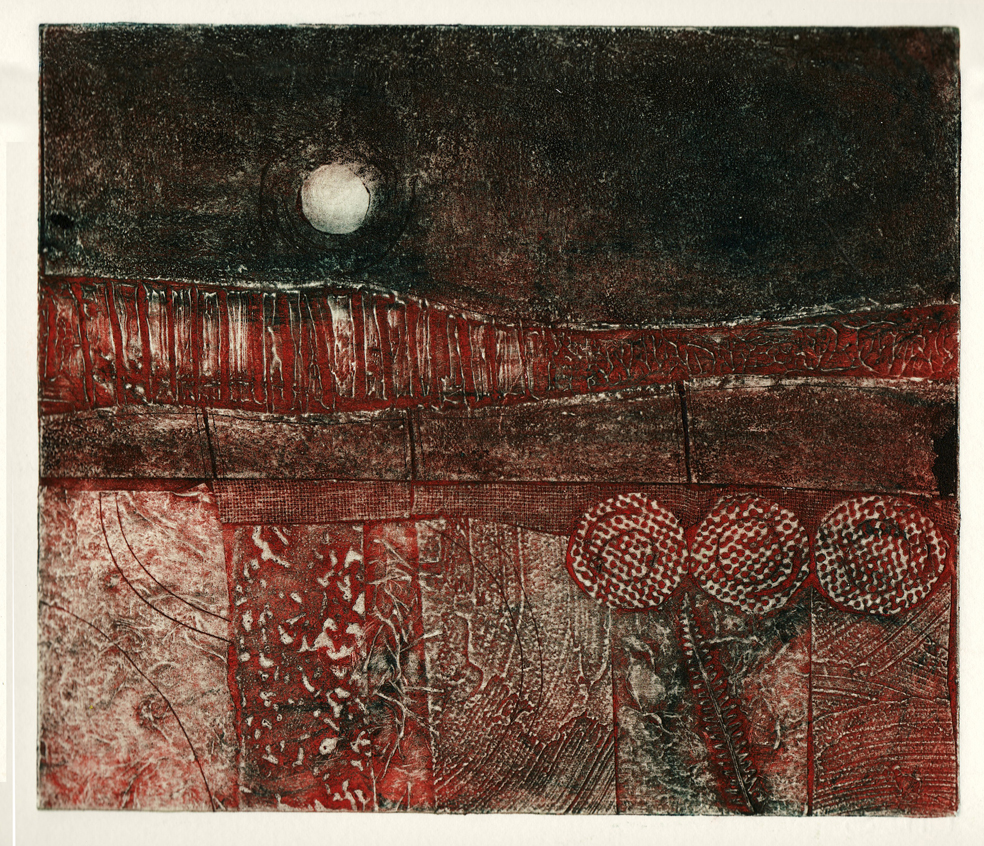
'Harvest moon 3' collagraph print © Mari French 2011

Harvest moon 3 (collagraph) © Mari French 2011

The method of building up overlapping layers, creating further shapes, is an alternative method of collagraph platemaking shown in the second ‘Arches’ plate below left.
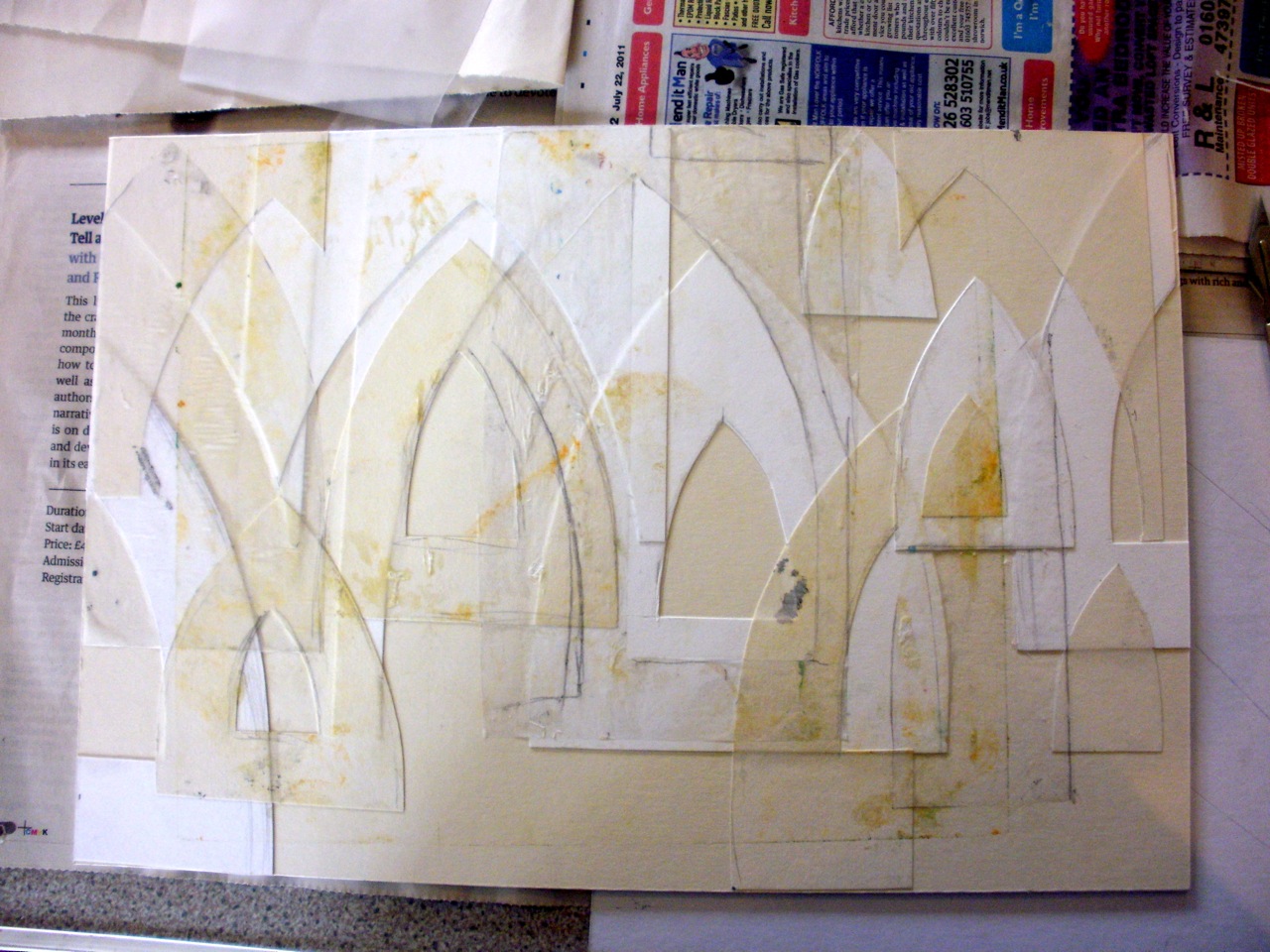
simple layered collagraph plate (Arches © Mari French)

simple layered collagraph plate (Arches © Mari French)

I found it fascinating that by ‘playing’ around like schoolchildren with bits of paper, glue and scissors, it was possible to produce such creative prints.

Although most of the students on the workshop were artists or had some creative experience, none of them had made collagraphs before. Yet as you can see from the photos of some of their work further down this post, they produced some stunning collagraph prints.

Much of this was due to the encouragement, patience and experience of our tutor. Laurie Rudling also holds workshops at the Broadland Arts Centre at Dilham near North Walsham in Norfolk.
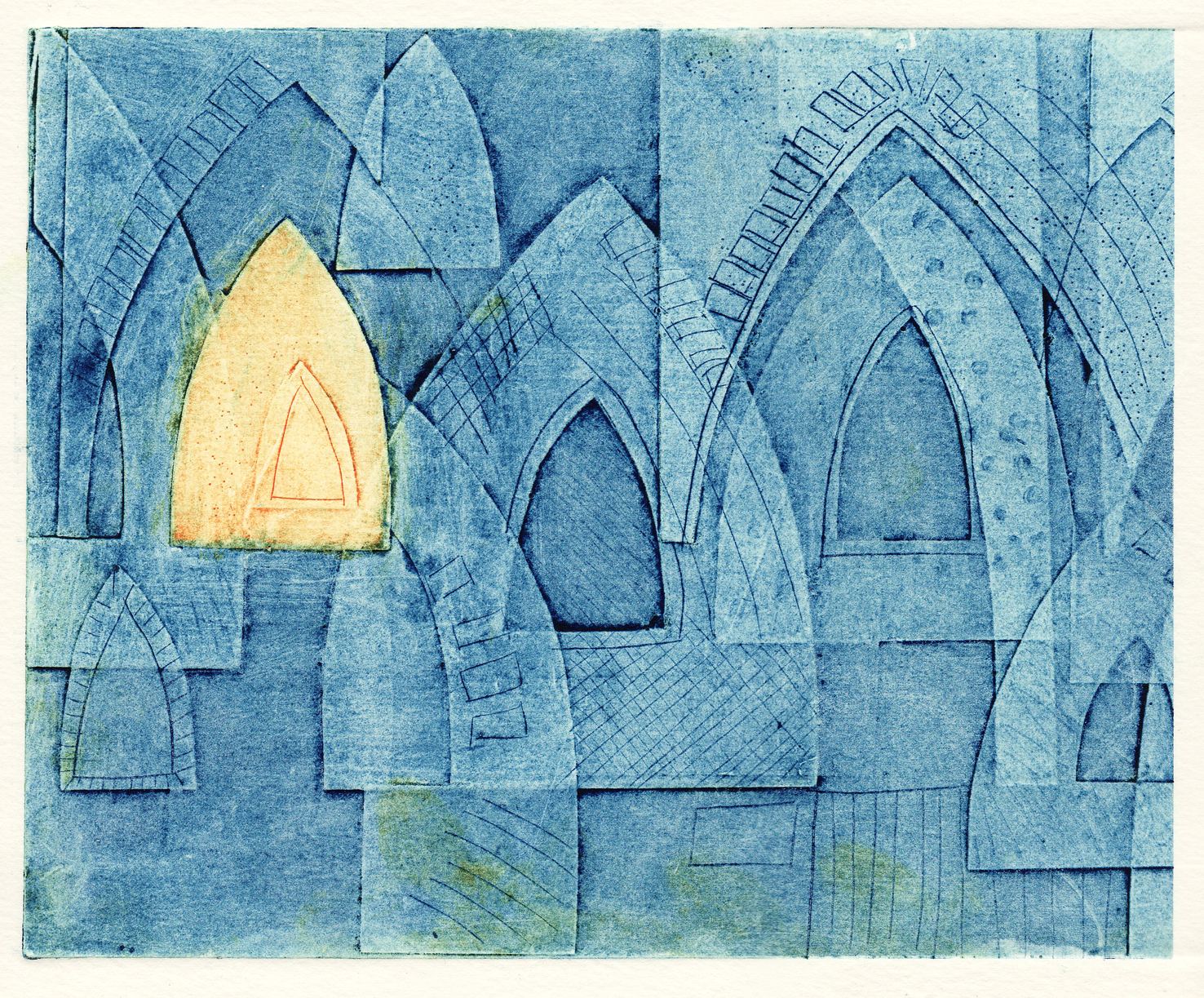
Arches (collagraph) © Mari French 2011

Arches (collagraph) © Mari French 2011

Poppy collagraph prints produced by fellow student Dee (photo © Mari French)
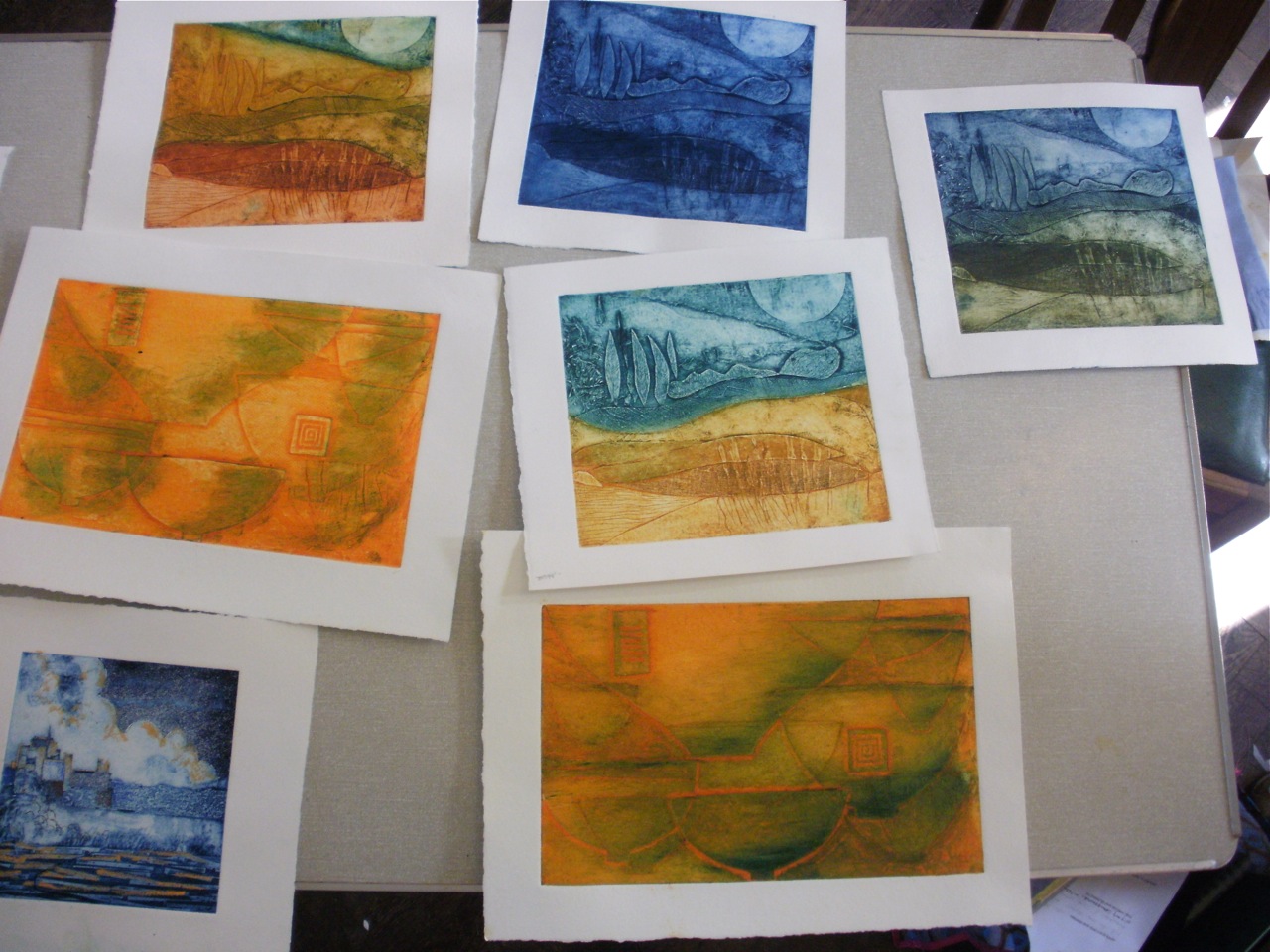
Poppy collagraph prints produced by fellow student Dee (photo © Mari French)

Collagraph workshop - students' work (photo © Mari French 2011

Collagraph workshop - students' work (photo © Mari French 2011)
more saltmarsh paintings…and to frame or not to frame?

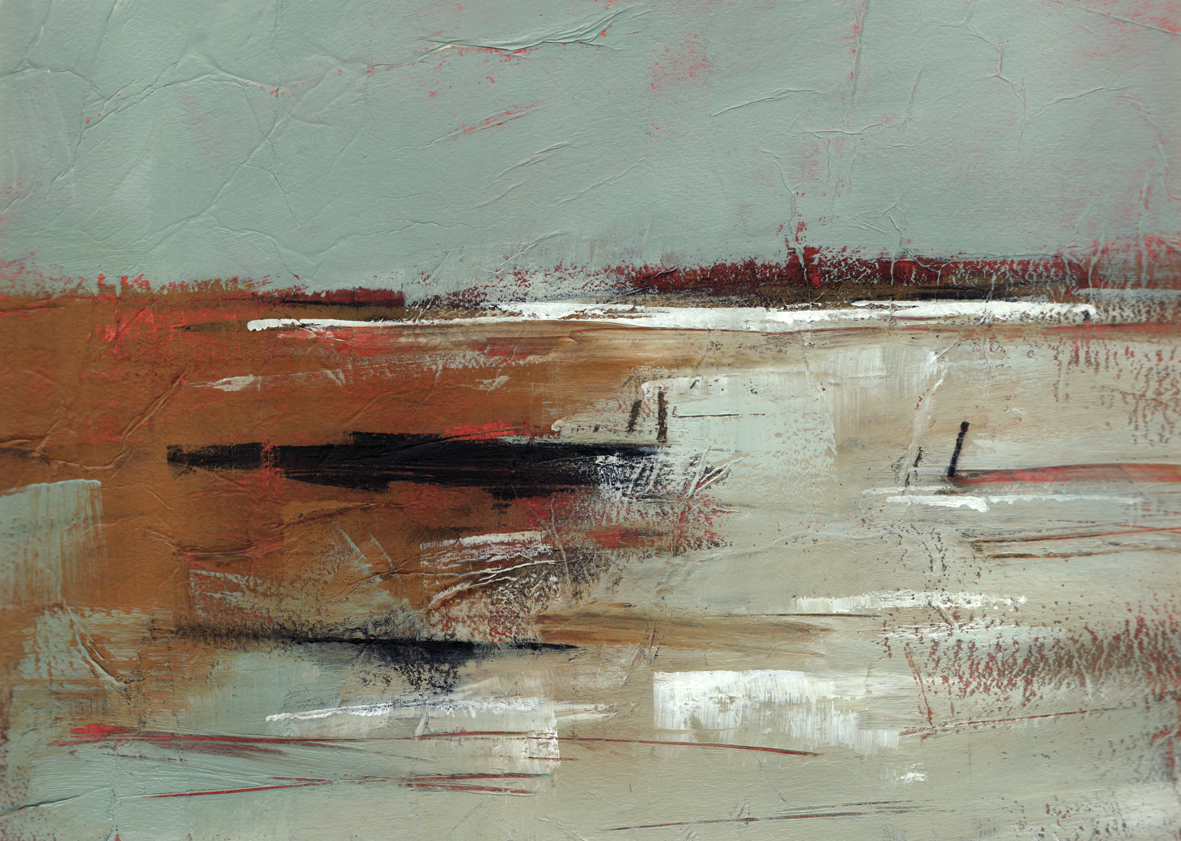
Bright day, Thornham saltmarsh © Mari French 2011

Bright day, Thornham saltmarsh © Mari French 2011

A couple more from my series of saltmarsh paintings (these are larger than the ones in my previous blog), which seem to be going well just now, building into a series which I’ll have to get framed soon for the group exhibition in May at Halesworth Gallery, Suffolk – Six Abstract Artists. As I’ve mentioned before (and its pretty obvious anyway) some are more abstract than others, so given the theme of the show I’ll have to be selective.

The framer I’ve been using since moving to Norfolk is Bill Henderson of Henderson’s Arts & Framing in Gaywood, King’s Lynn, who I find pretty reasonable price-wise (they also have a good stock of art supplies). Most of my work in the past year has been on box canvas, which I don’t usually frame. A gallery owner reflected in a recent discussion that buyers’ tastes may be swinging towards a preference for american-style ‘float frames’ for canvas – something I’m considering. When I lived and worked from my own studio/gallery on the Isle of Skye most visitors expressed a preference for leaving the canvases as they were – unframed.

Anyway, it’s been refreshing to work on an alternative surface producing these studies of Thornham saltmarsh and creek. I’ve also noticed my colour palette diversifying somewhat from previous more subdued colours I tended to use.

Saltmarsh light © Mari French 2011

Saltmarsh light © Mari French 2011

wellies and watercolours…

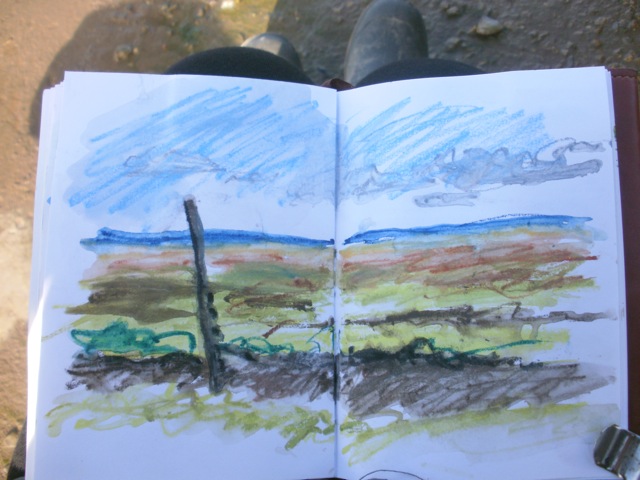
Thornham saltmarsh, from sketchbook © Mari French 2011

Thornham saltmarsh, from sketchbook © Mari French 2011

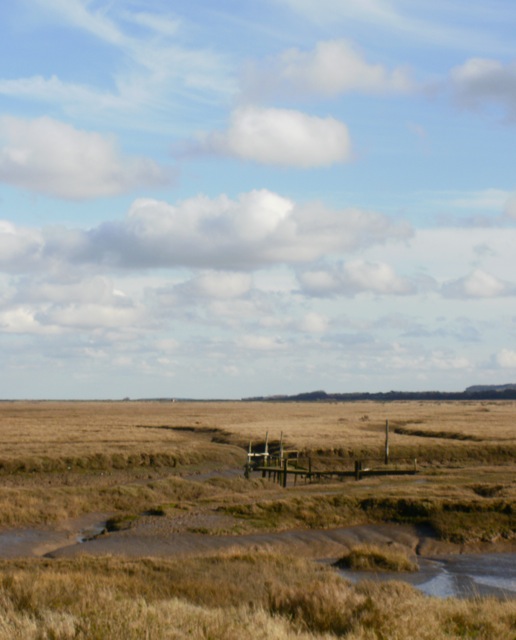
Thornham creek & marshes © Mari French 2010

Thornham creek & marshes © Mari French 2010

A selection of photos and sketches from a recent visit to Thornham marshes, on the north Norfolk coast, in glorious sunshine. At high tide the saltmarsh and creeks are inundated by seawater – it’s a place of dual characteristics which fascinates me.

I’m spending time studying this area with the intention of working up a body of paintings (another one!) for exhibition. The tide goes out fast here leaving shining mud banks reflecting the blue sky and is a feast for wading birds (the area is a mecca for bird-watchers).

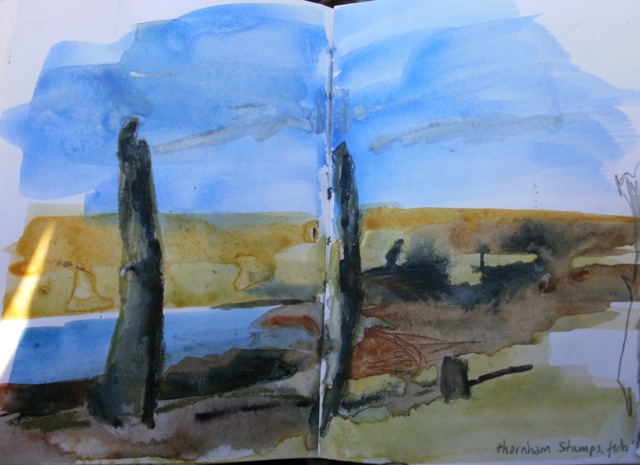
Old silvered tree stumps and rows of dark posts in the mud – remains of staithes (jetties) – provide useful vertical contrast to the expanse of horizontal bands of colour and texture. The creek winds out to the pale strand and dunes in the distance, and indigo strip of sea.

Although it was sunny there was a very cold breeze, so as well as wrapping up well, I made use of the disposable hand warmers I got for christmas. These come in a multi-pack and as soon as you tear open the cello pack they start to warm up and provide very good heat for several hours (although they’re probably not very eco-friendly). They’re also small enough to fit in gloves (or even wellies for a quick warm up!) – highly recommended for outdoor sketching.

Thornham creek, from sketchbook © Mari French 2011

Thornham creek, from sketchbook © Mari French 2011

Thornham stumps, from sketchbook © Mari French 2011

Thornham stumps, from sketchbook © Mari French 2011

Thornham creek & marshes © Mari French 2011

Thornham creek & marshes © Mari French 2011