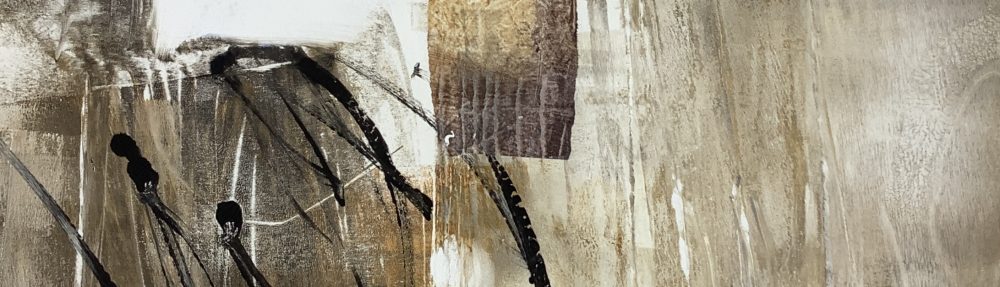
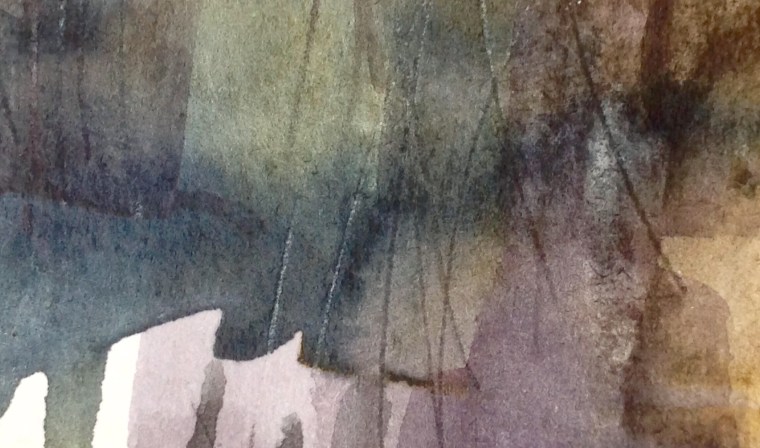
Reedbed sketch (detail) 1 © Mari French 2017
Funny how the mind works isnt it? Just browsing through my current sketchbook wondering where to get my next inspiration from and of course it’s all there in front of me (which is the point of my sketches after all, apart from the enjoyment of exploring a place and training myself to ‘see’).

Reedbed sketch (detail) 2 © Mari French 2017
But although I paint abstract landscapes, I don’t find it easy to abstract from my own sketches, so I’ve come to the conclusion – why not photograph some of the details/colour combinations in my sketchbooks that most interest me and crop them down, in effect abstracting them further? Removing them from their literal context while keeping the colours and marks formed intuitively from studying the subject (in this case reedbeds). Thus creating fragments of inspiration and signposts from my own work, at one remove from my original interpretation, to lead me to my next abstract landscape.
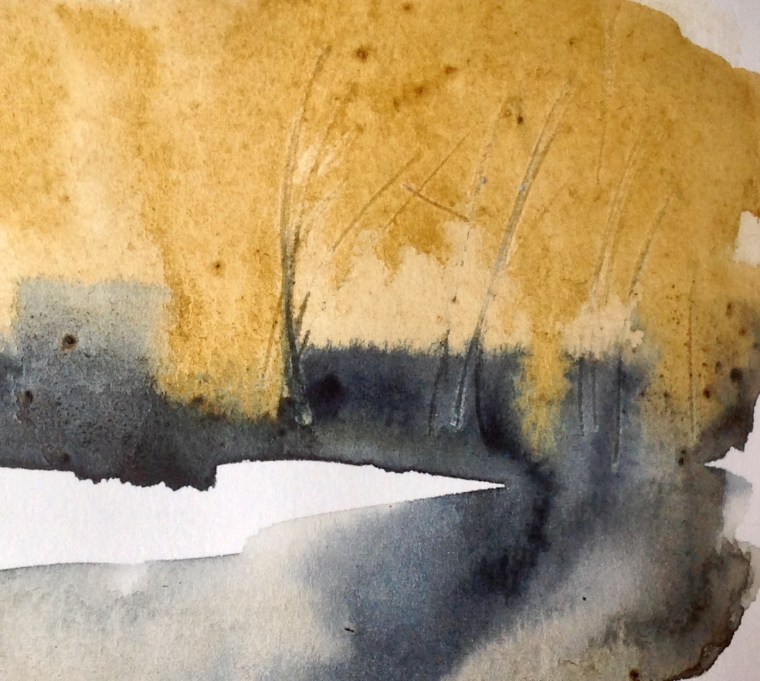
Reedbed sketch (detail) 3 © Mari French 2017
Blindingly obvious I suppose to some, but sometimes I tend to miss the obvious (am I the only one?). Perhaps getting too bogged down in the well-known ‘must produce work for exhibition/sale’ scenario and forgetting the vital process of mining one’s own sketchbooks and workbooks for my own subconscious insights into a subject.
I prefer not to work directly from my sketches to develop paintings as I find myself getting bogged down in trying to replicate (even subconsciously) the freedom of marks and effects that give life to the sketch, inevitably resulting in (for me) a stilted overworked final piece.
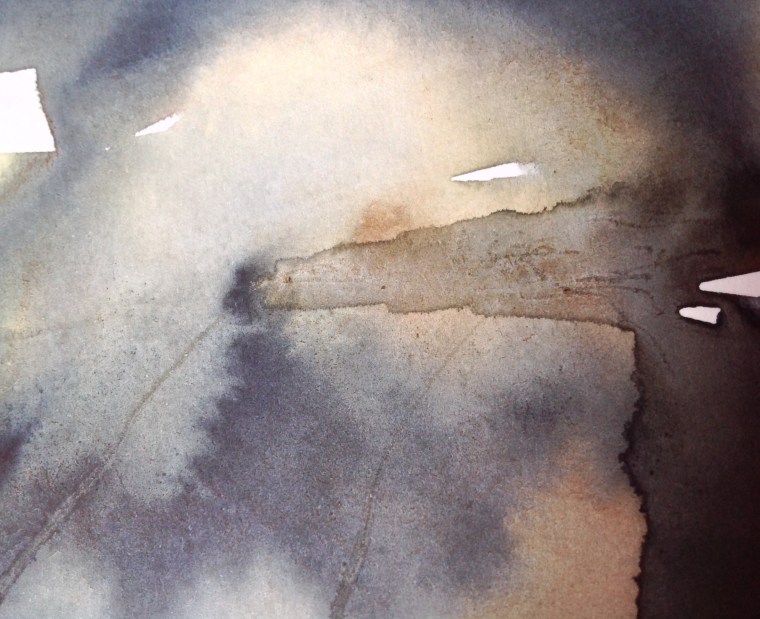
Reedbed sketch (detail) 4 © Mari French 2017
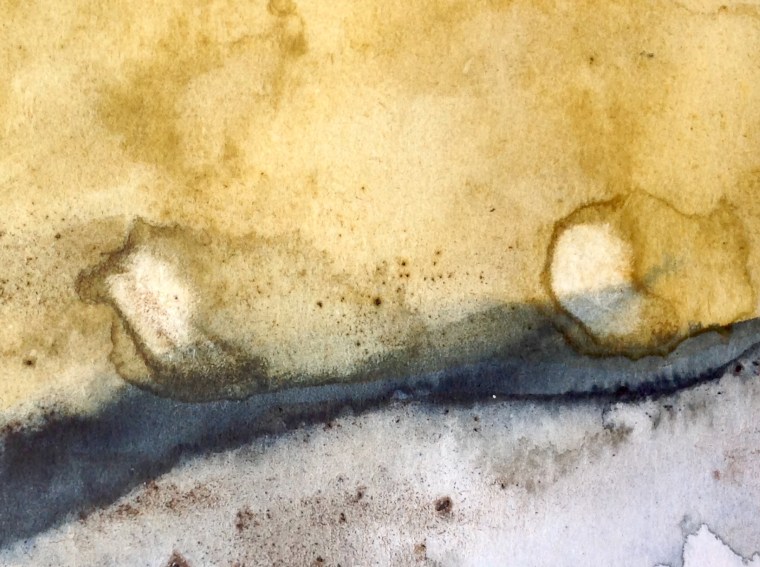
Reedbed sketch (detail) 5 © Mari French 2017
Many of my sketches use watercolour, sometimes ink, wet-in-wet, a technique I love for the glorious random accidental effects that can occur, often suggesting landscape forms. Looking at the cropped details of sketches in this post, I can see how the wands of the reeds, white spaces of the paper showing here and there and feathery ‘bleeds’ of paint/ink now take on a more prominent abstract element in the composition. And that gorgeous granulation! Also interesting is how small details can suggest the larger landscape. (I must apologise here for one or two rather blurry photos).
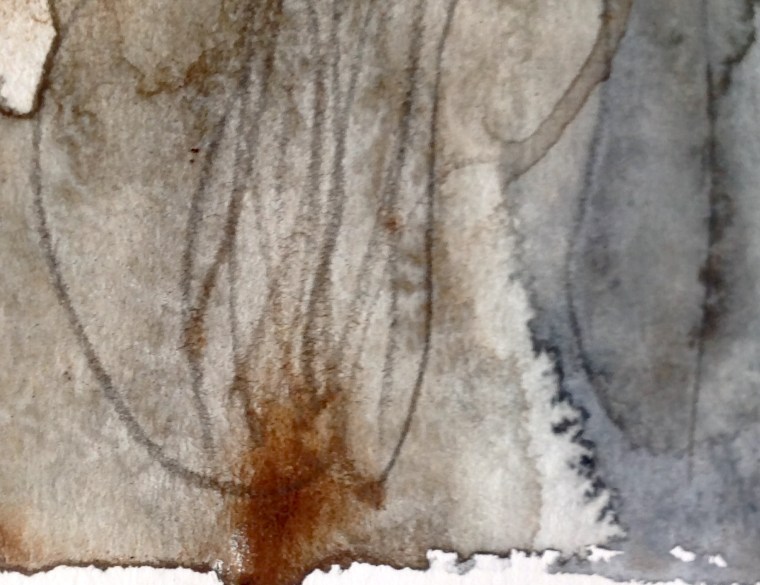
Reedbed sketch (detail) 6 © Mari French 2017
I don’t expect to replicate these effects, especially on a large scale, but, I’m reasoning, if I print out cropped abstract sections from my reedbed sketches I will be effectively removing the recognisable parts of the image, leaving myself with inspirational pieces of colour, light and atmosphere with which to influence my subsequent series of work; suggestions rather than templates.

Reedbed sketch (detail) 7 © Mari French 2017
I’m sure many artists will do this already, but I’m excited to fall upon this idea as a way of working to abstraction from my own sketchbook. I’d love to hear techniques you use to create looser/abstract pieces from your sketches, if you want to share them please do in the comments below.



 Mari French RI : contemporary artworks