splash and tell…

Have been so busy producing new work recently (using larger canvases and preparing for a show in London early next summer)… that I realised I hadn’t got round to mentioning the art demo I gave to the Snettisham art group (west Norfolk), a few weeks ago.

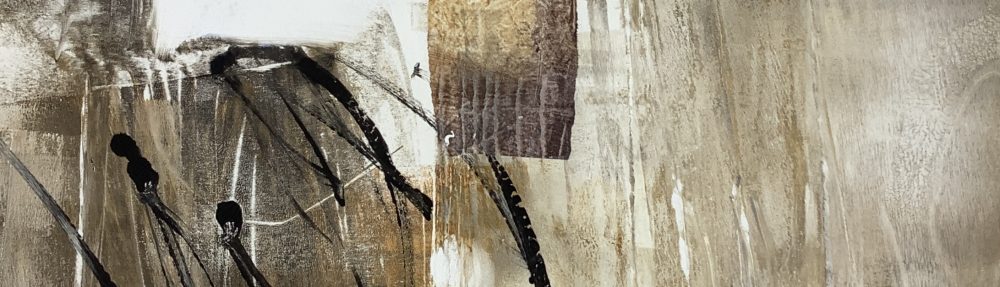
'Spontaneity', acrylic/mixed media on watercolour board © Mari French 2011

'Spontaneity', acrylic/mixed media on watercolour board © Mari French 2011

Unfortunately I was too self conscious (stupidly) to take any photos of the group/demo but some of the (rather raw) works (acrylic/mixed-media on board) that I produced in preparation, plus the one I completed in the demo (main pic above) are included here.

I’d never given a demo before (well not of painting… I’ve done plenty in my former life as a graphic designer hooked up to an apple mac). I’d ‘warned’ the Snettisham group I would be demonstrating various techniques as a way of loosening up, mainly in abstracted mixed-media, (I would guess many of them paint in a representational style). So I was only expecting about a dozen turning up, although the group has a large membership. When I arrived (a little early as I thought), the hall was pretty much full… there must have been about 30 people once all had arrived and settled.

I had been nervous in the days leading up to this, to be honest, and babbled a bit to start with, but once I’d started freely bashing acrylic paint and ink onto the pre-prepared surface (watercolour board with pasted down tissue paper) with a large brush, I felt more in my element.

acrylic/mixed media on watercolour board © Mari French 2011

preparation for demo, acrylic/mixed media on watercolour board © Mari French 2011

They were a very welcoming and responsive group, asking questions, laughing at my feeble ‘witticisms’ (thankfully), so I soon relaxed into it. They appreciated the various techniques on the whole… printing with bubble wrap/corrugated cardboard, splashing and wiping back… so I’m hoping that everyone got at least one or two useful tips to help with their future painting.

It’s amazing how quickly two hours can pass once you hit your stride, and also surprising (useful for any tutor), how we artists can take our own knowledge and experience, for granted. It is satisfying to pass on particularly playful and effective methods to help others with loosening up in their artwork.

minerals (mixed media study in preparation for art demo) © Mari French 2011

minerals (mixed media study in preparation for art demo) © Mari French 2011

Time ran away with us at the end, as the group crowded round enthusiastically asking questions, collecting printouts of notes on techniques, recommended art books, materials etc, and browsing through books, sketchbooks and work examples I’d brought along. (I’ve always find these ‘extras’ are very much appreciated at these kind of events).

I’ve been asked to come back next year when the group have their exhibition at Snettisham. It would be great to see some lively gestures and brushwork in there. I wish them luck with their art… and do remember if any of you are reading this…

have fun and allow yourself to play sometimes!
painting lethal earth…

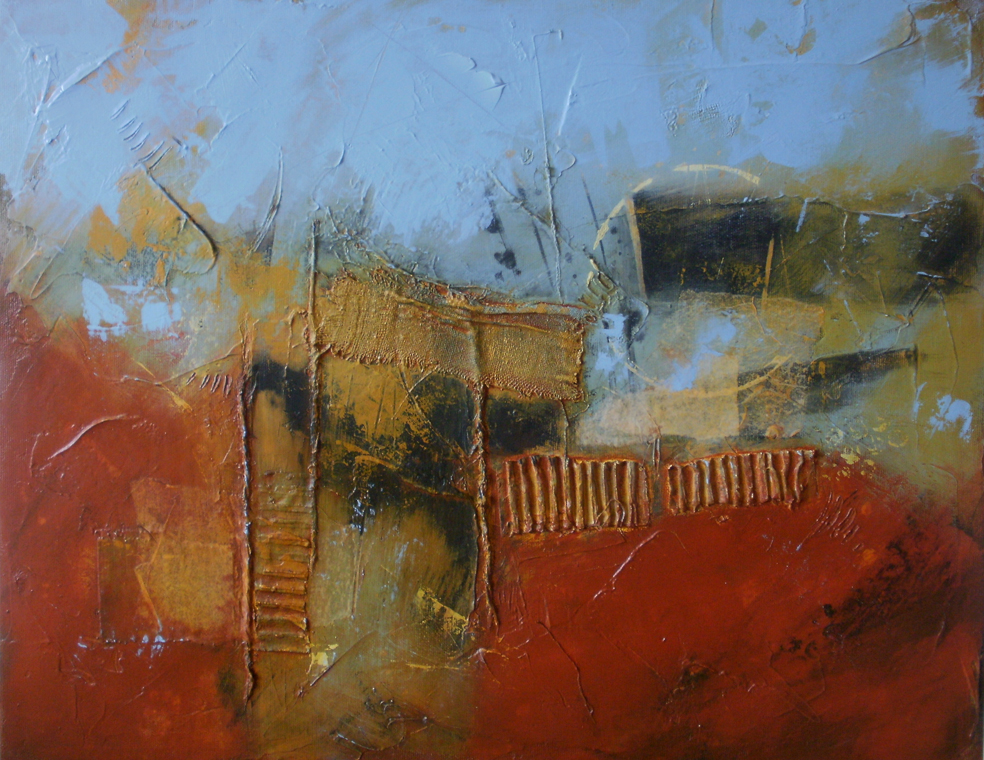
september 2011 © Mari French

september 2011 © Mari French

My response to the remains of the industrial tin mining landscape of Cape Cornwall… its dangerous, poignant and poisonous history (see my previous post).

An acrylic and mixed media work on deep-sided canvas 40x50cm.

pressing matters…

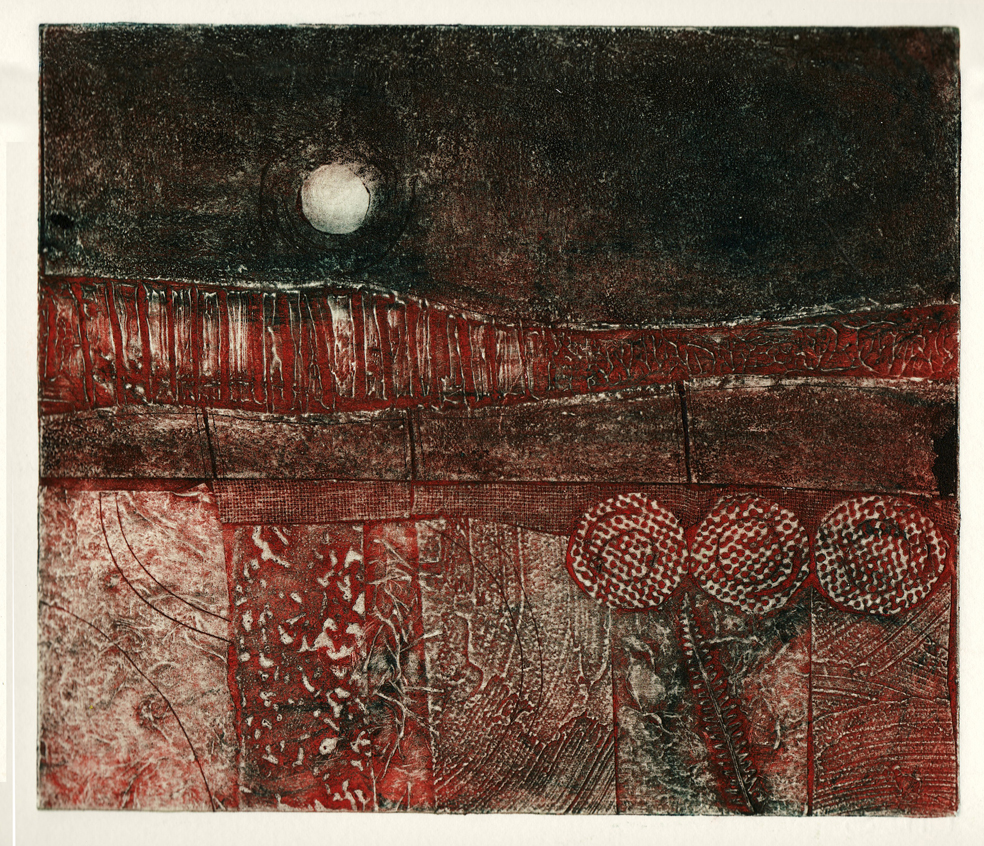
Harvest moon 2 (collagraph) © Mari French 2011

Harvest moon 2 (collagraph) © Mari French 2011

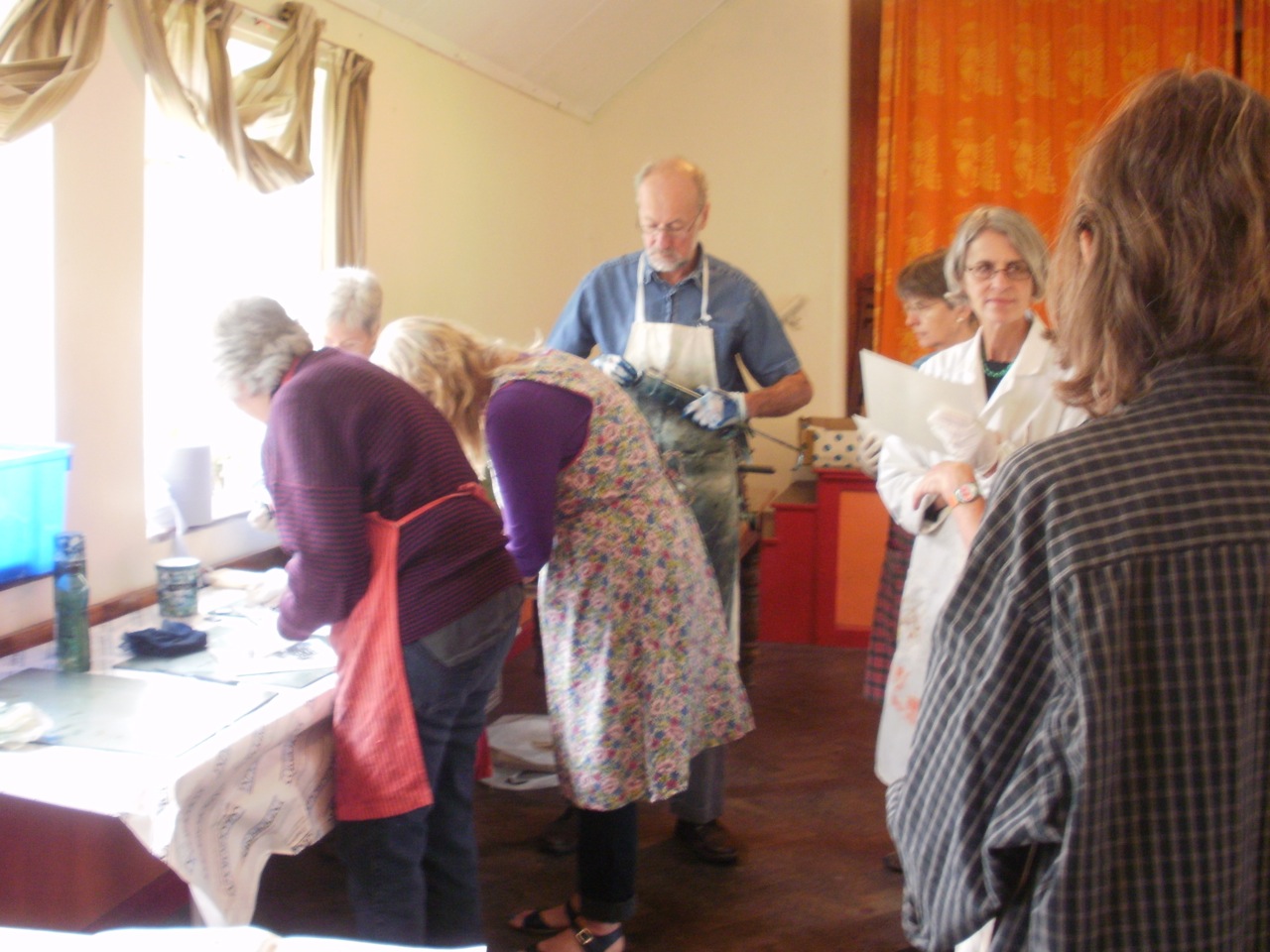
Last weekend I enjoyed the most inspiring and creative weekend collagraph printmaking workshop with Laurie Rudling at Salthouse, north Norfolk. The workshop was incredibly good value for money, being heavily subsidised as part of the Salthouse 11 art project. Laurie is an incredibly professional printmaker and effectively passes on his knowledge in an enthusiastic, instructive and effective way, packing a lot into the two day workshop.

Collagraph workshop with Laurie Rudling (© Mari French)

Collagraph workshop with Laurie Rudling (© Mari French)

Collagraphs are a method of (intaglio) printmaking created by collaging materials of a similar thickness, eg bits of sandpaper, wallpaper samples, muslin cloth etc, onto a simple (in this case cardboard) plate, creating textures and shapes that will show up when inked and passed through a press. The ‘plate’ is then varnished to make it more durable for inking and printing. Approx 15 to 25 prints are possible from such a plate.

Collagraph printmaking can also be kinder to the environment too, in that it uses no harsh chemicals such as acid, it makes use of scrap materials and the oil-based ink can be efficiently cleaned with simple vegetable oil.

Below you can see the basic collagraph plate from which I produced the ‘Harvest moon’ prints in this post. What I found most fascinating is that the most humble and unpromising materials can result in really interesting textures in the resulting print. The sky on this plate is sandpaper, the lower ‘field’ textures are scraps of B&Q wallpaper samples.

basic collagraph plate - 'Harvest moon', Mari French

basic collagraph plate - 'Harvest moon', Mari French

Once inked up the ink is forced into the indentations and textures of the plate, as opposed to relief printmaking (such as linocuts), where the ink sits on top of the raised areas. To oversimplify, colours are added by either sweeping a contrasting ink colour over the first or by diligently inking up individual areas in different colours.

'Harvest moon 3' collagraph print © Mari French 2011

Harvest moon 3 (collagraph) © Mari French 2011

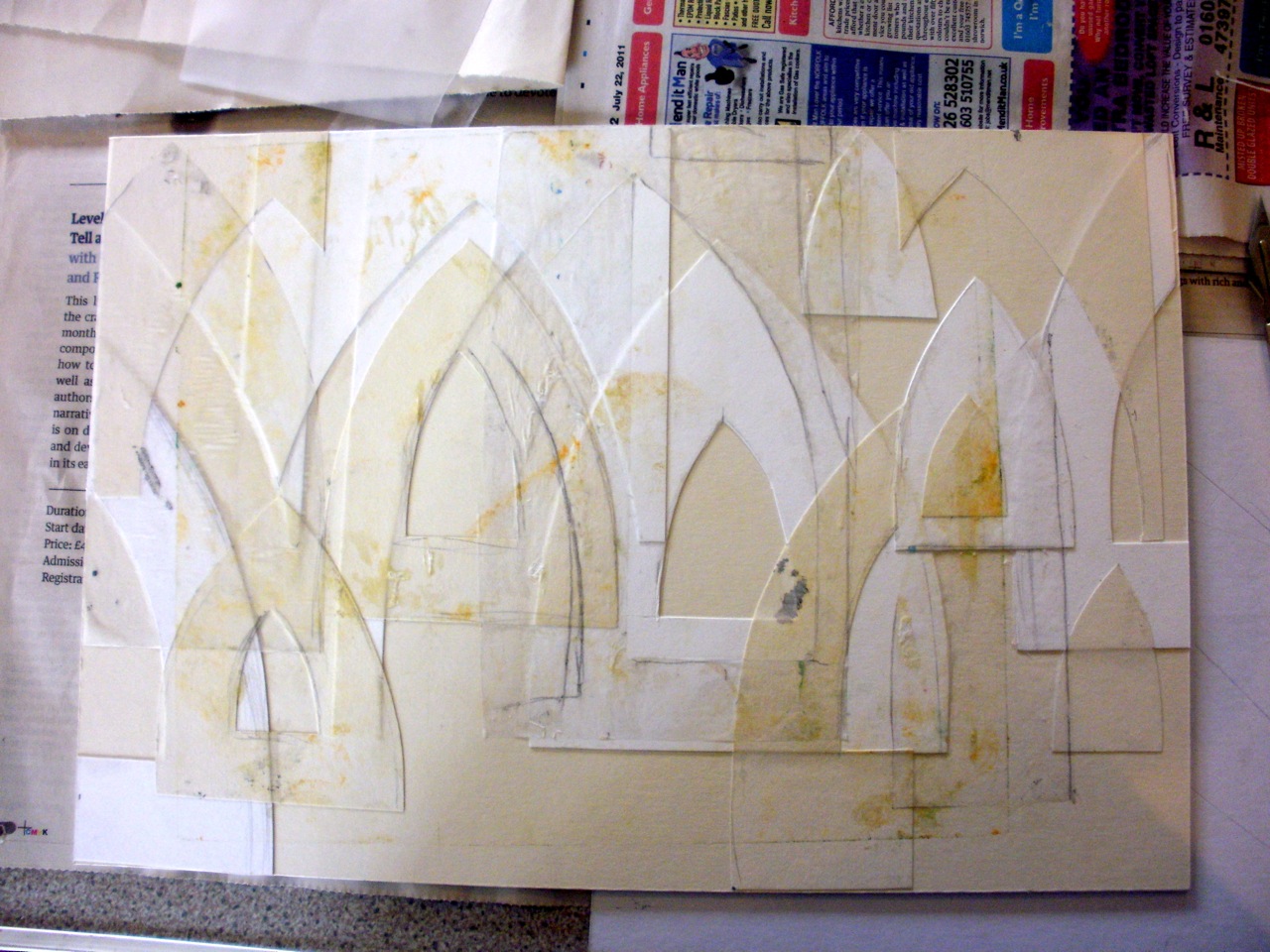
The method of building up overlapping layers, creating further shapes, is an alternative method of collagraph platemaking shown in the second ‘Arches’ plate below left.

simple layered collagraph plate (Arches © Mari French)

simple layered collagraph plate (Arches © Mari French)

I found it fascinating that by ‘playing’ around like schoolchildren with bits of paper, glue and scissors, it was possible to produce such creative prints.

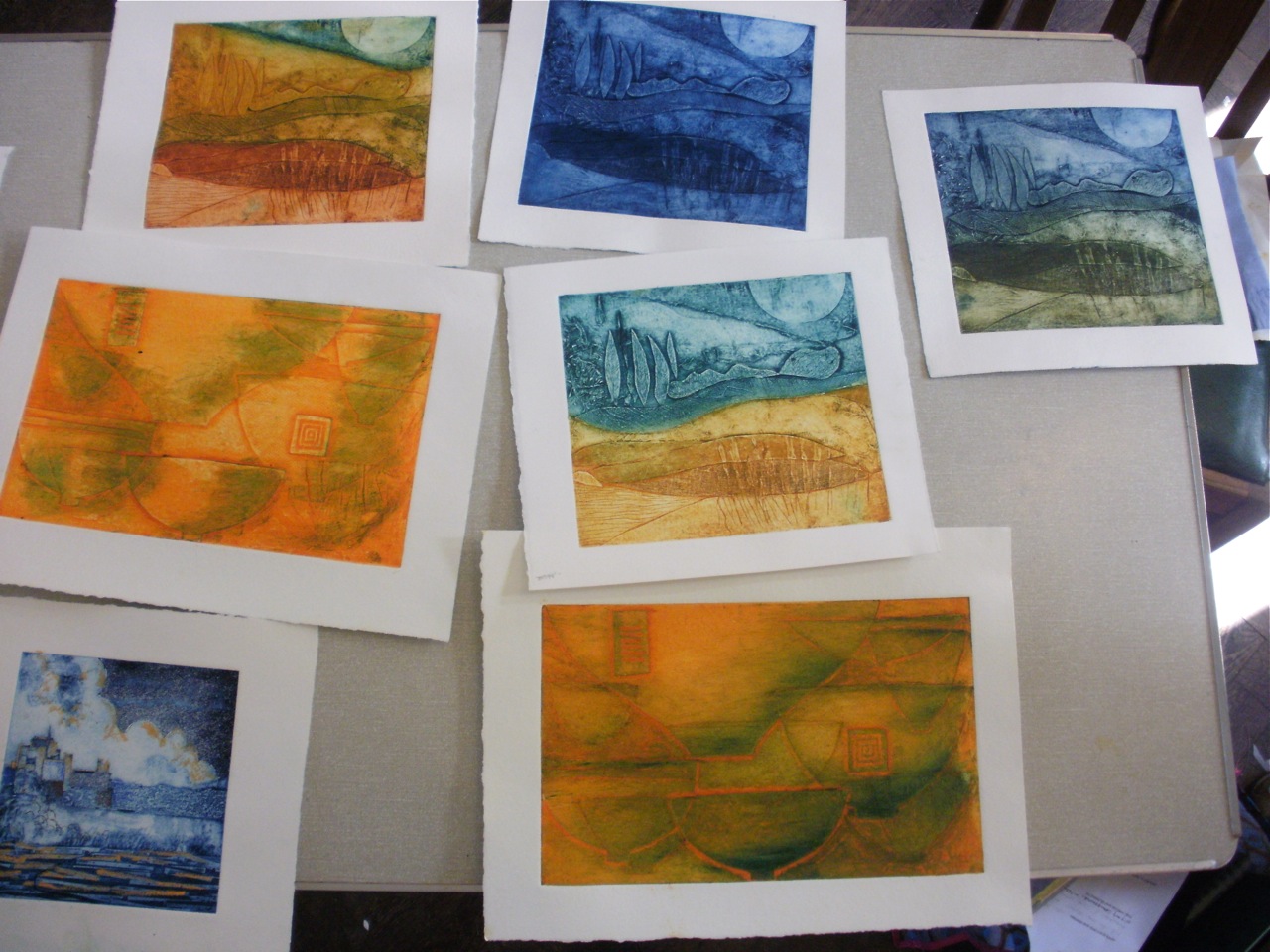
Although most of the students on the workshop were artists or had some creative experience, none of them had made collagraphs before. Yet as you can see from the photos of some of their work further down this post, they produced some stunning collagraph prints.

Much of this was due to the encouragement, patience and experience of our tutor. Laurie Rudling also holds workshops at the Broadland Arts Centre at Dilham near North Walsham in Norfolk.

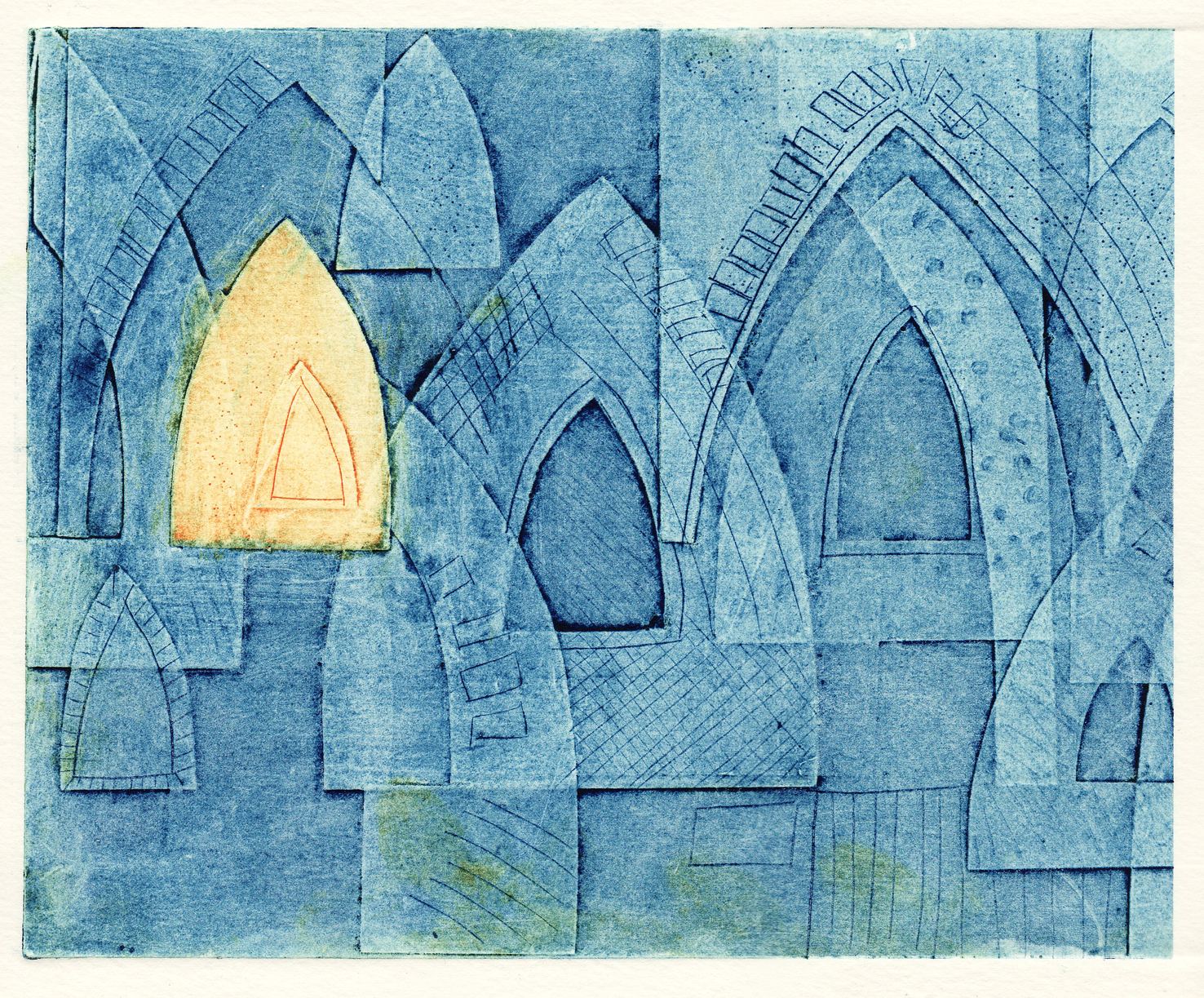
Arches (collagraph) © Mari French 2011

Arches (collagraph) © Mari French 2011

Poppy collagraph prints produced by fellow student Dee (photo © Mari French)

Poppy collagraph prints produced by fellow student Dee (photo © Mari French)

Collagraph workshop - students' work (photo © Mari French 2011

Collagraph workshop - students' work (photo © Mari French 2011)