Unknown's avatar

About Mari French RI

Mari French is emerging as one of East Anglia's most respected abstract painters. She grew up in Manchester close to the Pennine Hills, originally working as a graphic designer. She then lived for several years on the Isle of Skye developing her abstract landscapes. Mari now lives in Norfolk, working as a full-time artist, from her studio on a former 1930s RAF airbase. The roots of her paintings lie in her deep-seated affinity with landscape and weather, capturing the elemental forces of wild and less-visited landscapes. She says about her creative process “I try to evoke the shift of weather and light on a place and this is reflected in the sense of movement and change in the work itself. I sketch on location but in the studio I work instinctively, using a variety of media to evoke my experience of a place rather than a representation”. Mari has exhibited widely; she regularly exhibits with the Royal Institute of Painters in Watercolours (RI) at the Mall Galleries, London; she has also exhibited with The Royal Watercolour Society (RWS) at Bankside Gallery, London; was a finalist in Artist & Illustrator Magazine's 'Artist of the Year' 2016; and a finalist in The Sunday Times Watercolour Competition 2014. In 2022 she was elected a full member of the Royal Institute of Painters in Water Colours (RI). Her work has been featured in both the ‘Artist’ and ‘Artist & Illustrator’ magazines as well as in several art books and is held in private collections around the world.

monoprinting: a few results…

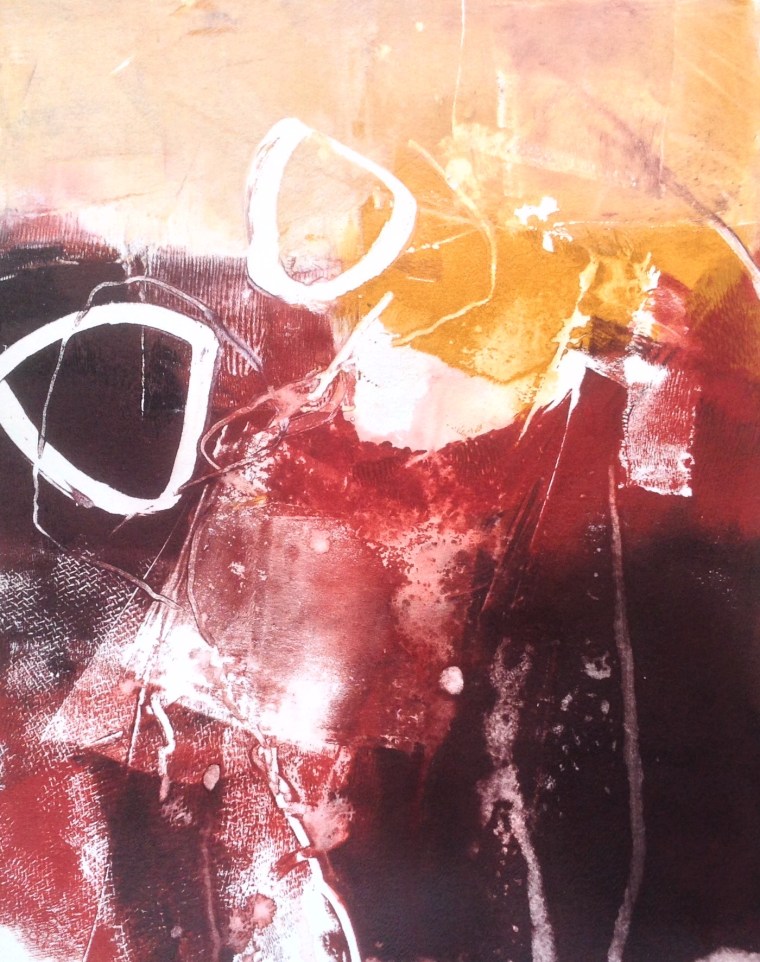
Monoprint © Mari French 2017

Monoprint © Mari French 2017

Well, here are some of the results of my recent monoprinting on gel plate sessions (as written about in my previous post here). I’m fairly pleased with some of them, not so sure about others, but trying out a completely different process or medium is a great way of shaking you out of an artist’s block or the doldrums or that feeling of ‘what next’. I recommend it!

I soon learnt a few things too…
Printmaking paper may work better than watercolour paper (less size), so I’ve ordered some Somerset smooth white paper;
Open acrylics (Golden) definitely work better (as do Atelier Interactive) as they don’t dry quite so fast. Alternatively I found that adding gloss acrylic medium helped with consistency and slowed down drying time a bit;
Allow lots of time for cleaning up and do it often, acrylics seem to dry particularly quickly on brayers.


I’d still like to produce the soft look of the paint on the gelli plate itself; by the time the image has been transferred to the paper it’s lost that quality. Something worth working on.

After a few days of producing these prints I decided to have a break and go back to painting (acrylics) for a while, and it’s been interesting how the monoprinting has fed back into the new paintings. But more of that in the next post!

getting messy with monoprinting…

Pulling the monoprint © Mari French 2017

Pulling the monoprint © Mari French 2017

I’ve wanted to try monoprinting for some time. The one time I had a go (years back) I was not impressed (excuse the pun) but I think I’d used the wrong type of paper, plate and temperament! A monoprint (or monotype) is a unique print taken from a plate on which ink or (in my case) acrylic paint has been spread with rollers. Marks, textures impressed into the ink/paint and shaped masks (eg. paper) can all be used to create and enhance the final image.

Recently inspired by the beautiful and original monoprints of artist Tonie Rigby I decided to try using a gelli plate. These are very popular at the moment but I’ve not been taken by the proliferation of bright colours and patterns often produced. Gel plates can be a bit tricky to get used to and some artists dislike the texture, but apart from the shape (A4, I prefer square sizes, so may have to cut mine down) I quite liked the slight give of the gel.

Having been stunned by Tonie Rigby’s ‘Urban boxes’ work (see her blog link above), I wondered if I too could achieve something different, a progression of my current painting series maybe. If nothing else it would be interesting and hopefully, fun to try.


Well, today in the studio it was definitely interesting AND fun. I produced over a dozen bits of rubbish before I started loosening up and getting messy, employing more painterly techniques, which is when I work best. I used various acrylic paints and watercolour paper. As with my paintings I wanted to experiment – what would happen if I used this or tried that? …

I must admit I actually liked the look of inked up gel plate itself, perhaps because the transparent surface added another dimension. Today’s work was just the beginning, I’ve just started and have a way to go yet, but I’ll keep at it. Will post more of my monoprinting attempts at a later date.


in the zone …

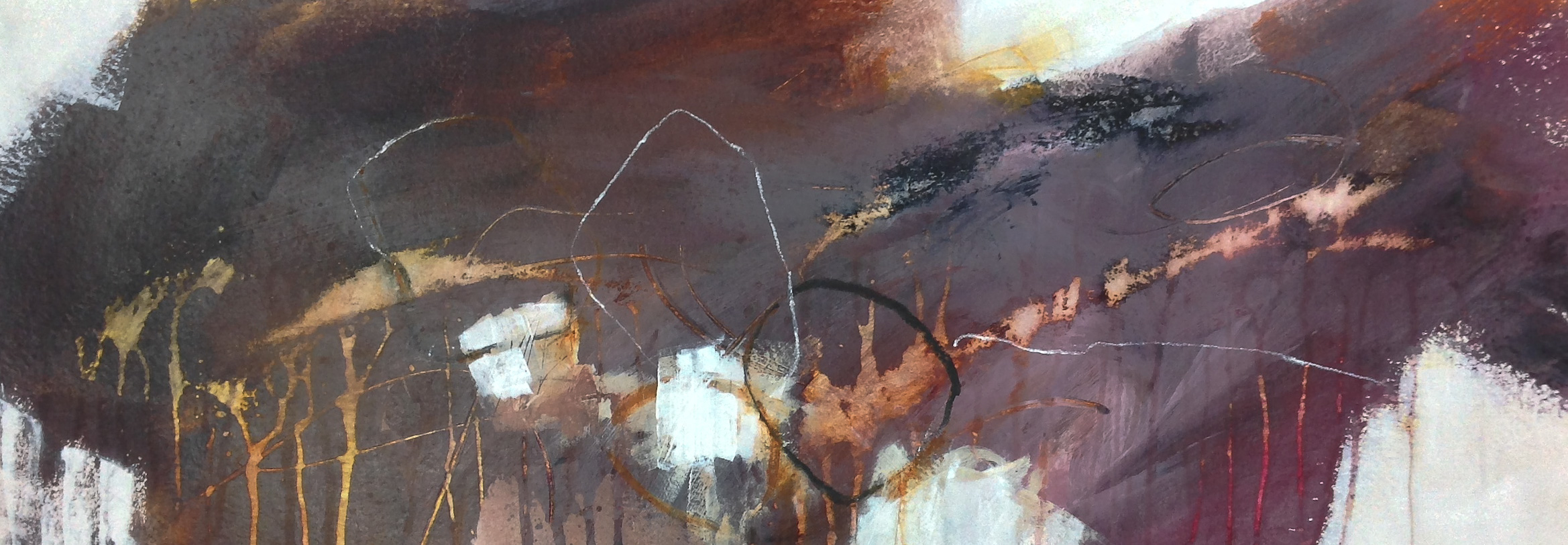
Byzantine winter. Mixed media on paper. 25x55cm. © Mari French 2017.

Byzantine winter. Mixed media on paper. 25x55cm. © Mari French 2017.

Well, having decided to go for blue autumnal sky colours with dashes of gold etc this week inspired by clear days at the coast, I found myself in the studio yesterday, messing about mixing up moody bruise colours – enlivened with coppers and bronzes. Sometimes it’s as though something else takes over and says ‘no, we’re doing this today’.

I was completely in ‘the zone’, that fabulous desirable state all artists crave but which doesn’t happen often enough! I was completely running on instinct and my subconscious, with a handful of brushes loaded with pigment and lots of hands-on pushing the paint around with the side of my hand and fingers. Crucially, I then slowed down and moved in close, taking my time with tender considered marks, enhancing the shapes and ‘openings’ in the paint.

This time the work above emerged and I had that delicious feeling of ‘just right’ as I stepped back from the easel. What a lovely change from the feelings of frustration that are all too common when painting (or creating anything).

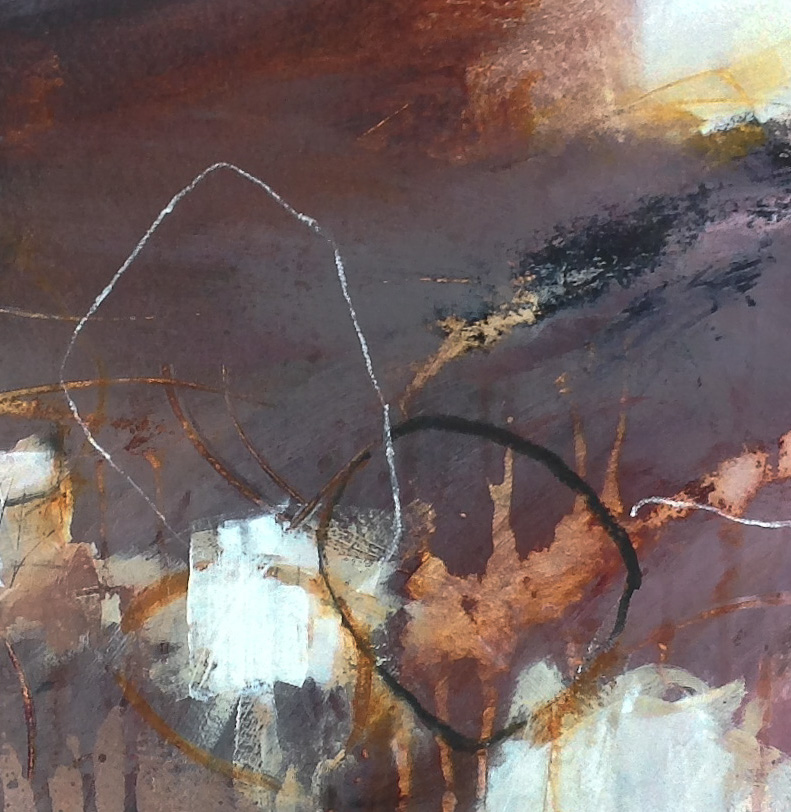
Byzantine winter (detail). © Mari French 2017.

Byzantine winter (detail). © Mari French 2017.

All too often I skip that last stage, the slowing down and considering. I usually have a tendency to go all for it, with lots of energetic paint application and markmaking, which can often make for exciting work and I love it. Sometimes though, I have a feeling I’ve just gone that little bit too far and unlike in digital painting there is no ‘undo’ function. It’s all part and parcel of learning through constant work of course. But when you get that ‘oh’ moment… it’s wonderful.

The trick now of course will be to continue in this vein, to get back into that ‘zone’, because I want to produce more of these.