all in the detail…

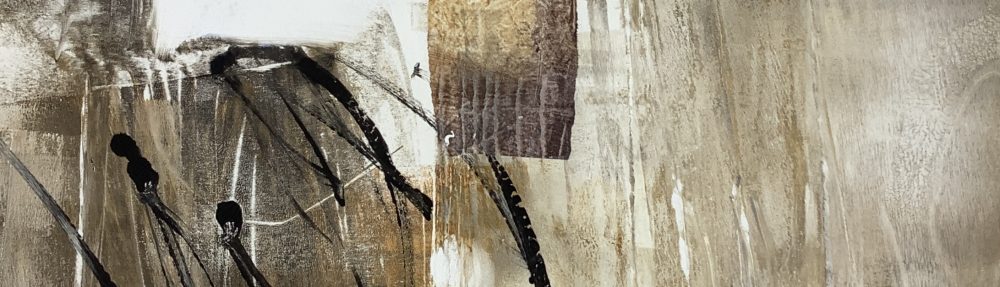
Reedbed sketch (detail) 1 © Mari French 2017

Reedbed sketch (detail) 1 © Mari French 2017

Funny how the mind works isnt it? Just browsing through my current sketchbook wondering where to get my next inspiration from and of course it’s all there in front of me (which is the point of my sketches after all, apart from the enjoyment of exploring a place and training myself to ‘see’).

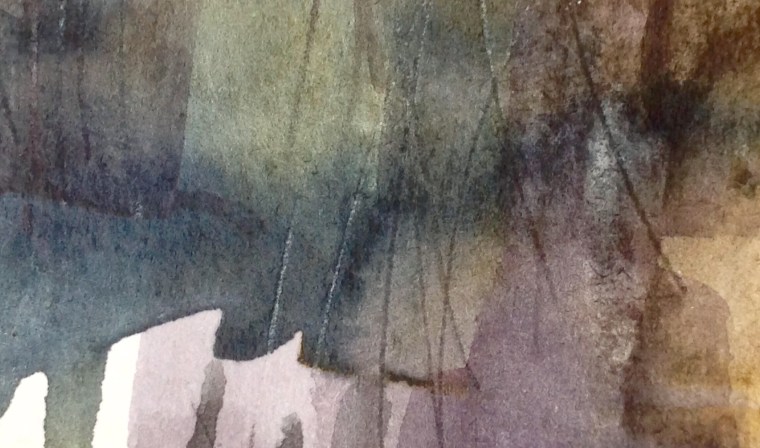
Reedbed sketch (detail) 2 © Mari French 2017

Reedbed sketch (detail) 2 © Mari French 2017

But although I paint abstract landscapes, I don’t find it easy to abstract from my own sketches, so I’ve come to the conclusion – why not photograph some of the details/colour combinations in my sketchbooks that most interest me and crop them down, in effect abstracting them further? Removing them from their literal context while keeping the colours and marks formed intuitively from studying the subject (in this case reedbeds). Thus creating fragments of inspiration and signposts from my own work, at one remove from my original interpretation, to lead me to my next abstract landscape.
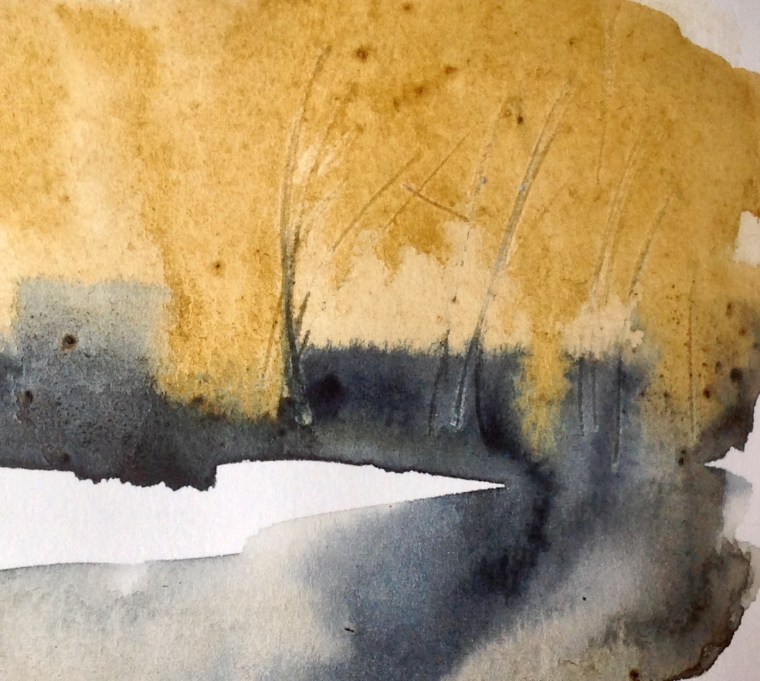
Reedbed sketch (detail) 3 © Mari French 2017

Reedbed sketch (detail) 3 © Mari French 2017

Blindingly obvious I suppose to some, but sometimes I tend to miss the obvious (am I the only one?). Perhaps getting too bogged down in the well-known ‘must produce work for exhibition/sale’ scenario and forgetting the vital process of mining one’s own sketchbooks and workbooks for my own subconscious insights into a subject.

I prefer not to work directly from my sketches to develop paintings as I find myself getting bogged down in trying to replicate (even subconsciously) the freedom of marks and effects that give life to the sketch, inevitably resulting in (for me) a stilted overworked final piece.
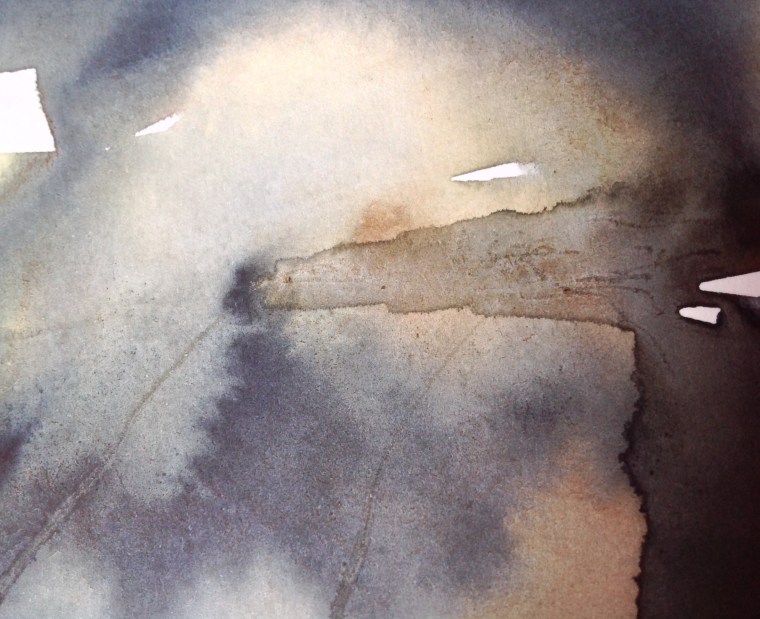
Reedbed sketch (detail) 4 © Mari French 2017
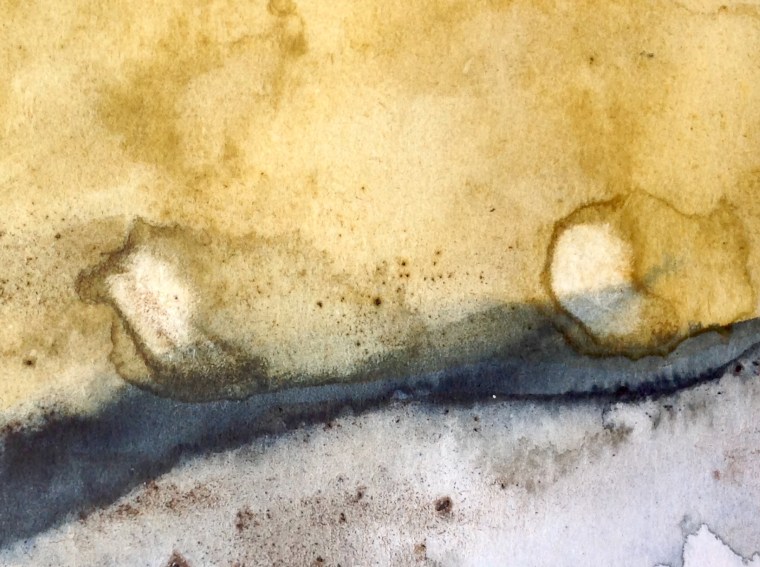
Reedbed sketch (detail) 4 © Mari French 2017

Reedbed sketch (detail) 5 © Mari French 2017

Reedbed sketch (detail) 5 © Mari French 2017

Many of my sketches use watercolour, sometimes ink, wet-in-wet, a technique I love for the glorious random accidental effects that can occur, often suggesting landscape forms. Looking at the cropped details of sketches in this post, I can see how the wands of the reeds, white spaces of the paper showing here and there and feathery ‘bleeds’ of paint/ink now take on a more prominent abstract element in the composition. And that gorgeous granulation! Also interesting is how small details can suggest the larger landscape. (I must apologise here for one or two rather blurry photos).
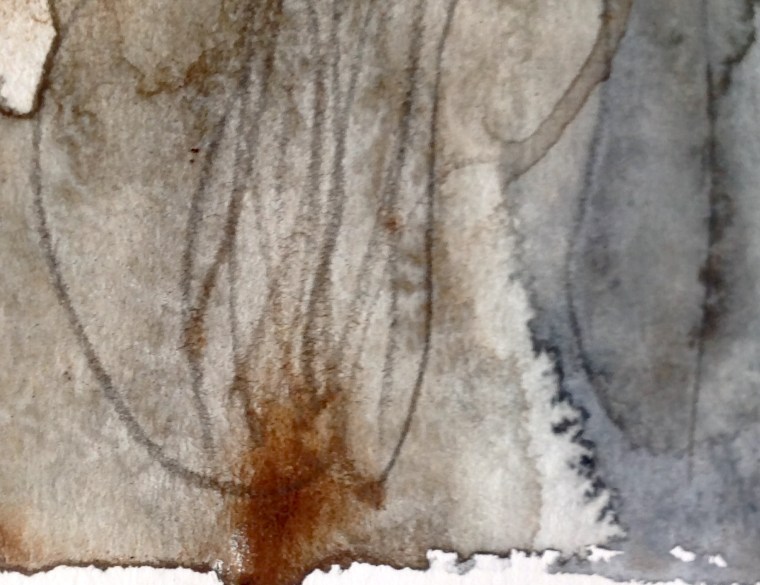
Reedbed sketch (detail) 6 © Mari French 2017Reedbed sketch (detail) 6 © Mari French 2017

Reedbed sketch (detail) 6 © Mari French 2017

I don’t expect to replicate these effects, especially on a large scale, but, I’m reasoning, if I print out cropped abstract sections from my reedbed sketches I will be effectively removing the recognisable parts of the image, leaving myself with inspirational pieces of colour, light and atmosphere with which to influence my subsequent series of work; suggestions rather than templates.

Reedbed sketch (detail) 7 © Mari French 2017

Reedbed sketch (detail) 7 © Mari French 2017

I’m sure many artists will do this already, but I’m excited to fall upon this idea as a way of working to abstraction from my own sketchbook. I’d love to hear techniques you use to create looser/abstract pieces from your sketches, if you want to share them please do in the comments below.

four seasons in one day…

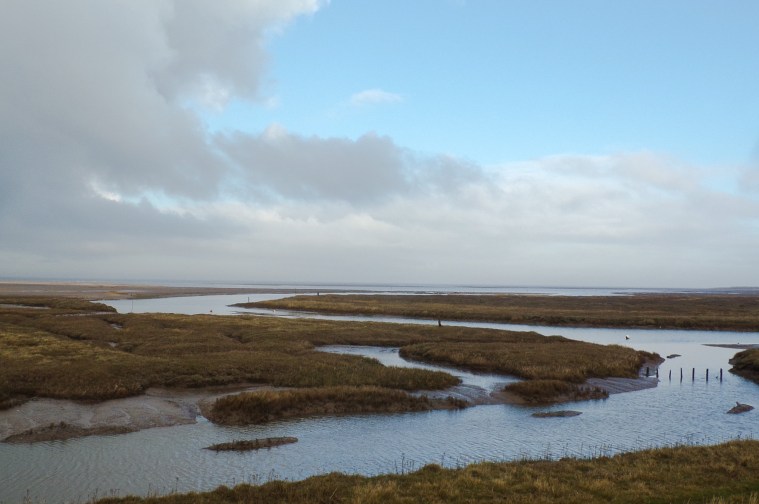
Thornham saltmarsh, Norfolk. © Mari French 2018

Thornham saltmarsh, Norfolk. © Mari French 2018

Rain, sun, stormy, bright… apart from snow, I experienced the full gamut of weather conditions yesterday at Thornham on the North Norfolk coast. It makes for interesting photography but renders sketching out in the open a bit tricky. Plus, it was really cold and windy.

Holme bird reserve, Norfolk. © Mari French 2018

Rain over Holme bird reserve, Norfolk. © Mari French 2018

As I arrived at Thornham bonfire smoke was drifting in over the marsh with the sun illuminating marsh pools and reedbeds. I started walking along the sea defences from Thornham towards the dunes at Holme, having been stuck at a desk with various urgent tasks all week I was desparate to get out.

At one point I was sat on a bench in beautiful warm sunshine with a great elevated view overlooking the bird reserve lake and reedbeds. Then the rainclouds came over and drops started falling on my sketchbook. It looked fantastically dramatic though!

Viewpoint with handy bench! Holme bird reserve, Norfolk. © Mari French 2018Viewpoint with handy bench! Holme bird reserve, Norfolk. © Mari French 2018

Viewpoint with handy bench! Holme bird reserve, Norfolk. © Mari French 2018

Holme bird reserve, Norfolk. © Mari French 2018

Holme bird reserve, Norfolk. © Mari French 2018

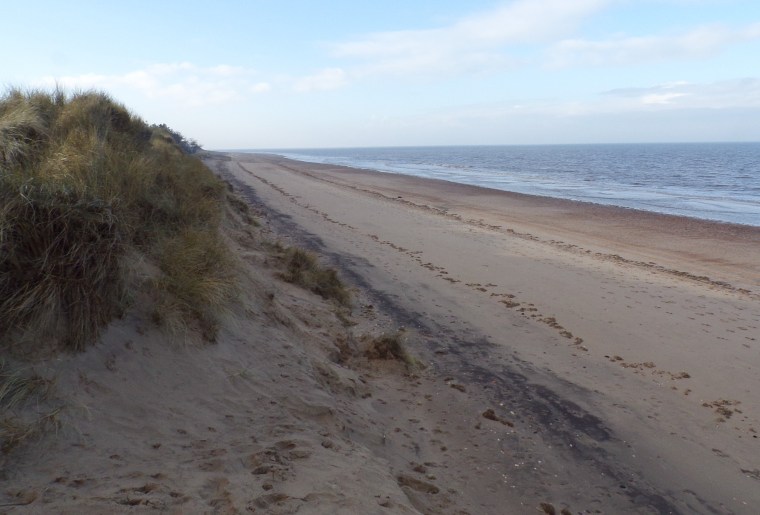
Skeins of geese were noisily flying over as the weather front was quickly blown eastwards and the sun came out again. I took the opportunity to walk over the dunes to the shore for a quick glimpse of the sea (always a tonic in the winter), then headed back the way I came, anticipating the next squadron of rainclouds that I could see on the horizon.

Holme dunes , Norfolk. © Mari French 2018

Holme dunes , Norfolk. © Mari French 2018

Thornham creek, North Norfolk. © Mari French 2018

Thornham creek, North Norfolk. © Mari French 2018

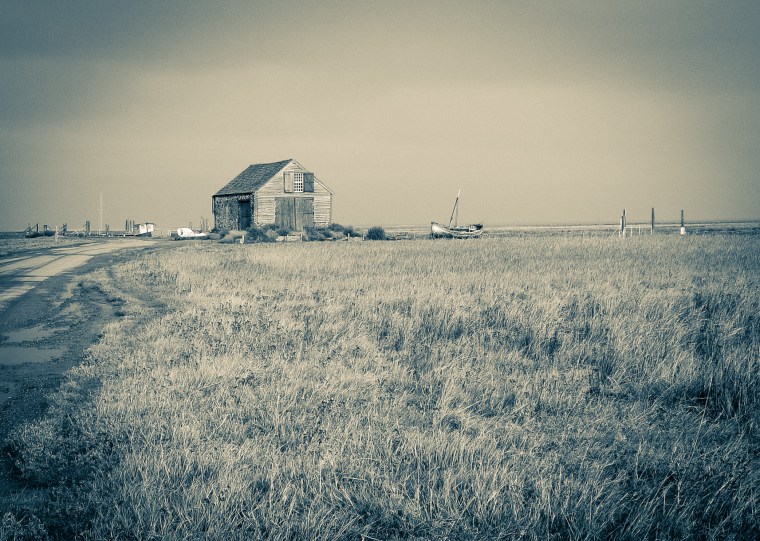
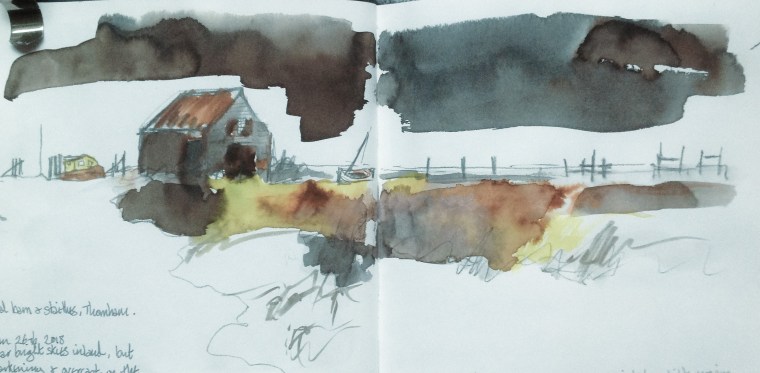
The old coal barn at Thornham was lit up in the sun against the brooding sky, with boats and wooden staithes poking up along the creek next to it. It’s a captivating subject although my sketch of it was pretty rushed and a bit blobby!

IMG_4462

Old coal barn, Thornham, North Norfolk. © Mari French 2018

Old coal barn, Thornham, North Norfolk. © Mari French 2018

Old coal barn, Thornham, North Norfolk. © Mari French 2018

York: stone, wood, copper…

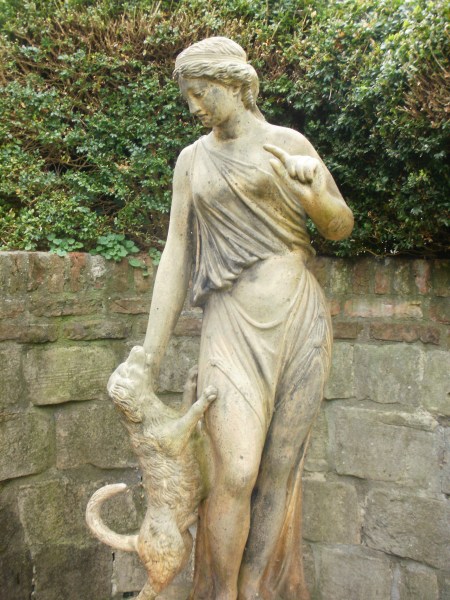
Autumn is a perfect season to visit the beautiful ancient city of York. A recent week’s break there had me exploring the medieval streets, riverside, and old hidden churches. I took a small sketchbook and brushpens with me, and of course a camera, not anticipating much sketching, but was compelled by the soft seasonal light on the old stone and statues.

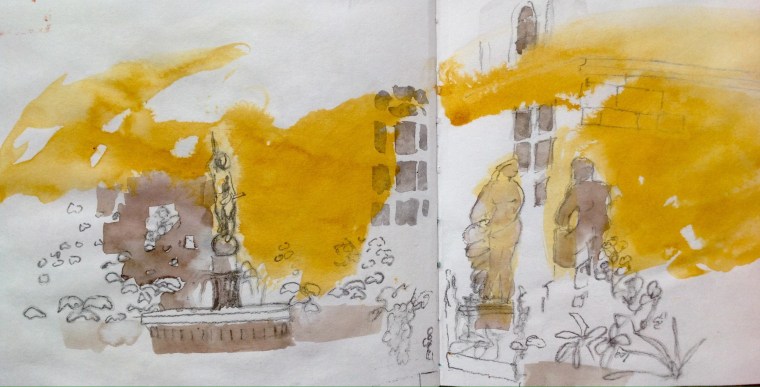
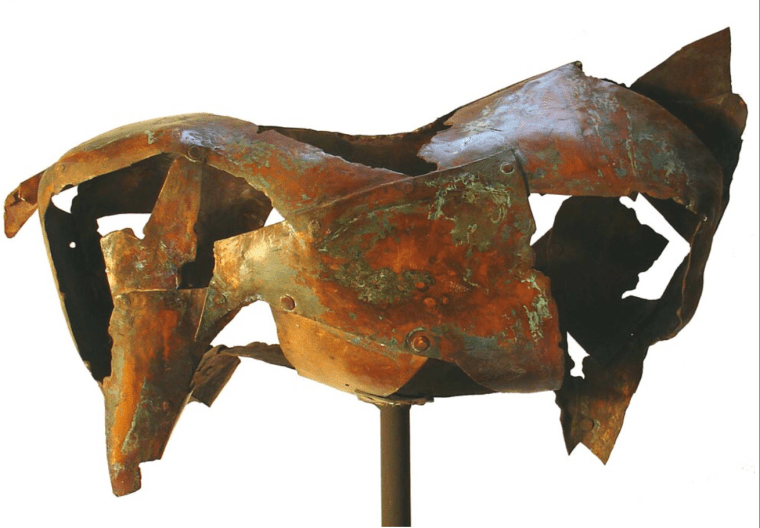
For me one of the challenges of a popular tourist city like York is finding the hidden quieter spots to relax and sketch. So it was a pleasure to discover the (free) beautiful garden of the Treasurer’s House at the back of theMinster, where I spent a relaxed hour sketching the various statues and luminous white swathes of cosmos flowers on a convenient bench (the artist’s friend!).One day we stumbled on the old church of St Martin-cum-Gregory in the Micklegate area, which happened to be showing a completely stunning exhibition of the sculpture of Harold Gosney. Unfamiliar till now with his work, this was a beautifully curated retrospective (by the Stained Glass Centre) in a beautiful space. Gosney has worked in stone, riveted copper and wood for the past 60 years, mainly capturing the essence of horses, birds and the human figure. His work is also on display at Ripon Cathedral. More on Harold Gosney and his work here. Images below are © Harold Gosney and greatnorthartshow.co.uk (copper sculpture).

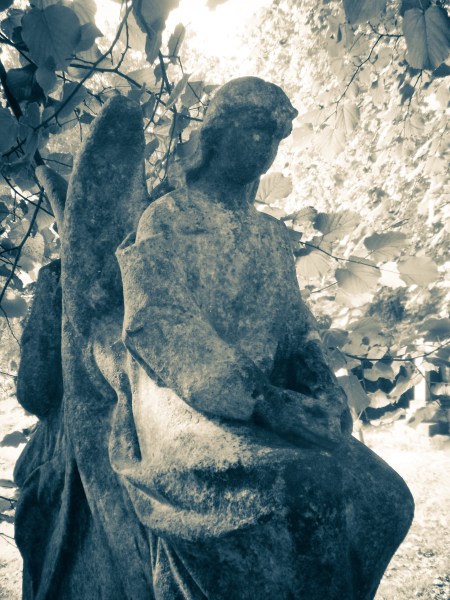
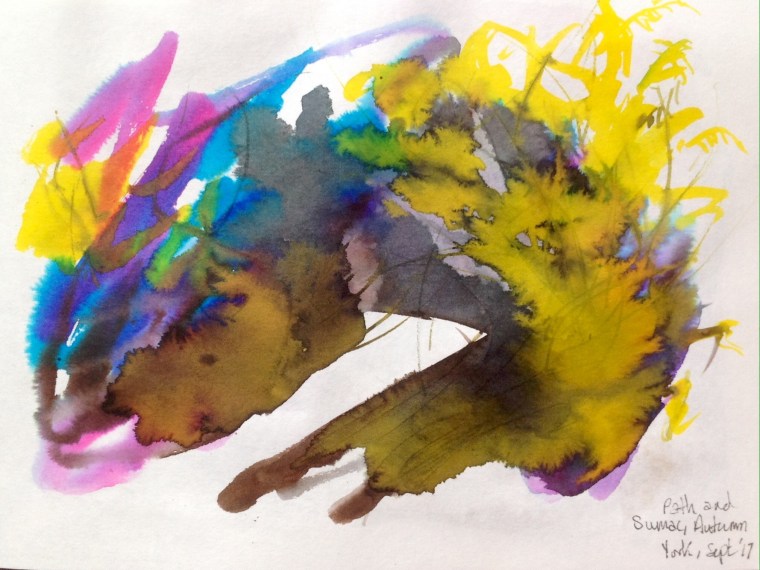
We also spent a few hours wandering through the peaceful space of York Cemetery just outside the city walls, on the recommendation of an artist friend. The cemetery is run on a nature conservancy principle with paths winding through the flowers and shrubbery and semi-hidden angel sculptures among the treees. I found (another) bench in the sunshine and sketched the light through the autumn foliage, trying to push the limits of effects and colour blending possible with my brushpens.

Another place we passed several times without realising it, was the entrance to Holy Trinity Church, off Goodramgate. This is a real gem of a medieval building, which still has the original box pews. Well worth finding but wrap up warm, it’s freezing even on a sunny day. I loved the fleeting play of sunlight on the pews and the colours of the worn old stone.

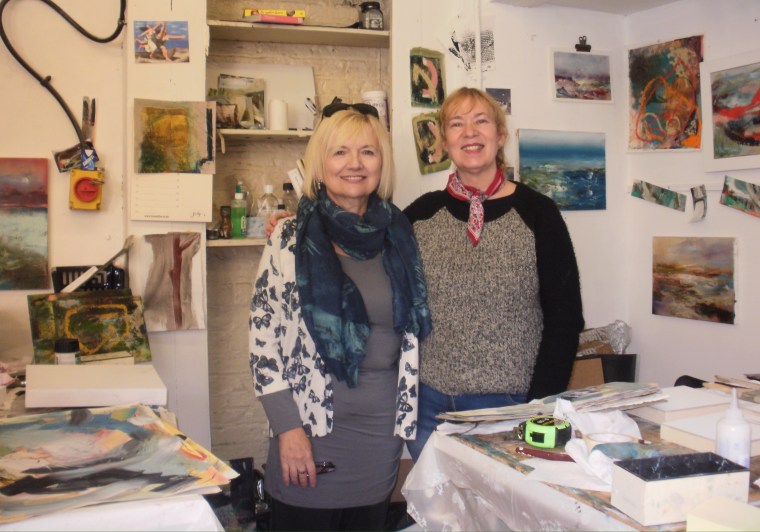
And, last but not least: a visit to my friend Lesley Birch, an excellent abstract landscape artist who I’d previously only ‘met’ on social media. Her art studio is in Pica Studios, part of the Quacks printers building on Grape Lane. The studios house several artists/makers and are open by appointment. Contact them on this link. Below you can see myself with Lesley in her busy studio.By the way, if anyone can tell me how on earth to add captions to photos on the recent WordPress versions I’d be very grateful. It used to be straightforward, but they seem to have changed it for some reason (on the app anyway!). Thanks.