see Emily play …

I had the privilege of attending an Emily Ball workshop last weekend at Cambridge Artworks. I’d been a fan of Emily’s work since picking up her book Drawing and Painting People – a fresh approach some years ago. Even though I prefer landscape painting, her emphasis on mark-making and developing your own visual language really struck a chord with me; I’d been aware of the need to develop and extend my own mark-making for some time. So when the opportunity was presented to me by an artist friend, I leapt at the chance.

There were ten of us all together, from different backgrounds and artistic experience, and we were worked very hard by Emily, eventually, I think I can say, producing very different work to our normal output over the three days.

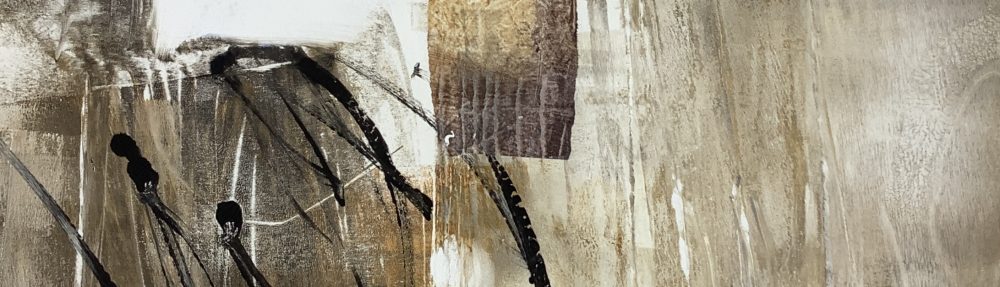
Emily showed us how to unpick and reinvent the familiar, inventing our own marks to animate our work, till eventually the painting takes on a life of its own apart from the subject.

Some of the fun exercises included one I called ‘Hangman’, after the old pen on paper game. We were put into teams of two and took it in turns – one would make a mark on a large sheet of paper, the other would then step forward and add their own mark, relating to, reacting to, or obliterating part of our own mark; leading to much friendly cursing and wails as our ‘precious’ marks were changed beyond our control.

Emily was very generous with her time and materials and it was a pleasure and privilege to learn directly from her. She runs courses from the Seawhite premises where she has her studio as resident artist, as well as at locations abroad. I’d urge you to check them out.

The three day weekend workshop was full-on, tiring but thoroughly enjoyable and satisfying. Typically generously, we were each given one of her inspiring books at the end.

 

ending the year on a high …

I’ve had a couple of lovely surprises, regarding my art, this last few weeks and it’s been great to finish the year on such a positive note.

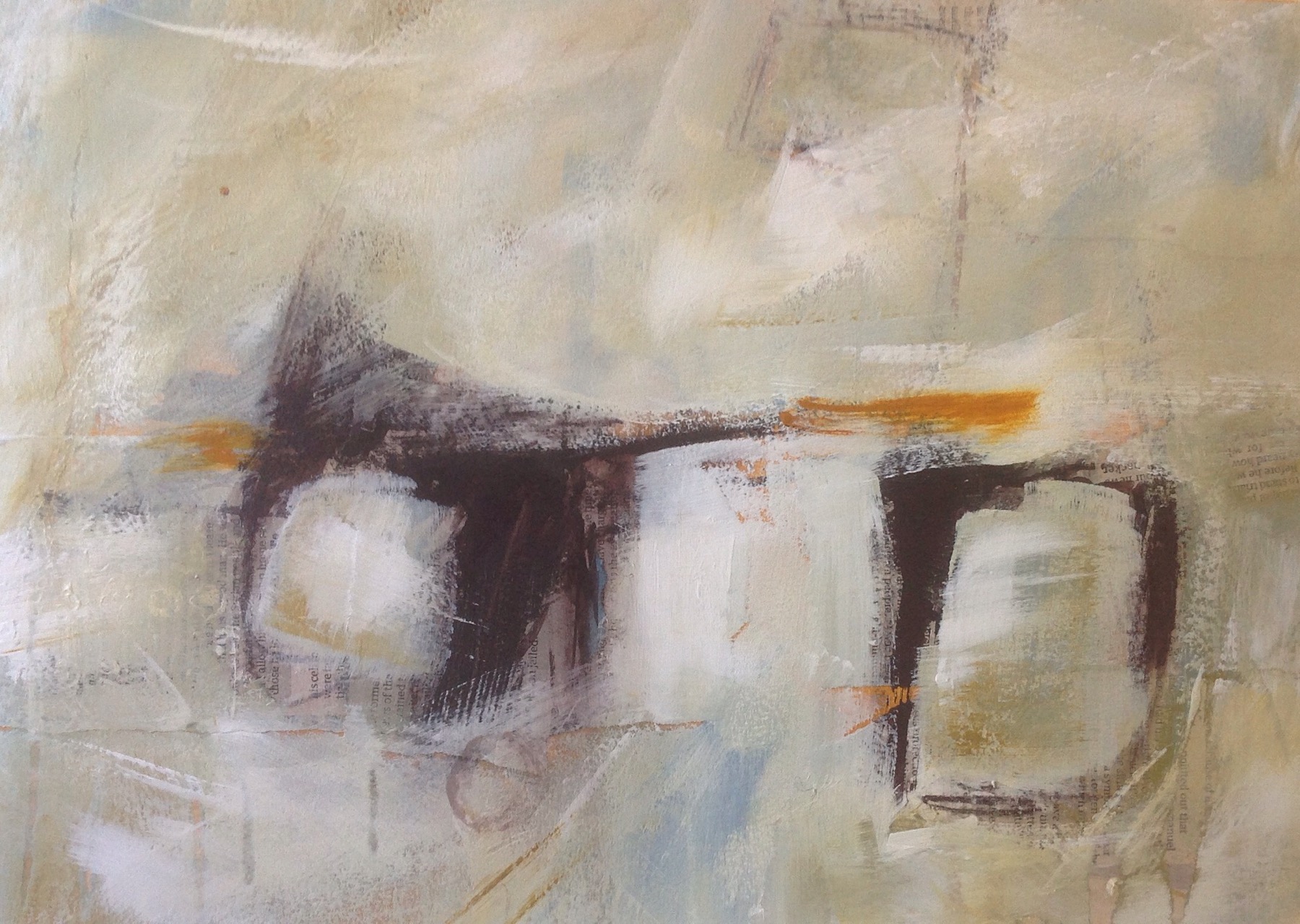
First of all I was selected as ‘one of 50 finalists out of thousands’ by Artists & Illustrators magazine Artist of the Year 2016 competition, for my painting ‘Flight’ (below). 


As one of the finalists ‘Flight’ will be exhibited in the Mall Galleries, London, in February. There will be several prizes awarded, including the Readers’ Award, which is still open for voting, which I’d very much appreciate.

I also found out this week, that I’ve been accepted for Cley Contemporary 2016, which is part of the North Norfolk Exhibition Project (NNEP). This highly-regarded contemporary annual art festival is held in the beautiful St Margaret’s Church in Cley-next-the Sea, showing artwork by a selection of national and regional artists. I’ve tried unsuccessfully in the past to get in, so I’m delighted to be accepted this time. Especially as the guest curator for 2016, Hugh Pilkington, has said:

… I thought it would be interesting to identify what is the contemporary art being made in Norfolk today, how large is the audience and who are the patrons that might support that work. 

​Who are the artists who could make up a new Norfolk or Norwich School? Who are the successors of Cotman and Crome; of Self and Ackling; of Emerson and Payne Jennings? Who are the landscape painters? Who are the abstract painters? Who are the sculptors? Who works in other interesting and challenging formats? …

We will be given the brief for the work for Cley Contemporary in February. The work will be site-specific which will be an interesting challenge as Cley has a beautiful stretch of Saltmarsh coastline – one of my favourite subjects, as you may have noticed on this blog!


Areas of Light. One of the images in my submission for Cley Contemporary 2016. Mari French 2015

Areas of Light. One of the images in my submission for Cley Contemporary 2016. Mari French 2015

  
Cley Marshes. © Google Maps.

Cley Marshes. © Google Maps.


Lastly, I’d like to wish all my readers a wonderful Christmas and a happy and peaceful New Year! See you in 2016.

mud larks …

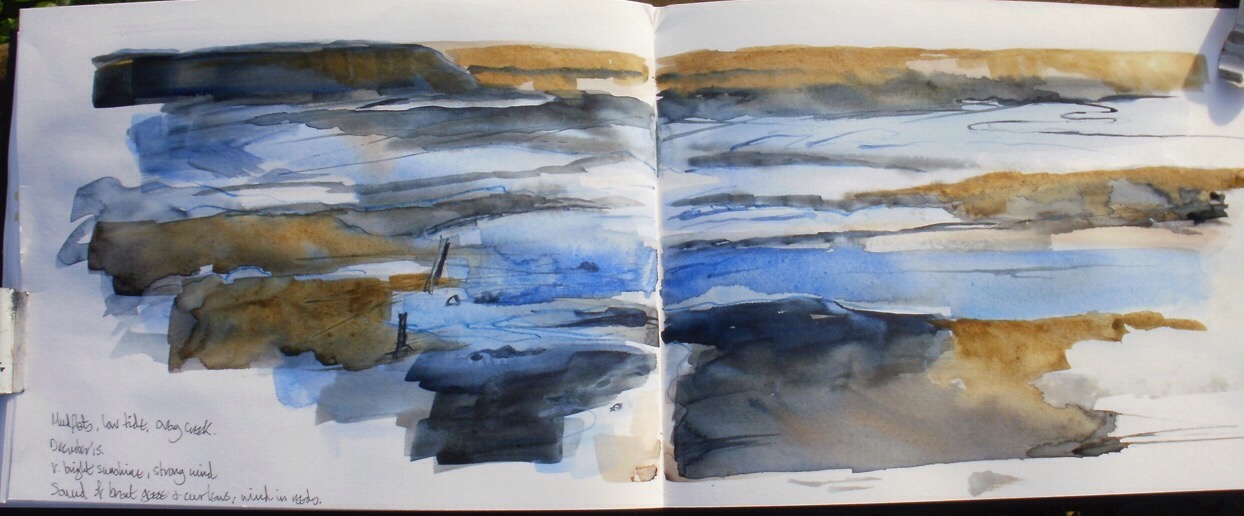
 Mudflats, low tide, Overy creek. Sketchbook, Mari French 2015

Mudflats, low tide, Overy creek. Sketchbook, Mari French 2015

I don’t actually walk across the marshes themselves; unless you’re extremely familiar with them that could be pretty risky. But the raised grassy banks of the sea defences that traverse the Norfolk saltmarsh coast, provide convenient access and elevated views across the marshes, reedbeds and creeks and out to the dunes and beaches. 

They also provide excellent walking opportunities; topped with good paths, they stretch for miles, crisscrossing the marshes between the string of coastal villages and, in places, linking up with official walking routes, such as the Peddars Way and the Norfolk Coastal Path. In summer the sea defences are bordered with a profusion of wildflowers, framing endless views. Even on the wildest winter days, there are usually a few hardy dog walkers or bird watchers about. Nevertheless it is still possible to get a sense of isolation and wilderness.


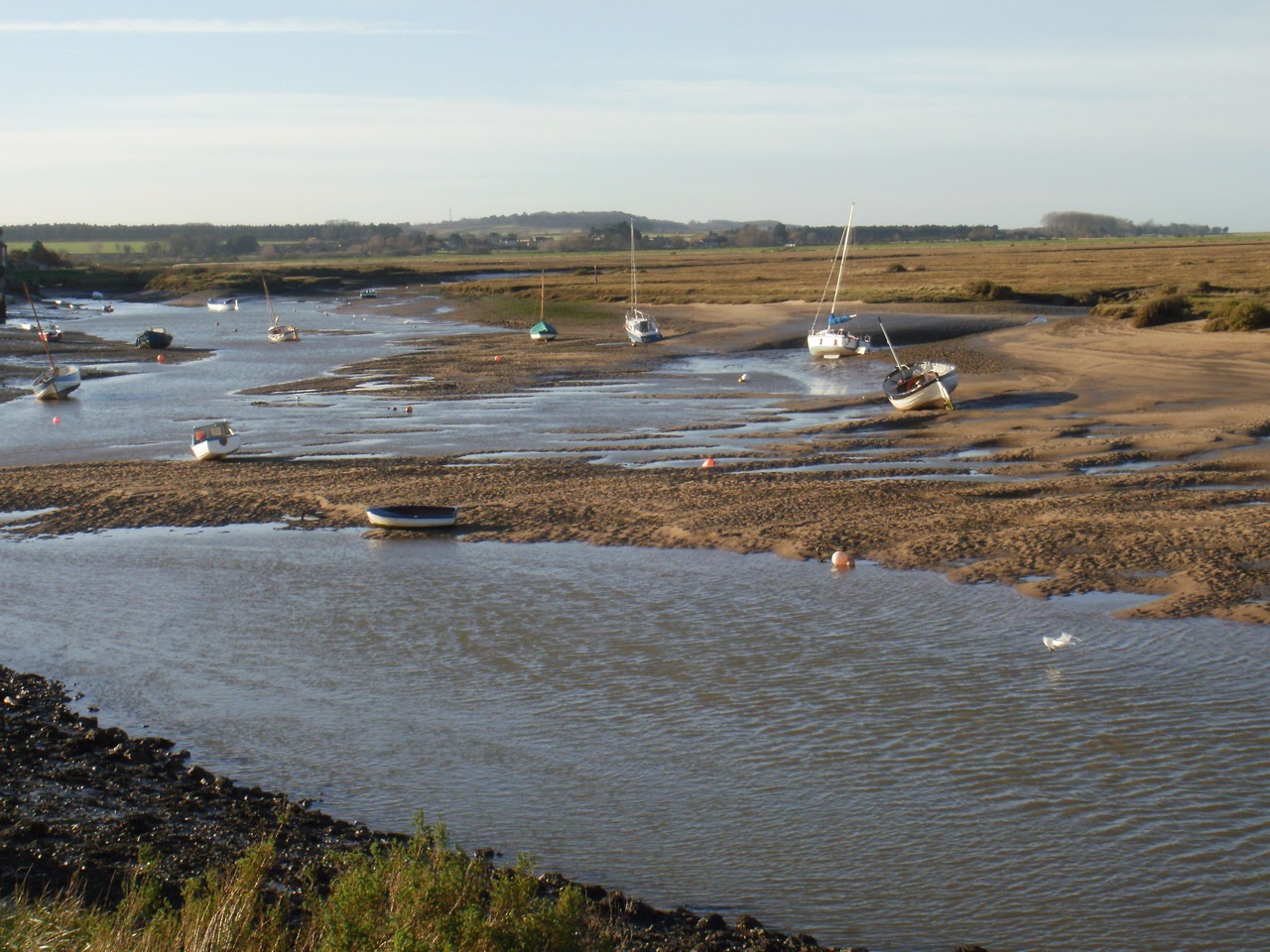
Burnham Overy creek. Mari French 2015

Burnham Overy creek. Mari French 2015

 
Thornham and Holkham are my usual sketching areas, but I sometimes go a few miles further east to Burnham Overy Staithe, which, with its moored sailboats, breakwaters, extensive sandy flats and grazings, offers an alternative sketching location.

Last Wednesday, although cold and windy, was bright and sunny and not wanting to waste the rare winter sun, I threw my sketching gear in the car with a simple packed lunch, and headed up through Burnham Market, through the lovely village of Burnham Overy and out to the Staithe and creek.


Breakwaters, Overy creek. Sketchbook, Mari French 2015

Breakwaters, Overy creek. Sketchbook, Mari French 2015

  
The tide was low and retreating, the wind strong and cold, and the clear sky reflected back off the wet mudflats where the creek had emptied, turning them into a blue expanse, scribbled with the tracks of birds and sinuous rivulets of water.  
Reedbeds with geese coming in. Mari French 2015

Reedbeds with geese coming in. Mari French 2015


Large flocks of small dark Brent geese, with their distinctive mutterings, clustered on the winter grazings. Curlews called and the wind brushed the burnished silver reeds into undulating waves. Out on the retreating creeks, redshank and cormorant. In the distance, murmurations of starlings like shadowy twisting veils.